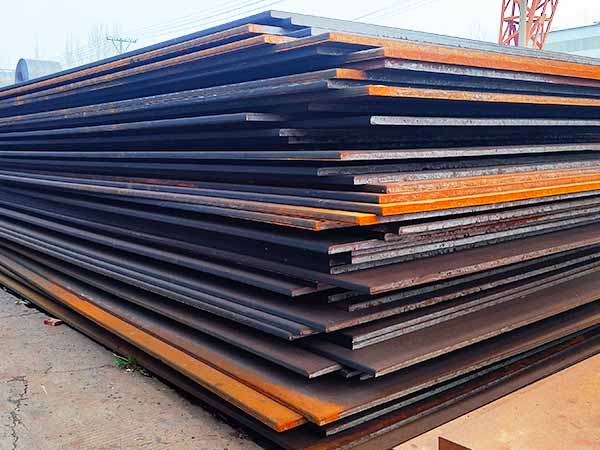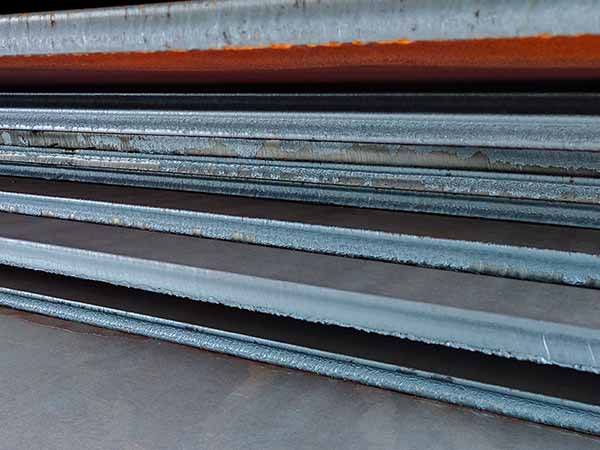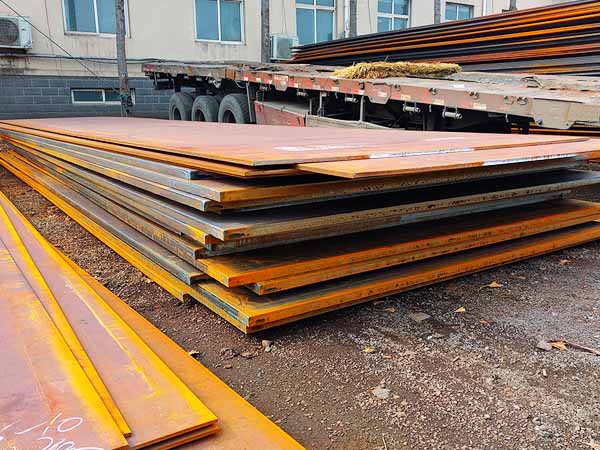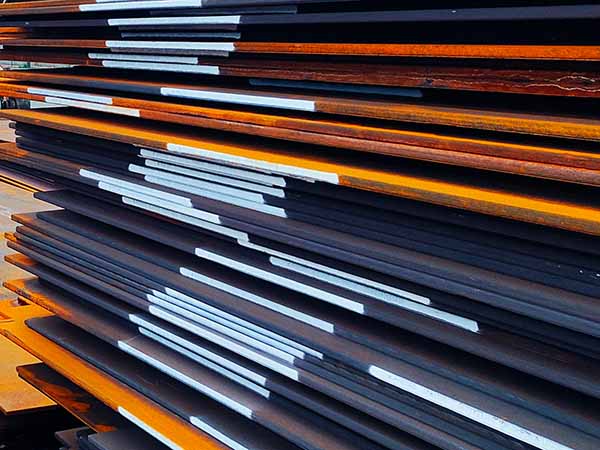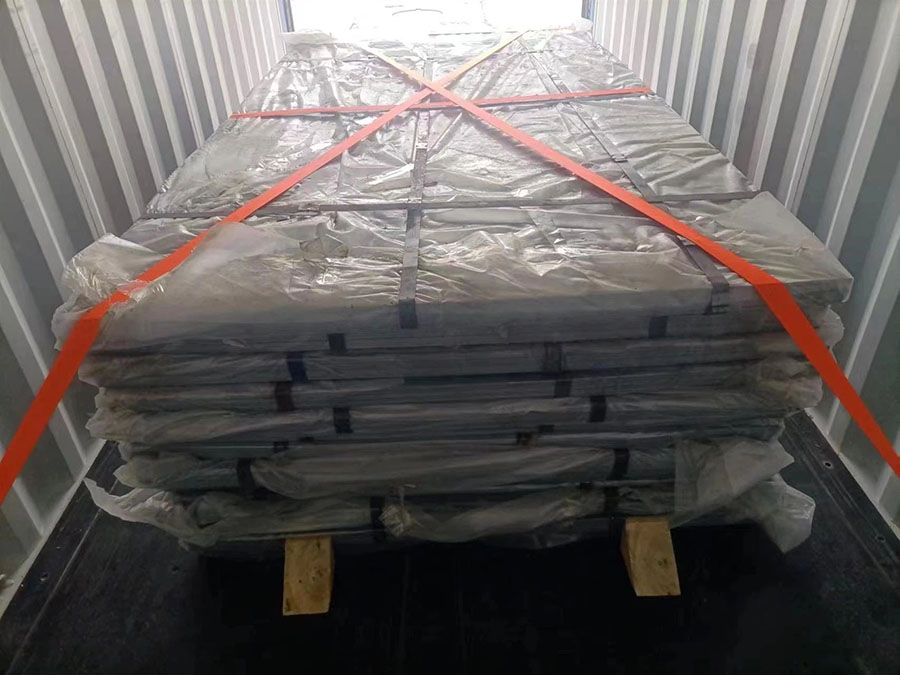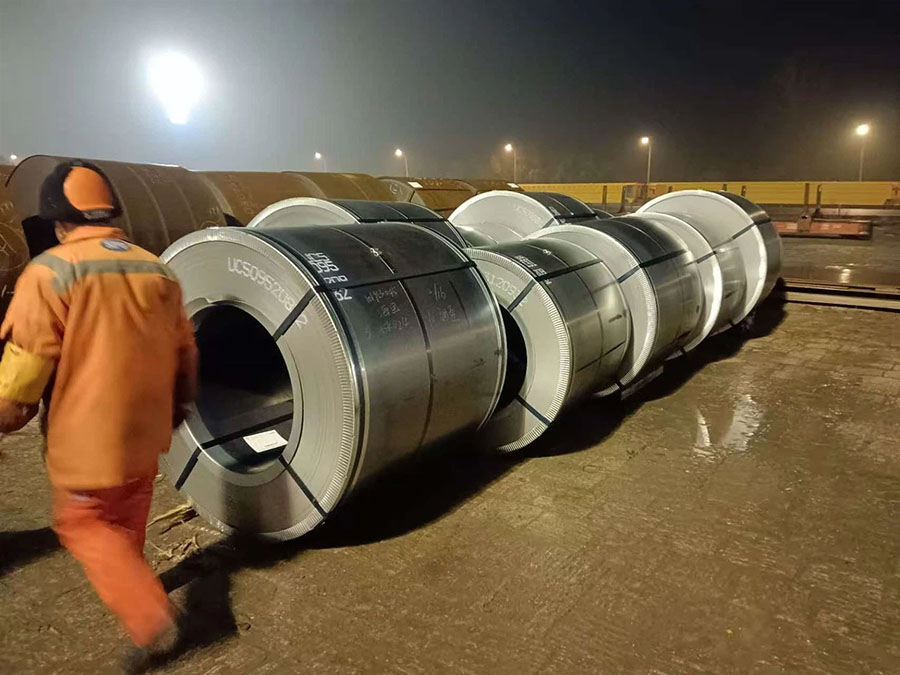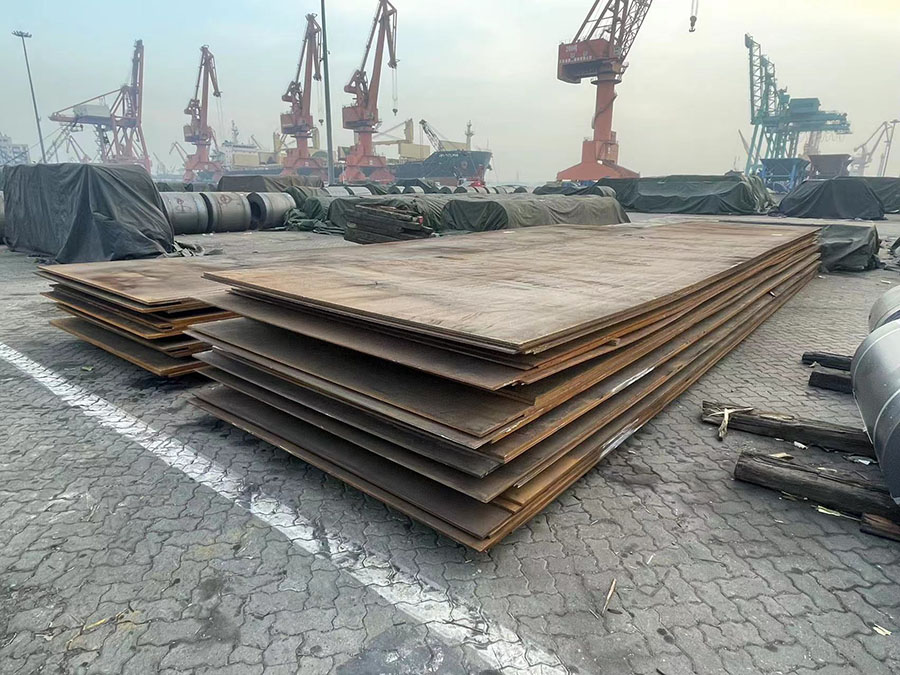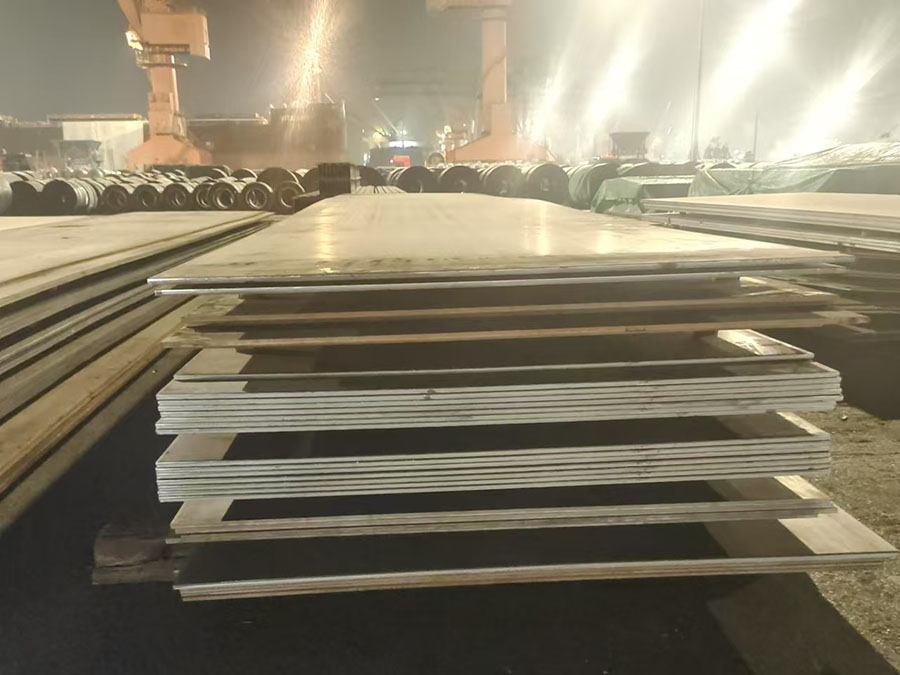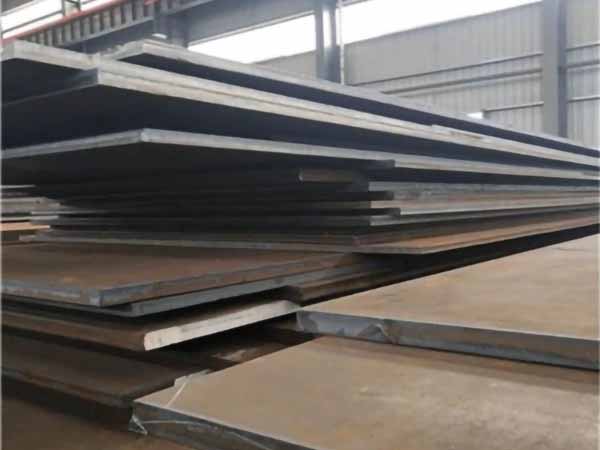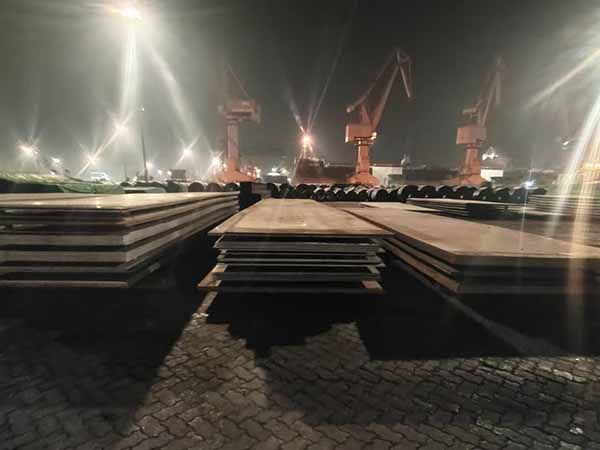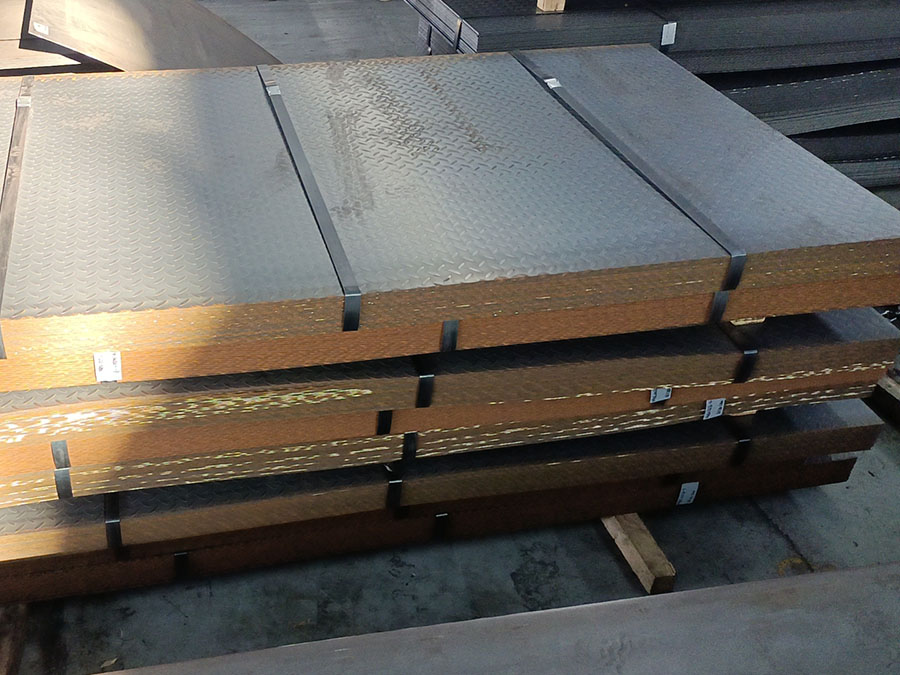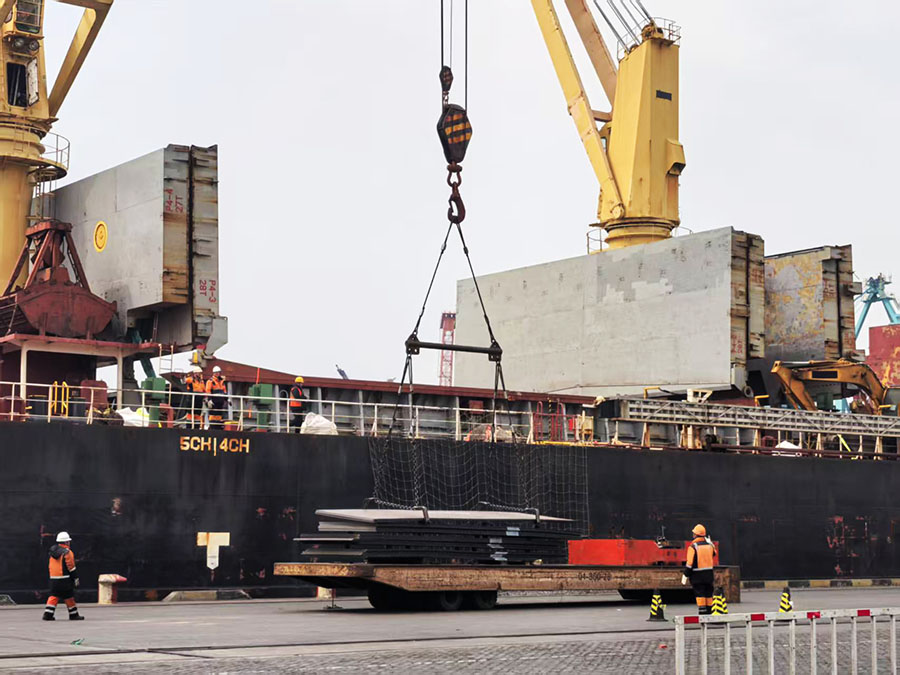
We are a specialist supplier of ABS Grade EH32 shipbuilding steel plates. Our ABS Grade EH32 shipbuilding steel plates are certified by the American Bureau of Shipping (ABS) and comply with ASTM A131 and ABS shipbuilding material specifications. Our ABS EH32 steel plates offer excellent low-temperature toughness at -40°C, stable mechanical properties and good weldability, and are widely used in polar-class vessels, ocean-going vessels and offshore engineering structures. Backed by ample stock, a comprehensive range of specifications and third-party inspection support, we provide one-stop steel solutions to shipyards and offshore engineering contractors worldwide.
Certification :
ABS RulesGrade :
ABS Grade EH32Thickness :
5.0 - 150.0 mmWidth :
1500.0 - 4000.0 mmLength :
6000.0 - 18000.0 mmSpecial thickness, width, and length can be negotiated separately.
We also provide customized processing services.If you have any questions, please contact us.
ABS Grade EH32 steel plate is a high-strength structural steel plate for shipbuilding, certified by the American Bureau of Shipping (ABS), which offers excellent low-temperature impact toughness and is specifically designed for extreme low-temperature marine environments.
Because ABS Grade EH32 shipbuilding steel plate retains excellent impact toughness even in harsh marine environments at -40°C, it is the ideal choice for structural components in polar-class vessels, offshore platforms and icebreakers.
ABS: Certified by the American Bureau of Shipping
E: Quality grade (Impact toughness grade: exhibits good toughness at -40°C)
H: High-strength steel
32: Minimum yield strength of 315 MPa (≈ 32 kgf/mm²)
| Product | ABS Grade EH32 Shipbuilding Steel Plate |
|---|---|
| Certification | ABS |
| Grade | EH32 |
| Material Category | Heigh-strength Structural Steel for Shipbuilding |
| Thickness | 5 - 150 mm |
| Width | 1500 - 3950 mm |
| Length | 6000 - 18000 mm |
| Delivery Conditions | Hot Rolled (HR), Controlled Rolled (CR), Normalized (N), Thermo-Mechanical Controlled Processed (TMCP), Quenched and Tempered (Q+T). |
| Surface Conditions | Surface pretreatment (shot blasting, rust removal, oiling, painting, etc.) is available. |
| Testing | Tensile test, Charpy V-notch impact test, Ultrasonic testing (UT), Z-direction property test (Grades Z15/Z25/Z35), Dimensional inspection, Custom cutting. |
| Primary Applications | Shipbuilding and offshore engineering structures in cold or polar waters. |
| MOQ | 5 tons (small orders can be negotiated). |
| Delivery Time | 15–20 days after order confirmation (urgent orders accepted) |
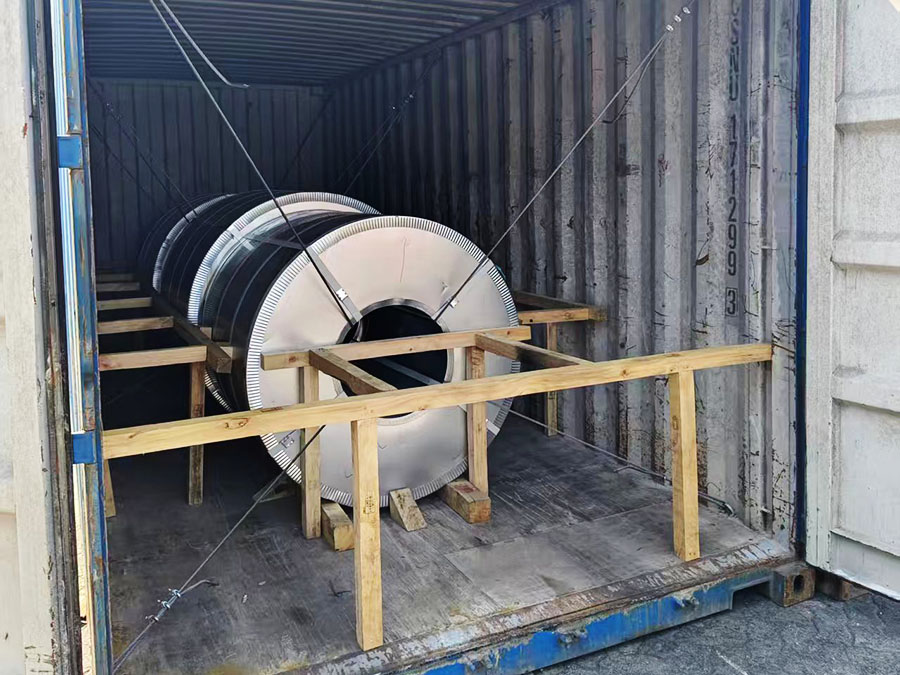
| Packaging | Standard export packaging for sea transport (primarily steel strapping and moisture-proof cloth wrapping). |
| Country of origin | China |
| Grade | C | Si | Mn | P | S | Cu | Cr | Ni | Nb | V | Ti | Mo | Als |
|---|---|---|---|---|---|---|---|---|---|---|---|---|---|
| ABS EH32 | ≤ 0.18 | ≤ 0.50 | 0.90 - 1.60 | ≤ 0.025 | ≤ 0.025 | ≤ 0.35 | ≤ 0.20 | ≤ 0.40 | 0.02 - 0.05 | 0.05 - 0.10 | ≤ 0.02 | ≤ 0.08 | ≥ 0.015 |
| Thickness (mm) | 5 - 50 | 50 - 150 |
|---|---|---|
| Typical CEV (wt %) | ≤ 0.36 | ≤ 0.38 |
Calculation formula (IIW): CEV = C + Mn/6 + (Cr + Mo + V)/5 + (Ni + Cu)/15
| Grade | Thickness, mm | Yield Strength (ReH), MPa | Tensile Strength (Rm), MPa | Elongation (A), % |
|---|---|---|---|---|
| ABS EH32 | ≤ 50 | ≥ 315 | 450 - 570 | ≥ 22 |
| Grade | Thickness, mm | Temperature, ℃ | Impact Energy, KV2 / J | |
|---|---|---|---|---|
| Longitudinal | Transverse | |||
| ABS EH32 | ≤ 50 | -40 | ≥ 31 | ≥ 22 |
The key advantage of ABS Grade EH32 high-strength structural steel plate for shipbuilding, certified by the American Bureau of Shipping (ABS), is its ability to maintain excellent impact toughness even at temperatures as low as -40°C, making it ideal for shipbuilding in cold waters and polar engineering projects.
Vessel types: Icebreakers, polar research vessels, cargo ships for Arctic routes
Areas of application: Hull plating, decks, bulkheads, keels, frames
Performance requirements: Resistance to low-temperature environments and ice impact
Vessel types: Very Large Container Ships (VLCCs), bulk carriers, Very Large Crude Carriers (VLCCs), Liquefied Natural Gas (LNG) carriers
Application areas: Main hull, high-strength decks, side structures, longitudinal and transverse bulkheads, critical support structures
Performance requirements: Withstand high cyclic loads and wave impacts
Vessel types: Offshore support vessels (OSVs), pipe-laying vessels, crane vessels, semi-submersible platform hulls
Application areas: High-stress zones, cryogenic operation modules
Performance requirements: Cryogenic resistance, high fatigue strength
Structures: Jack-up rigs, pile legs, platform decks, support trusses
Performance requirements: Adaptability to deep-sea high pressure, salt spray corrosion and low-temperature environments
Structures: Hulls, module supports, liquid cargo tank reinforcement structures
Performance requirements: Long-term floating operations, fatigue resistance and low-temperature resistance
Structures: Oil/gas pipelines and riser systems in cold-water regions
Performance Requirements: Resistance to low-temperature fracture, ability to withstand external loads
Structures: High-pile quays, fender structures, cross-sea causeways, offshore wind turbine foundations in cold waters
Performance Requirements: Low-temperature resistance, impact resistance, corrosion resistance
Structural applications: Main girders, stiffeners and pier caps for suspension/cable-stayed bridges
Performance requirements: Combination of high strength and low-temperature toughness
Structural applications: LNG storage tanks, cryogenic pressure vessels (–40°C class)
Performance requirements: Excellent low-temperature toughness and weldability
1. Low-temperature toughness: Impact energy ≥ 31 J at –40 °C, suitable for polar and cold environments.
2. High srength: Yield strength ≥ 315 MPa, tensile strength 440–590 MPa, elongation ≥ 22%.
3. Good workability: Low carbon (C ≤ 0.18%), carbon equivalent ≤ 0.40%, supporting a variety of welding and cold forming processes.
4. Corrosion resistance: Contains Cu, Ni and Cr alloys, offering resistance to seawater and marine atmospheric corrosion.
5. Comprehensive certification: Certified by ABS and other classification societies, enabling global interchangeability and procurement.
1. ABS-certified quality with comprehensive test reports.
2. Third-party inspection available.
3. Customised dimensions available.
4. Competitive pricing and on-time delivery.
5. 24/7 technical support.
A:
ABS EH32 marine steel plate has good weldability with low carbon equivalent. It is suitable for SAW, GMAW and SMAW processes.
A:
The international equivalent grades of ABS EH32 are as follows:
Chinese standard: GB/T 712 EH32
American standard: ASTM A131 EH32
Class society equivalents: CCS EH32, DNV EH32, BV EH32, LR EH32
All grades possess the same chemical and mechanical properties.
A:
This depends on the thickness. Typically, it is supplied in a TMCP or normalised condition to meet the mechanical property requirements.
A:
Yes, we can supply EH32 steel plates with Z-direction performance testing in accordance with customer requirements.
A:
The ABS EH32 shipbuilding steel plates we supply are typically available in thicknesses ranging from 5 to 150 mm. For extra-thick plates (over 100 mm), we use the TMCP process to ensure product performance.
A:
The main difference between the two lies in the minimum impact test temperature.
DH32: The impact test temperature is -20°C.
EH32: The impact test temperature is -40°C, which is a more stringent requirement.
Consequently, EH32 is suitable for lower ambient temperatures or colder marine environments, whilst DH32 is suitable for milder marine environments.
A:
ABS Grade AH32, DH32, EH32 and FH32 shipbuilding steel plates have the same strength. The core difference is low-temperature impact resistance.
| Grade | Impact Test Temperature | Impact Energy, KV2 / J | Suitable for Marine Environments |
|---|---|---|---|
| ABS AH32 | 0°C | 31(Longitudinal), 22(Transverse) | Standard marine environments. |
| ABS DH32 | -20°C | 31(Longitudinal), 22(Transverse) | Cold-water marine environments. |
| ABS EH32 | -40°C | 31(Longitudinal), 22(Transverse) | Polar marine environments with extremely low temperatures. |
| ABS FH32 | -60°C | 31(Longitudinal), 22(Transverse) | Polar/ice regions and ultra-low-temperature deep-sea environments. |
A:
Yes, all our ABS shipbuilding plates are certified by the American Bureau of Shipping (ABS). We will provide full certification documents and a Material Test Certificate (MTC) to ensure that our ABS steel plate products comply with international maritime industry regulations and meet the acceptance requirements for our customers’ projects.
A:
Yes. Depending on the thickness (typically 40 mm or more), we can supply ABS shipbuilding steel plates in either normalized (N) or thermomechanically controlled process (TMCP) conditions to improve the grain structure.
A:
We accept small-volume orders, with a minimum order quantity of 5 tons.
A:
Yes, we offer shot blasting to SA2.5 standard and high-quality shop primer coating.
– We offer free samples and bespoke solutions. Please feel free to enquire about our latest prices and volume discounts.
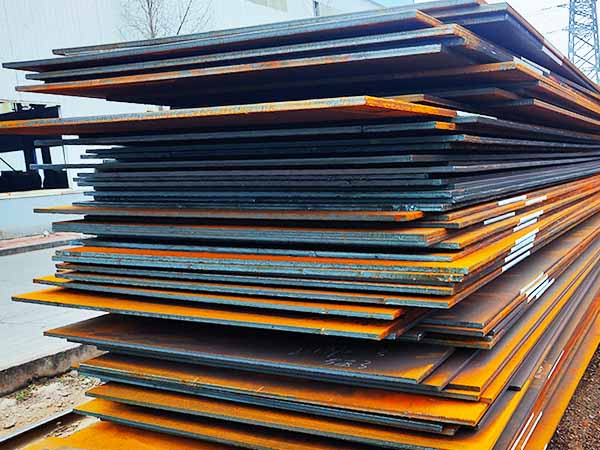
Yuxin Steel provides high-quality steel products to customers in more than 20 countries worldwide.
Contact Info
Would you like to know more about our offers? Please feel free to contact us.