
ABS Shipbuilding Steel Plate
Supplying High-Quality ABS-Certified Shipbuilding Steel Plates Manufactured in China
Are you looking for reliable marine steel plates that comply with American Bureau of Shipping (ABS) standards?
Our ABS-certified marine plates are specifically designed for harsh marine environments, offering outstanding strength, toughness and corrosion resistance, and are suitable for ship hull structures, offshore platforms and various marine engineering equipment.
As a trusted supplier of ABS-certified marine steel, we offer a comprehensive range of ABS marine steel in customisable specifications, with global delivery available, to fully support your shipbuilding and offshore engineering projects.
Available Grades and Specifications
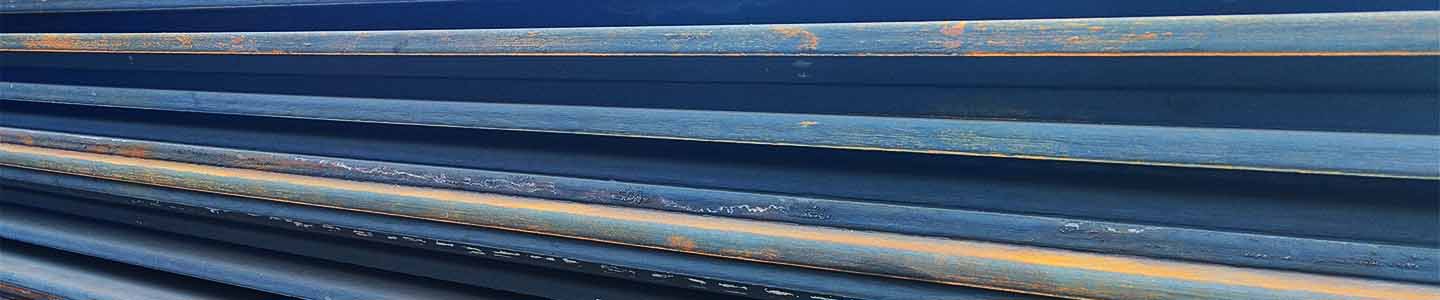
We offer a comprehensive range of ABS-certified marine steel plates, with each grade specifically designed to meet the performance requirements of different marine applications. Below are our core ABS marine steel plate grades and key technical specifications. For more detailed technical documentation or custom specifications, please contact our technical team directly.
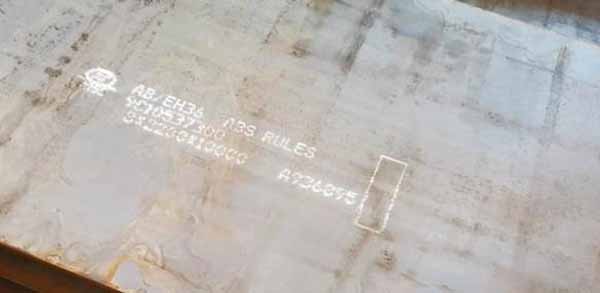
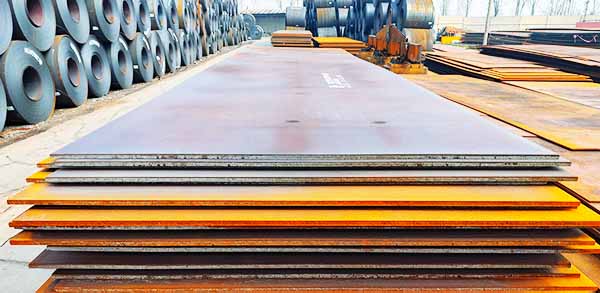
Key Features and Benefits of Our ABS Marine Steel Plates
ABS Certification and International Recognition
- All our ABS marine steel plates are fully certified by the American Bureau of Shipping (ABS) and have also been approved by leading global classification societies such as CCS, DNV, LR, and BV, ensuring they meet the classification and usage requirements for your various maritime projects worldwide.
Superior Strength and Toughness
- Our ABS shipbuilding steel plates offer excellent tensile strength and yield strength, whilst maintaining outstanding impact toughness even in low-temperature environments, effectively reducing the risk of structural failure in vessels.
Superior Corrosion Resistance and Fatigue Resistance
- The product utilises a rational alloy strengthening process, significantly enhancing the steel plate’s corrosion resistance and fatigue performance in seawater and harsh marine environments. This reduces long-term maintenance costs whilst extending the service life of the structure.
Excellent Weldability and Workability
- Our ABS shipbuilding steel plates enable stable and reliable welding, cutting, bending and forming processes. We can also customise heat treatment processes according to project requirements.
Full Range Coverage and Customisation Services
- We offer a full range of ABS marine steel plates and support customisation for special dimensions and delivery conditions. For critical structural components, we also offer Z-direction performance testing (Z15, Z25, Z35) and ultrasonic testing (UT) services to ensure that every steel plate precisely meets your project requirements.
Value for Money and On-Time Delivery
- We offer our customers highly competitive pricing and, backed by a comprehensive global logistics network, ensure that goods are delivered on time to all major ports worldwide.
Applications
Ordinary-strength ABS shipbuilding plates (ABS Grade A, B, D, E)
| Grade | Applications |
|---|---|
| A | Non-critical structures of inland waterway vessels, small and medium-sized barges and coastal craft; internal bulkheads, frames, superstructures and non-load-bearing decks. |
| B | Hull plates, internal longitudinal bulkheads and hatch coamings for small and medium-sized cargo ships, ferries and container ships; hull structures subjected to moderate stresses in temperate waters (0°C environment). |
| D | Structural components requiring low-temperature toughness in cold waters (–20 °C environment), including the hulls, keels and decks of ocean-going vessels, ice-class vessels, trawlers and offshore supply vessels. |
| E | Key load-bearing structures of icebreakers, polar research vessels and ships operating in Arctic waters. |
High-strength ABS shipbuilding plates (ABS Grade AH32, AH36, DH32, DH36, EH32, EH36, FH32, FH36)
| Grade | Applications |
|---|---|
| AH32 | The main hull, decks, sides, strong frames and bottom structure of medium-sized bulk carriers, oil tankers and container ships. |
| AH36 | The high-strength decks, side plating and bulkheads of large container ships, large oil tankers and large bulk carriers; and the general load-bearing structures of offshore platforms. |
| DH32 | High-stress structures on vessels in cold waters; critical components of offshore platforms. |
| DH36 | Low-temperature, high-stress areas on oil tankers, chemical tankers, offshore supply vessels, terminals and offshore platforms. |
| EH32 | Key structures for polar vessels, icebreakers, LNG carriers, research vessels, large commercial vessels operating in extremely cold waters, and Arctic offshore platforms. |
| EH36 | Core load-bearing components for deep-sea drilling platforms, FPSOs, LNG carriers, polar vessels and vessels operating in extremely cold waters. |
| FH32 | Polar heavy-lift vessels, icebreakers, Arctic research vessels, cryogenic marine engineering. |
| FH36 | The most demanding low-temperature, high-stress areas of Arctic platforms, FPSOs, deep-sea structures, etc. |
Quality Assurance and Service Commitment
From raw material procurement to the delivery of finished products, we strictly enforce quality control standards throughout the entire process to ensure that every batch of marine steel plates is consistent and reliable:
Raw Material Inspection
- We select only high-quality steel billets, and each batch undergoes rigorous chemical composition testing to ensure quality control from the source.
Production Process Control
- The entire production process strictly adheres to ABS specifications, with stable process parameters to guarantee consistent product performance and reliable quality.
Testing and Certification
- Every batch of ABS marine steel plates undergoes rigorous performance testing and chemical composition analysis. A complete set of ABS certificates and Material Test Certificates (MTCs) is provided with the shipment to ensure compliance with international standards and project acceptance requirements.
Customisation Services
- We offer bespoke solutions tailored to your requirements, including dimensions, grades, heat treatment and surface finishing, to meet the specific application needs of different projects.
On-Time Delivery
- Through long-term collaboration with a professional and reliable logistics team, we ensure goods are delivered on time to major ports worldwide.
24/7 Technical Support
- Our specialist technical team is available around the clock to answer your queries and provide technical solutions.
Optimise Your Maritime Project
Are you looking for a reliable supplier of ABS shipbuilding steel plates?
The high-quality ABS shipbuilding steel plates we supply are all rigorously certified by classification societies.