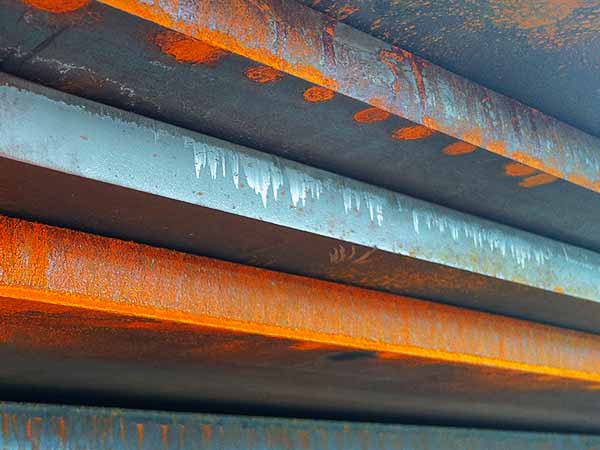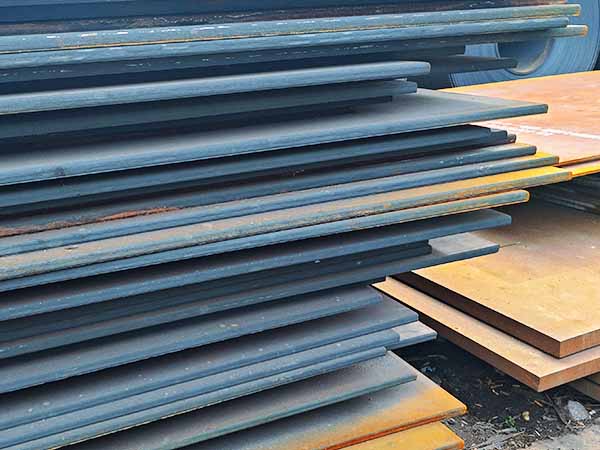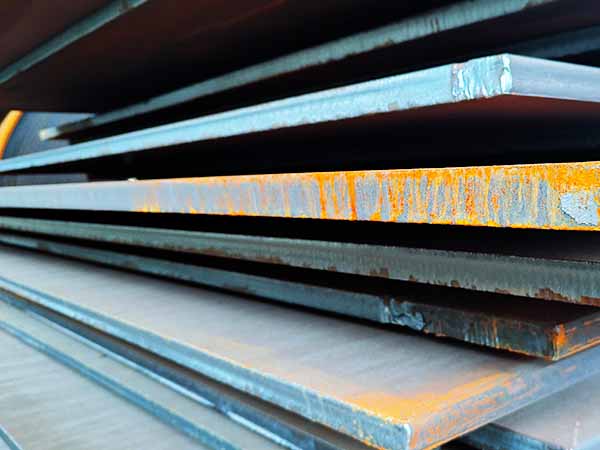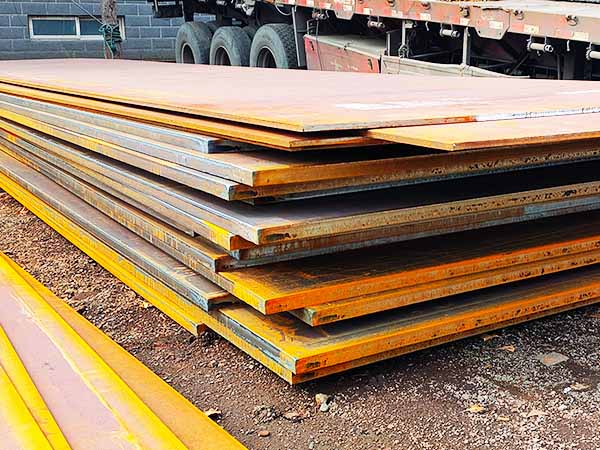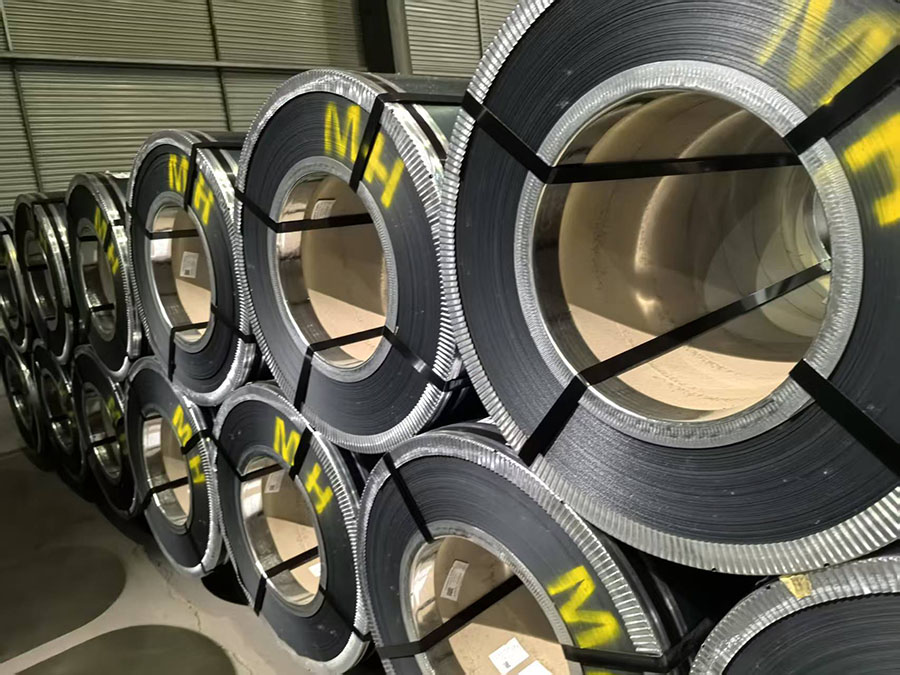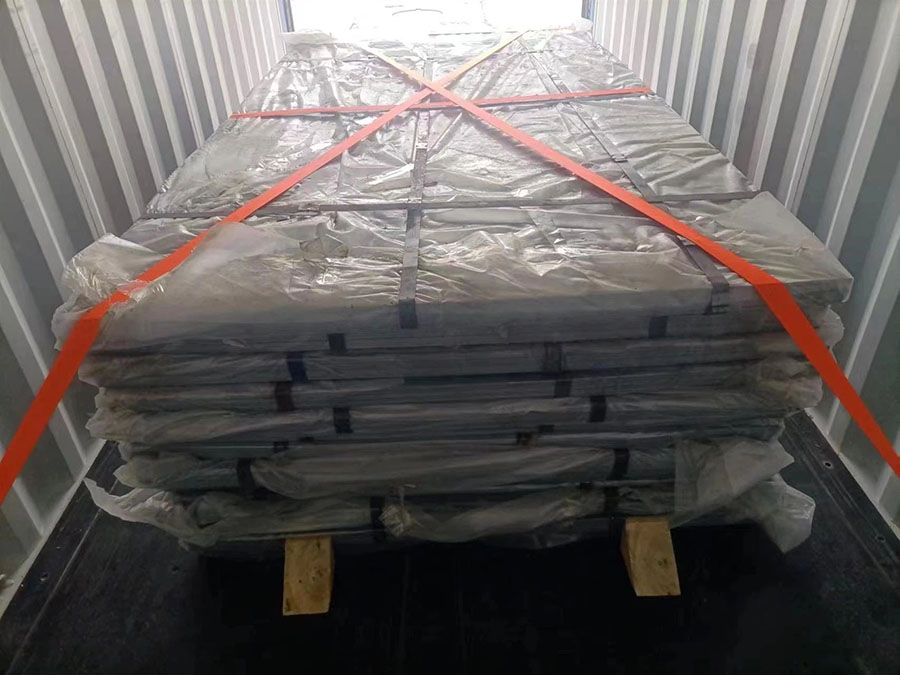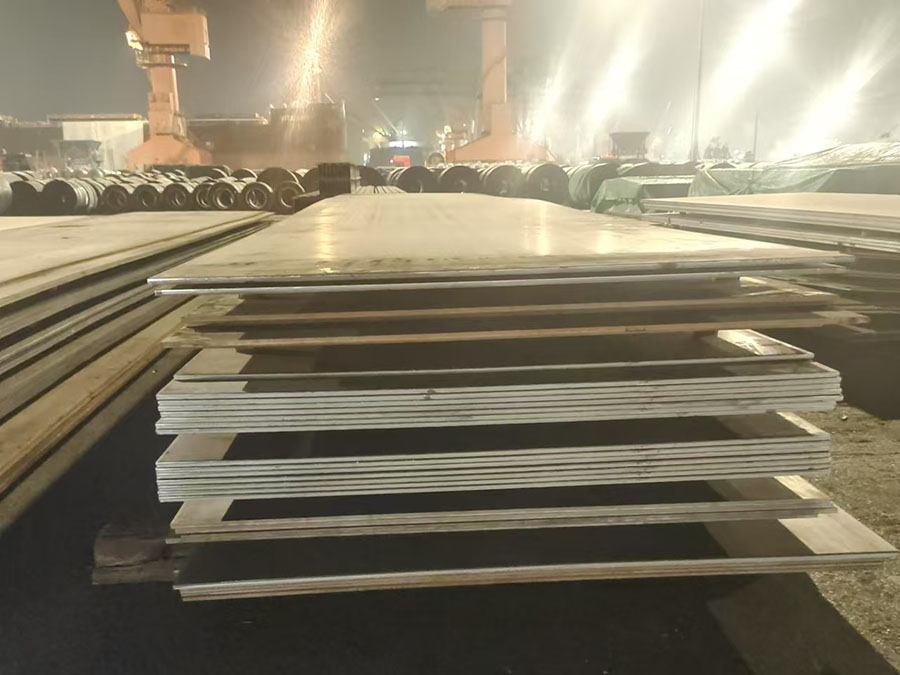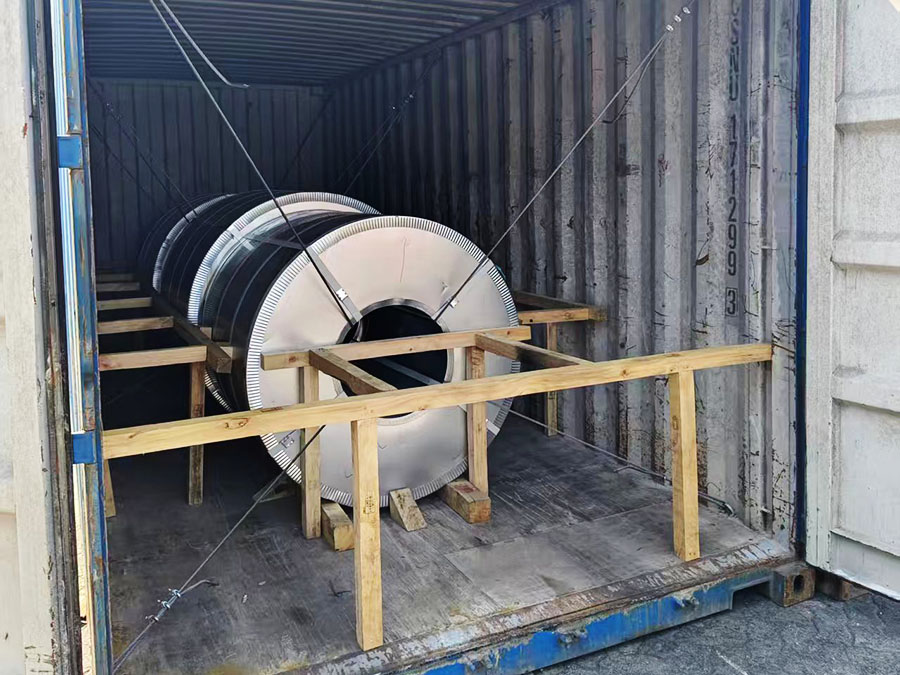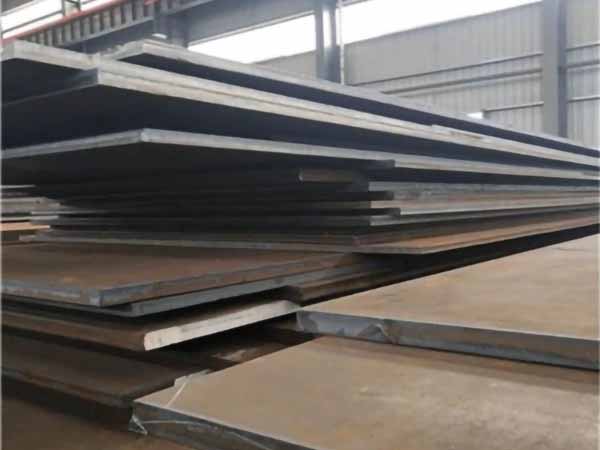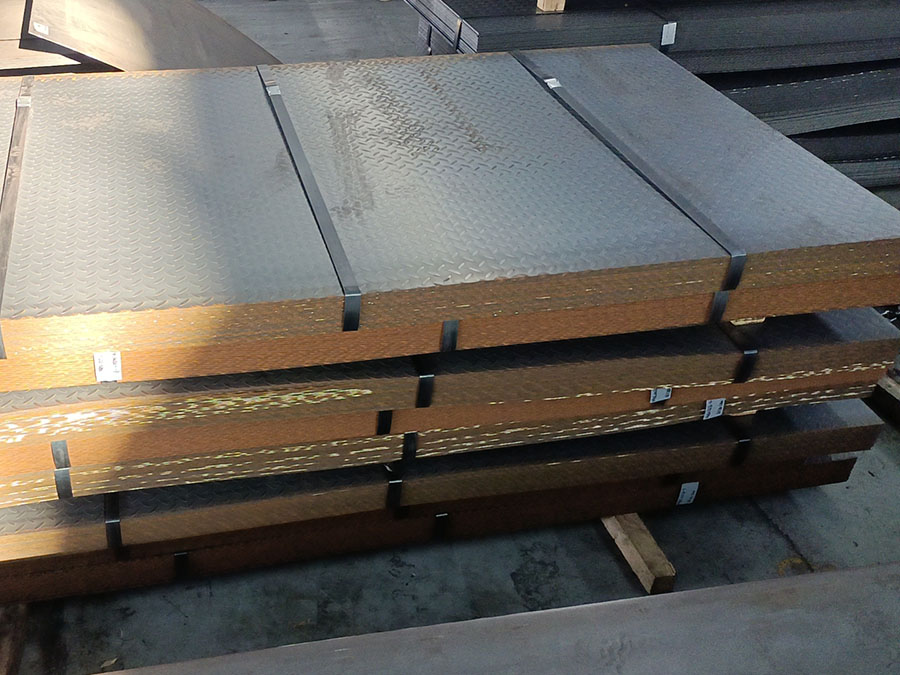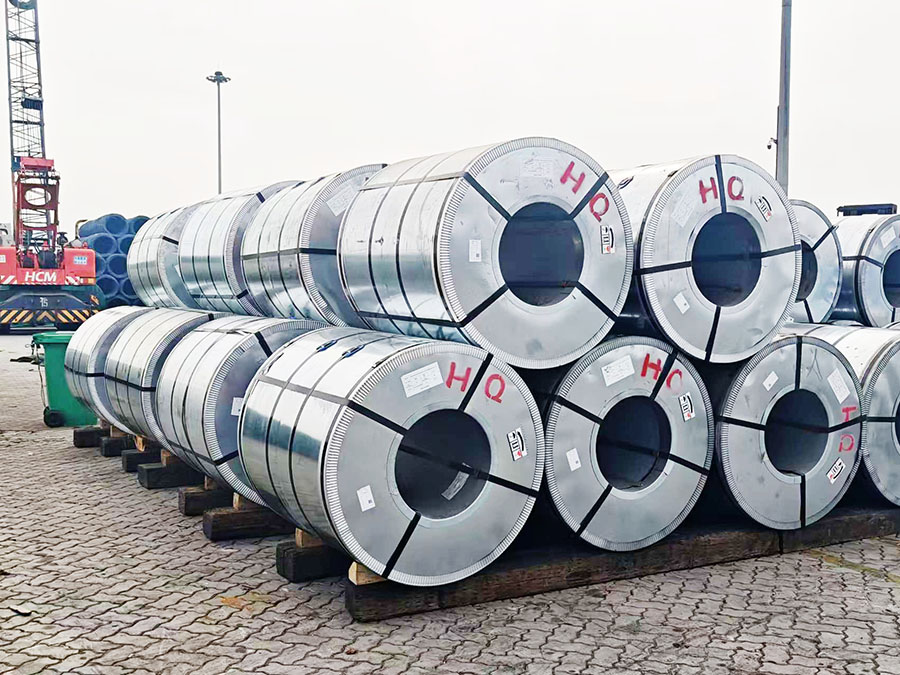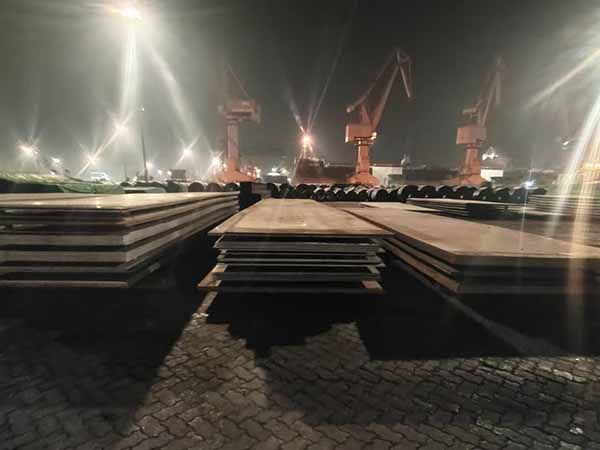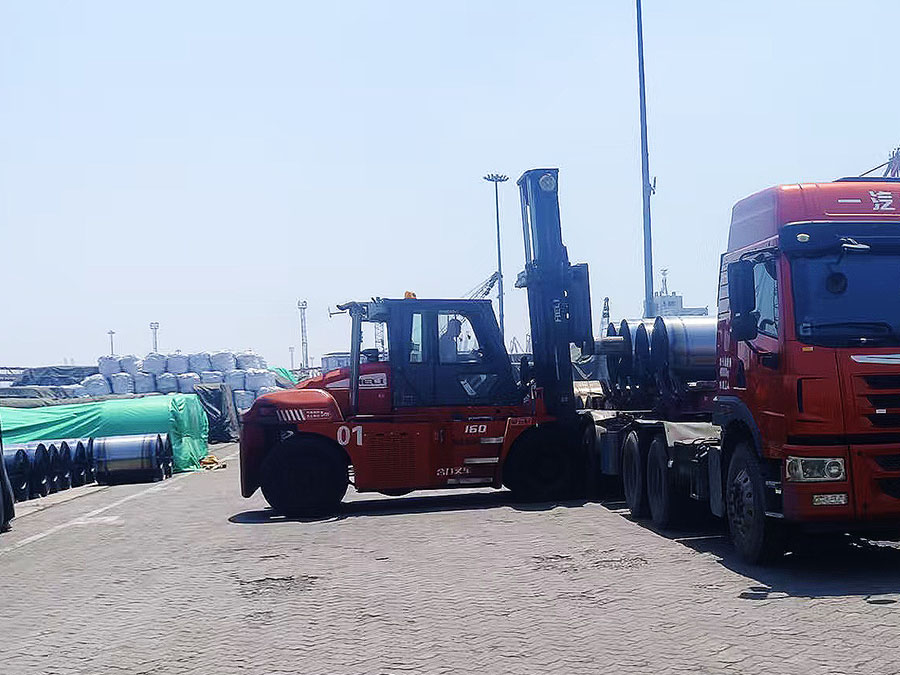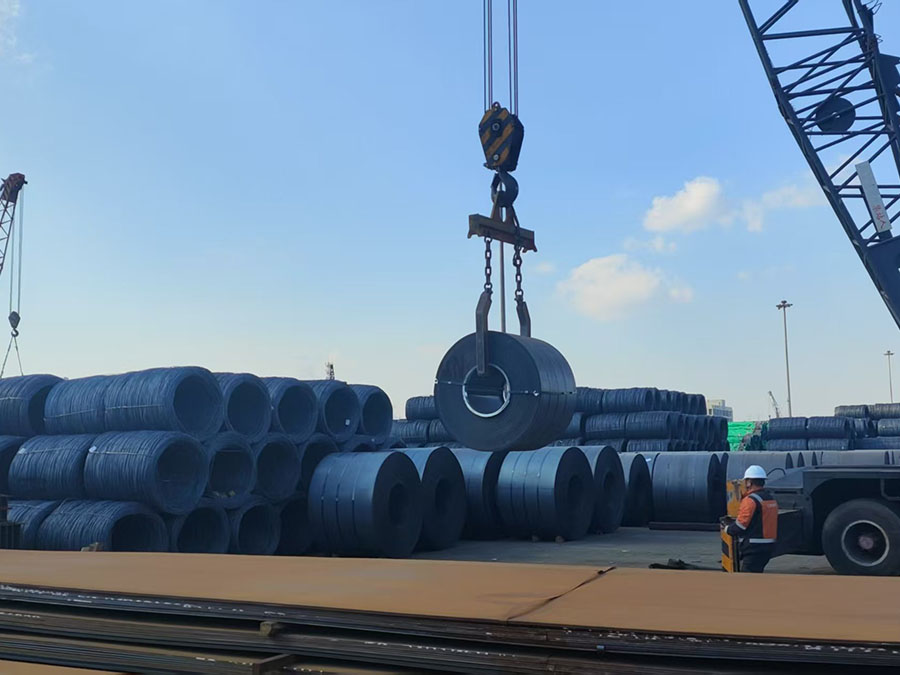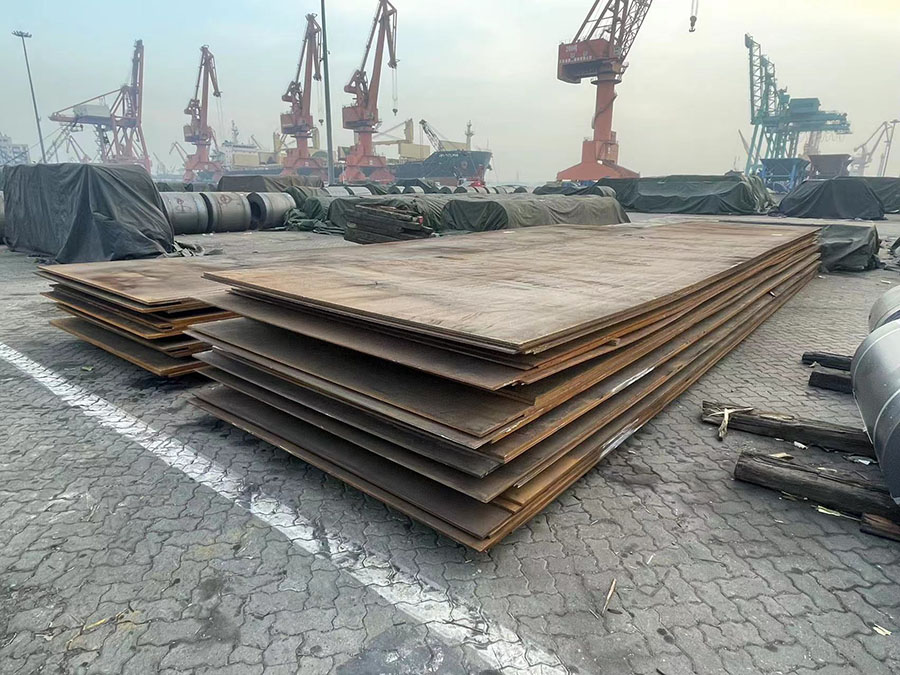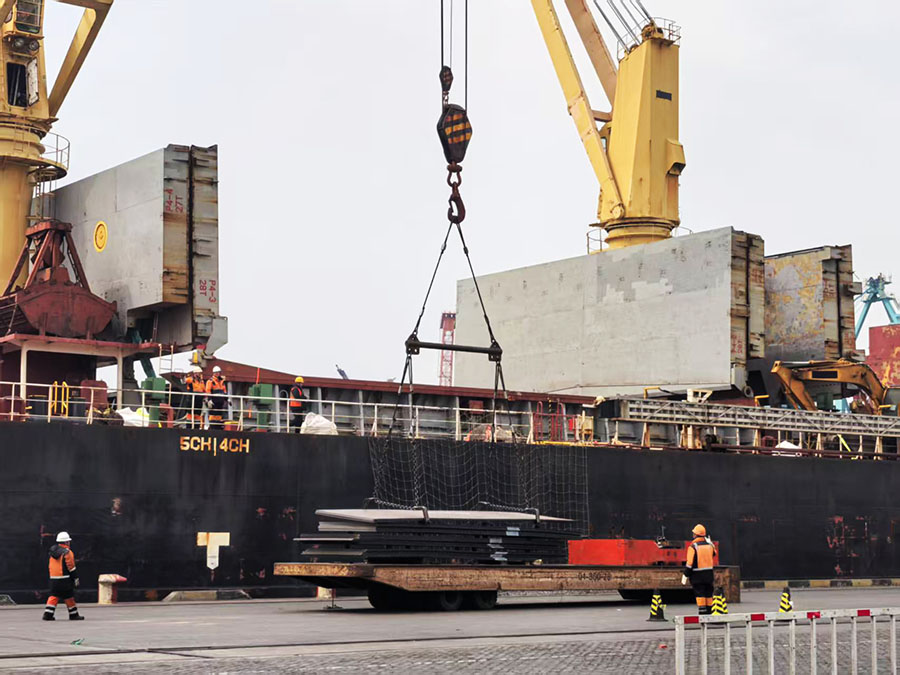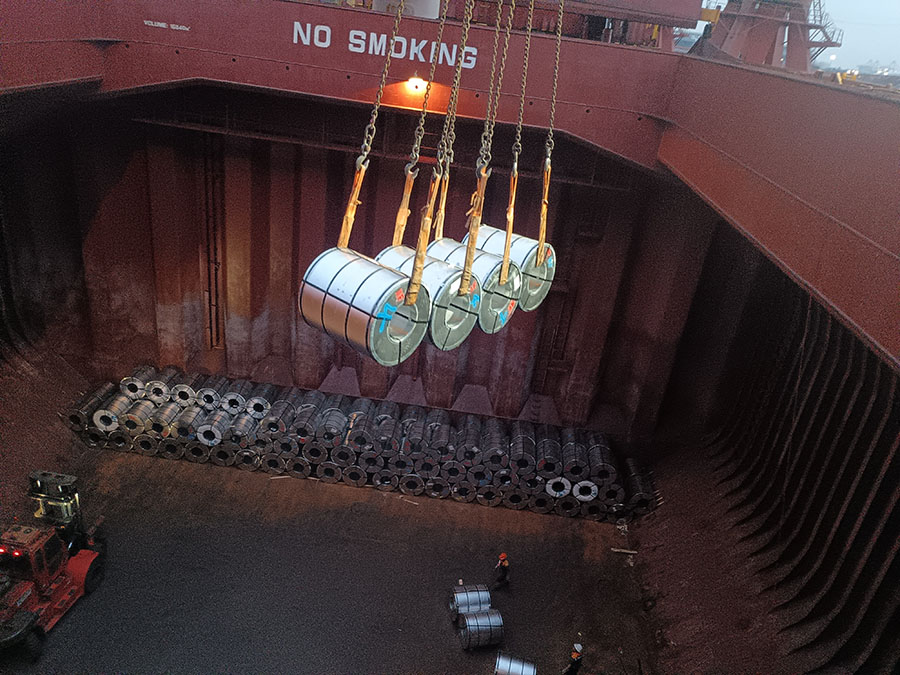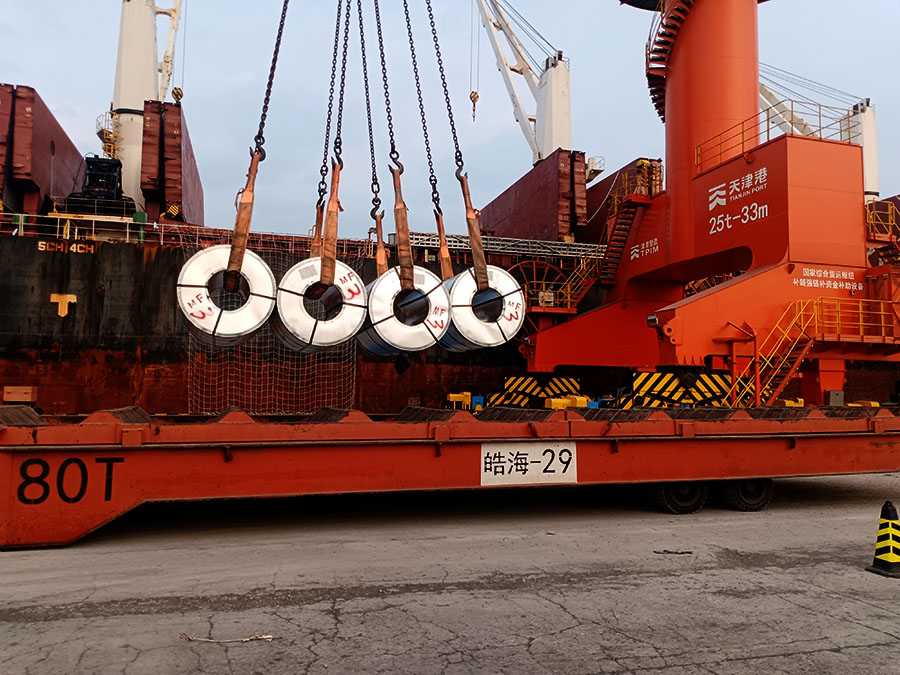
DNV Grade DH36 shipbuilding steel plates are high-strength structural steel plates certified by DNV (Det Norske Veritas) for shipbuilding applications. They offer excellent low-temperature toughness, tensile strength, weldability, and resistance to saltwater corrosion, and are widely used in the global shipbuilding and offshore engineering sectors. Our company supplies DNV Grade DH36 shipbuilding steel plates in a full range of specifications, including hot-rolled, TMCP, and normalized conditions. All products have undergone rigorous inspection and certification by DNV, meet the highest international standards for offshore engineering, and are suitable for medium- to large-sized ocean-going vessel hulls, offshore platforms, and coastal engineering structures.
Certification :
DNV RulesGrade :
DNV Grade DH36 (NV D36)Thickness :
5.0 - 150.0 mmWidth :
1500.0 - 4000.0 mmLength :
6000.0 - 18000.0 mmSpecial thickness, width, and length can be negotiated separately.
We also provide customized processing services.If you have any questions, please contact us.
DNV Grade DH36 is a high-strength, low-alloy shipbuilding structural steel plate certified by Det Norske Veritas (DNV). It features stable mechanical properties, excellent weldability and corrosion resistance, as well as outstanding low-temperature impact toughness.
This steel plate undergoes rigorous smelting, controlled rolling, and non-destructive testing, resulting in a dense and uniform microstructure, low impurity content, high dimensional accuracy, and excellent structural stability. It effectively withstands harsh operating conditions such as extreme temperature fluctuations, the impact of ocean waves, long-term seawater corrosion, and high stress loads, ensuring the safety and service life of critical structures in ocean-going and coastal vessels, offshore platforms, and other marine engineering equipment. It is one of the core materials used in high-end marine engineering equipment.
DNV: Certified by Det Norske Veritas (DNV)
D: Stands for “Quality Grade,” indicating that the steel has passed an impact test at -20°C
H: Stands for “High Strength”
36: Stands for “Strength Grade,” indicating that the minimum yield strength of the steel is 315 MPa (≈ 32 kgf/mm²)
| Product | DNV Grade DH36 Shipbuilding Steel Plate |
|---|---|
| Certification | DNV |
| Grade | DH36 |
| Material Category | Heigh-Strength Structural Steel for Ship and Ocean Engineering |
| Thickness | 5 - 150 mm |
| Width | 1500 - 4000 mm |
| Length | 6000 - 18000 mm |
| Delivery Conditions | Hot Rolled (HR), Controlled Rolled (CR), Normalized (N), Thermo-Mechanical Controlled Processed (TMCP), Quenched and Tempered (Q+T). |
| Surface Conditions | The surface is in its original condition; surface treatments such as sandblasting, rust removal, oiling and painting are available. |
| Testing | Tensile test, Charpy V-notch impact test, Ultrasonic testing (UT), Z-direction property test (Grades Z15/Z25/Z35), Dimensional inspection. |
| Applications | It is primarily used in critical load-bearing hull structures of deep-sea cargo ships, oil tankers, and container ships operating in cold waters, as well as in high-load, low-temperature marine engineering load-bearing components such as offshore platforms in cold regions, offshore wind turbine foundations, and polar maritime equipment. |
| MOQ | 5 tons (small orders can be negotiated). |
| Delivery Time | 15 - 20 days after order confirmation (urgent orders accepted). |
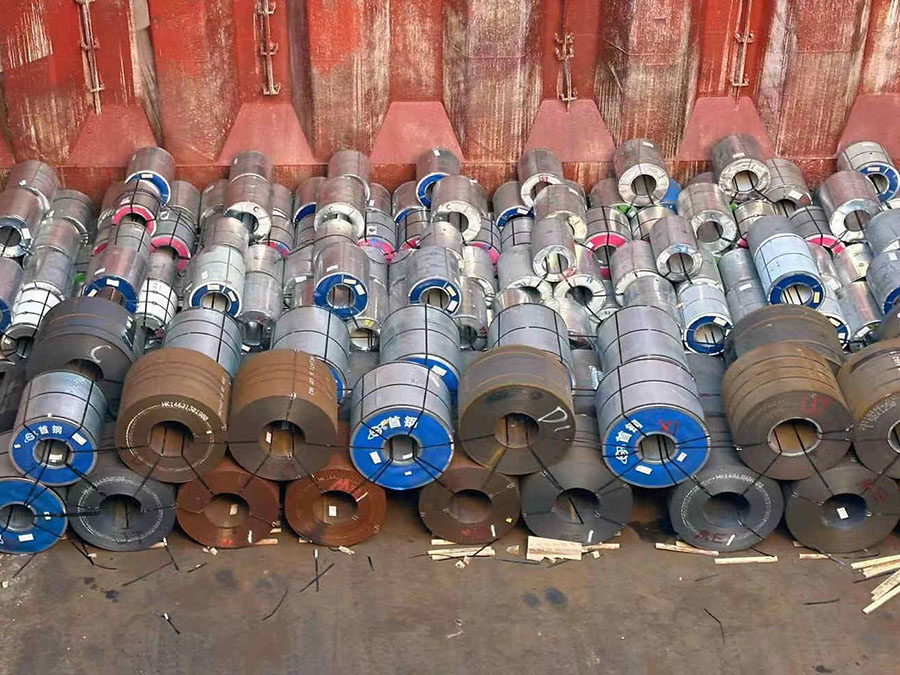
| Packaging | Standard export packaging for sea transport, or as required. |
| Country of Origin | China |
| Grade | C | Si | Mn | P | S | Cu | Cr | Ni | Nb | V | Ti | Mo | Als |
|---|---|---|---|---|---|---|---|---|---|---|---|---|---|
| NV D36 | ≤ 0.18 | ≤ 0.50 | 0.90 - 1.60 | ≤ 0.025 | ≤ 0.025 | ≤ 0.35 | ≤ 0.20 | ≤ 0.40 | 0.02 - 0.05 | 0.05 - 0.10 | ≤ 0.02 | ≤ 0.08 | ≥ 0.015 |
| Thickness (mm) | 5 - 50 | 50 - 150 |
|---|---|---|
| Typical CEV (wt %) | ≤ 0.38 | ≤ 0.40 |
Calculation formula (IIW): CEV = C + Mn/6 + (Cr + Mo + V)/5 + (Ni + Cu)/15
| Grade | Yield Strength (ReH), MPa | Tensile Strength (Rm), MPa | Elongation (A), % |
|---|---|---|---|
| NV D36 | ≥ 355 | 490 - 630 | ≥ 21 |
| Grade | Thickness, mm | Temperature, ℃ | Impact Energy, KV2 / J | |
|---|---|---|---|---|
| Longitudinal | Transverse | |||
| NV D36 | ≤ 50 | - 20 | ≥ 34 | ≥ 24 |
| > 50 - 70 | - 20 | ≥ 41 | ≥ 27 | |
| > 70 - 150 | - 20 | ≥ 50 | ≥ 34 | |
Suitable for ultra-large container ships, Cape-size bulk carriers, VLCC/ULCC oil tankers, etc.
Application areas: High-strength decks, bottom plates, outer side plating, stem posts, cargo hold longitudinal bulkheads, ribs, longitudinal frames, and other primary load-bearing structures.
Application Areas: Deck load-bearing zones, watertight bulkheads, and side wave-resistant structures.
Conventional ocean-going vessels operating on routes in the North Atlantic, North Sea, and winter North Pacific
Application Areas: Critical load-bearing areas throughout the hull.
Polar auxiliary icebreakers, polar cruise ships, and polar research vessels
Application Areas: Hull plating, ice-zone stiffeners, and icebreaking bow support structures.
LNG carriers
Application Areas: Support frames for secondary shielding layers in cargo holds and deck bases in cryogenic zones.
Tugs, offshore supply vessels, dredgers, salvage and rescue vessels, etc.
Application Areas: Deck crane bases, hull outer shells, load-bearing bases for operational equipment.
Application Areas: Jack-up legs, main support trusses, top decks, thick plates at joint connections, and water-barrier casing support structures.
FPSOs (Floating Production, Storage, and Offloading units), semi-submersible drilling platform floats, offshore floating production and storage vessels, etc.
Application Areas: Subsea oil and gas pipeline supports, riser clamps, subsea manifold bases, pipeline protection structures, etc.
Application Areas: Monopile foundations, transition sections, support structures for the lower sections of tower cylinders in low-temperature sea-level zones, and decks and columns of offshore step-up substations.
Application Areas: Subsea foundations, load-bearing hulls of floating power generation platforms.
Offshore patrol vessels, auxiliary military supply ships, etc.
Application Areas: Secondary load-bearing structures of the hull, and bases for deck equipment.
The entire product line is certified by Det Norske Veritas (DNV), comes with complete Material Test Certificates (MTCs), and supports on-site inspections by third-party testing agencies, meeting the compliance and acceptance requirements for global projects.
Maintains good impact toughness in low-temperature marine environments, effectively reducing the risk of brittle fracture in structures and ensuring operational safety under extreme weather conditions.
The steel plates feature a uniform internal microstructure, free of metallurgical defects such as inclusions and cracks, meeting the long-term durability design requirements for offshore engineering.
Through optimized alloy composition, resistance to salt spray and seawater corrosion is enhanced, slowing the material aging process and extending the service life of offshore structures.
Designed with a low carbon equivalent, the steel is compatible with conventional welding processes and offers good bending, cutting, and forming capabilities, making it suitable for complex structural fabrication and efficient on-site construction.
Custom sizing and deep processing services are available to meet diverse engineering needs.
A:
Yes. All of our DNV Grade DH36 shipbuilding steel plates are subject to inspection by third-party organizations such as SGS and BV, and we provide complete official DNV certification documents with each shipment.
A:
DNV Grade DH36 steel plates are widely used in the hull structures of large ocean-going vessels, offshore oil platforms, port facilities, and coastal marine engineering projects. They are particularly suitable for critical load-bearing and fatigue-resistant components in harsh marine environments.
A:
We offer value-added services such as cutting, polishing, surface rust removal, and heat treatment. We can also customize steel plates to special specifications based on customers’ project drawings to meet their specific engineering needs.
A:
The key differences between these three types of shipbuilding steel plates lie in their low-temperature impact toughness and applications:
| Grade | Yield Strength | Tensile Strength | Impact Test Temperature | Applications |
|---|---|---|---|---|
| NV A36 | ≥ 355 MPa | 490–630 MPa | 0°C | Coastal vessels, decks, superstructures, mild-temperature waters |
| NV D36 | ≥ 355 MPa | 490–630 MPa | -20°C | Vessels in cold regions, hull bottoms, bulkheads |
| NV E36 | ≥ 355 MPa | 490–630 MPa | -40°C | Arctic vessels, offshore platforms, low-temperature marine structures |
Note: Do not substitute grades arbitrarily; adhere to DNV design temperature requirements.
A:
Both are high-strength structural steel plates for shipbuilding with a yield strength of at least 355 MPa, in compliance with DNV regulations. The key difference lies in the minimum service temperature:
AH36: Design operating temperature ≥ 0°C, impact test temperature 0°C; suitable for warm waters.
DH36: Offers superior low-temperature toughness, with an impact test temperature of -20°C, and is suitable for cold waters.
– We offer free samples and bespoke solutions. Please feel free to enquire about our latest prices and volume discounts.
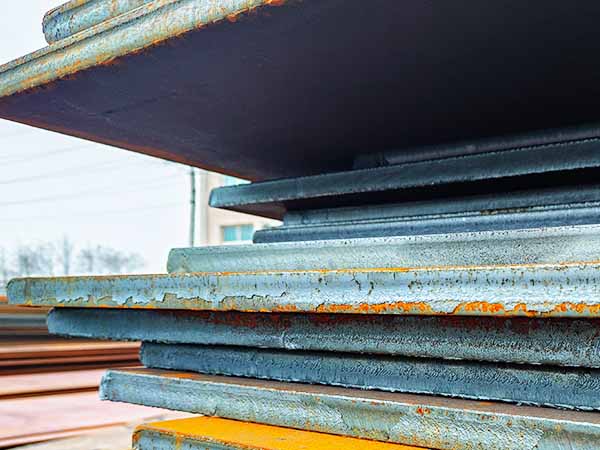
Yuxin Steel provides high-quality steel products to customers in more than 20 countries worldwide.
Contact Info
Would you like to know more about our offers? Please feel free to contact us.