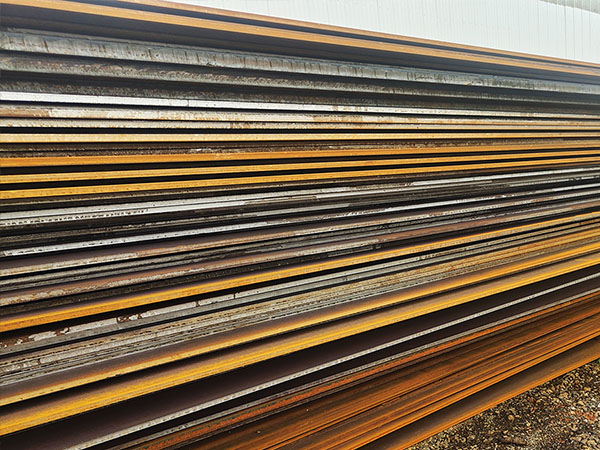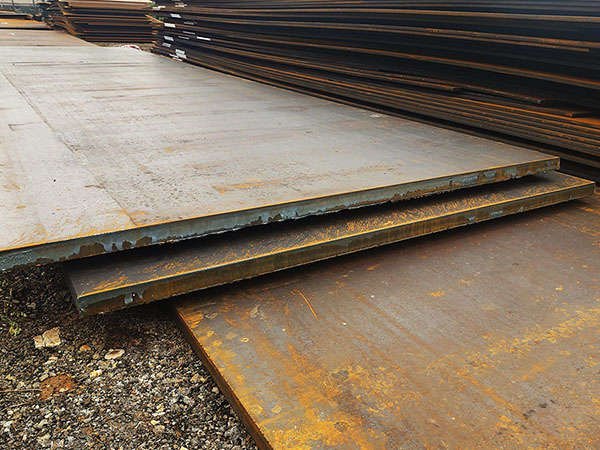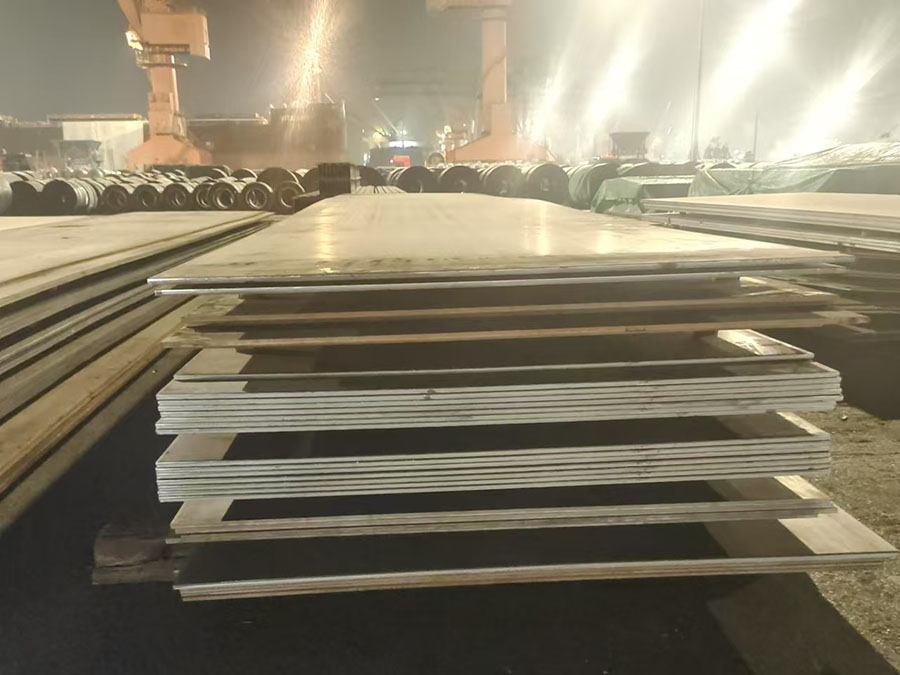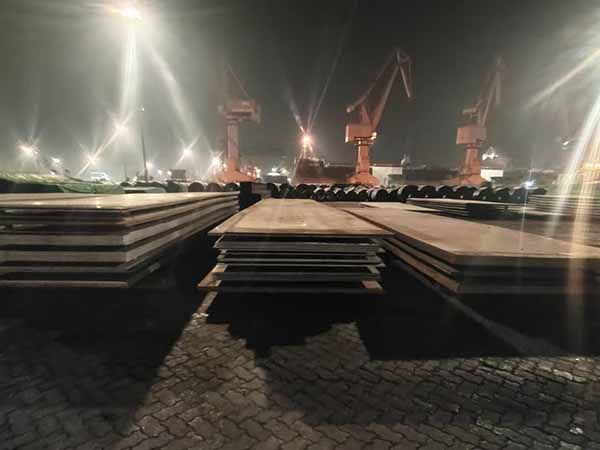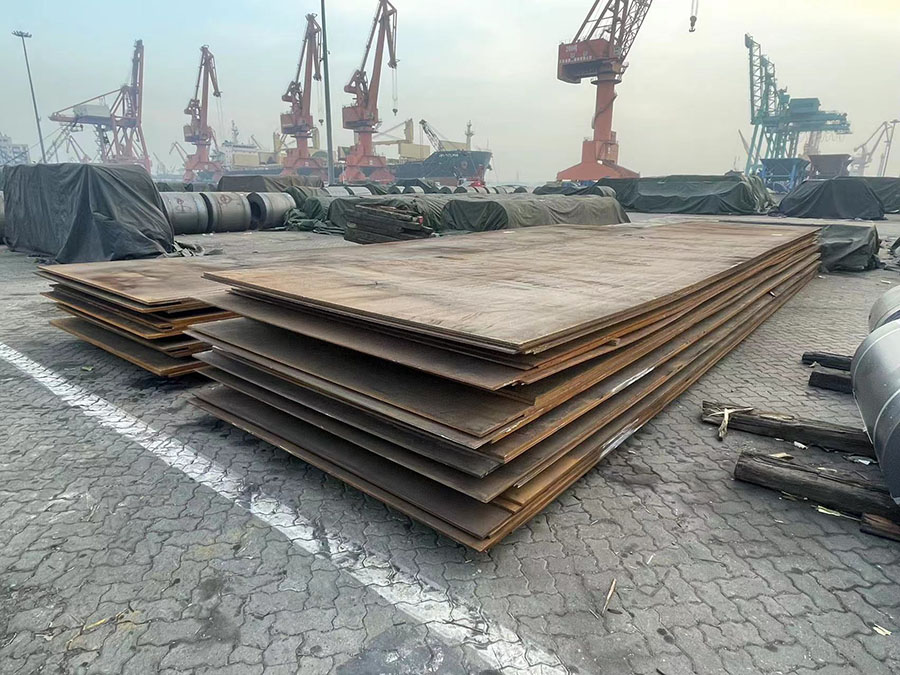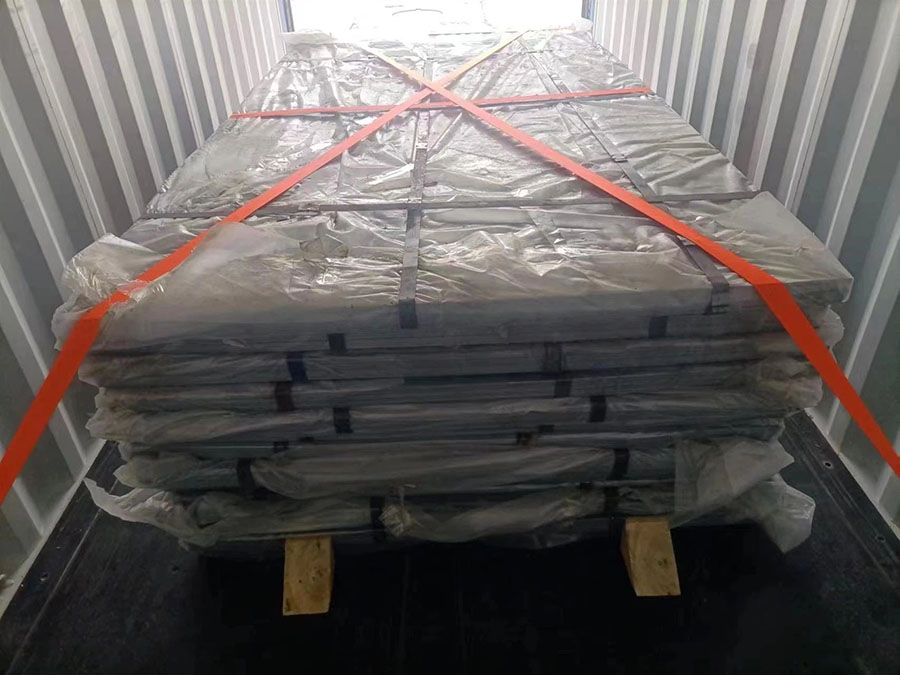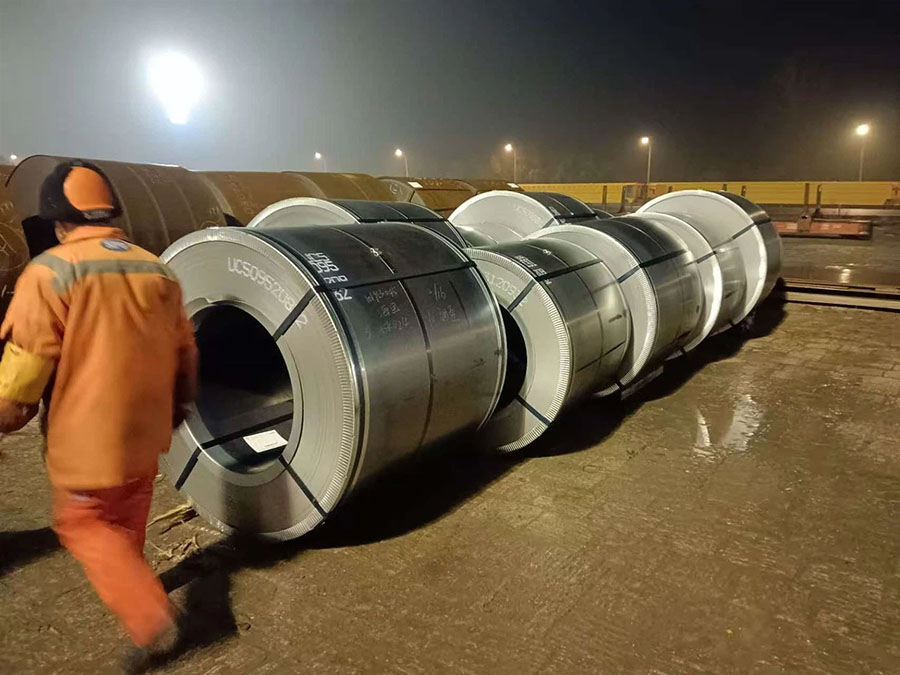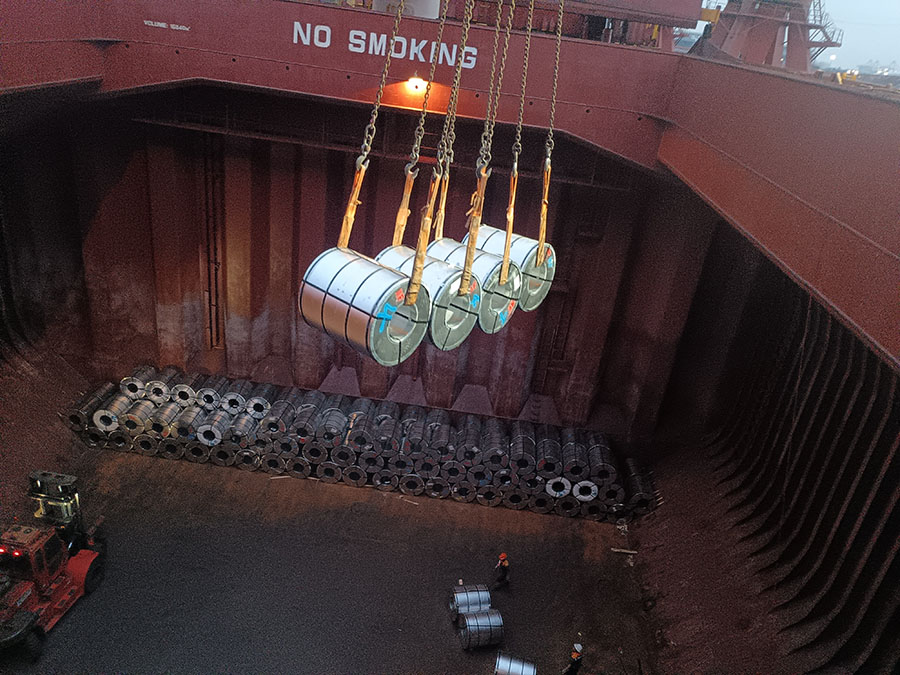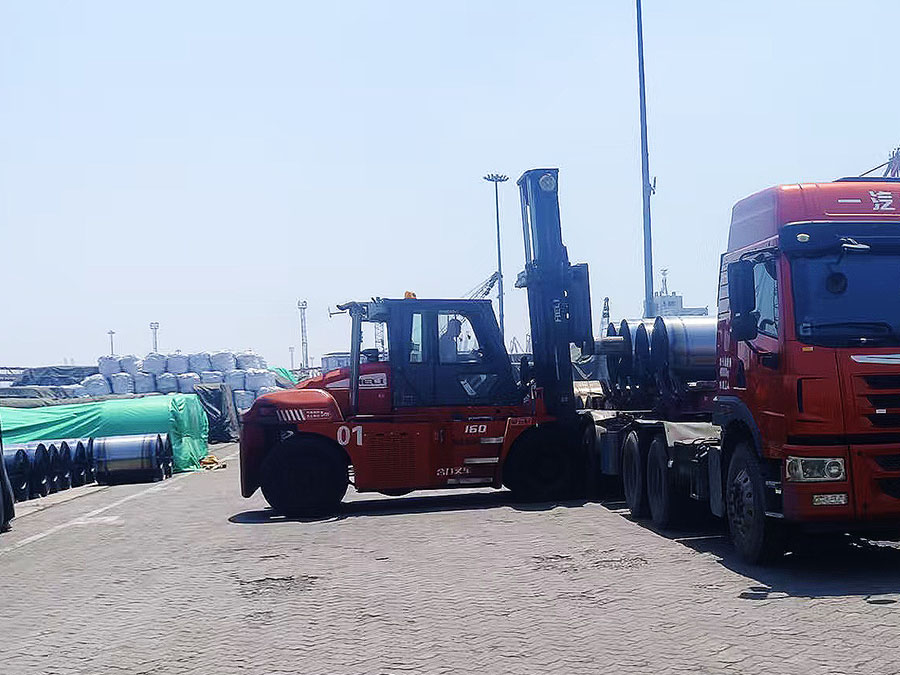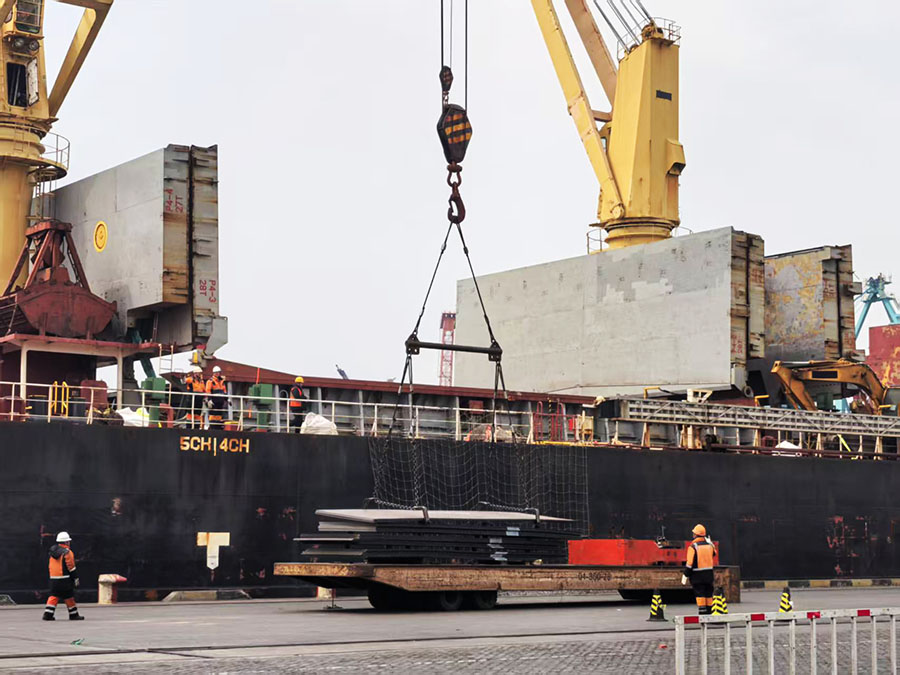
EN 10025-6 S890QL is a high-strength structural steel compliant with European standards
Standard :
EN 10025-6Grade :
S890QL1Thickness :
3 - 100 mmWidth :
1500 - 2500 mmLength :
3000 - 12000 mmSpecial thickness, width, and length can be negotiated separately.
We also provide customized processing services.If you have any questions, please contact us.
EN10025-6 S890QL1 is a high-strength structural steel that complies with European standards, primarily used in engineering fields with demanding requirements for material strength, toughness, and weldability.
Standard and Grade Designation
1. Standard: EN 10025-6
EN10025 is a series of standards developed by the European Committee for Standardization (CEN) for "Hot-rolled products of structural steels." EN10025-6 specifically applies to high-strength structural steels in the quenched and tempered condition, with the following key features:
Applicable steel grades: High-strength steels with a yield strength ≥ 690 MPa;
Delivery condition: Quenched and Tempered (Q&T), achieving a balance of high strength and toughness through heat treatment;
Key requirements: Emphasis on low-temperature impact toughness, weldability, and dimensional accuracy, making it suitable for extreme working conditions (e.g., low temperatures, heavy loads, dynamic loads).
2. Grade: S890QL1
The grade name S890QL provides specific information about the steel's mechanical properties:
S (Structural Steel): The English abbreviation for structural steel, indicating its use for load-bearing structures.
890: Represents a minimum yield strength of 890 MPa, a core metric measuring a material's resistance to deformation. It falls under the category of "ultra-high-strength steel" (yield strength > 690 MPa qualifies as ultra-high strength).
Q (Quenched and Tempered): Indicates that the material has undergone "quenching + tempering" heat treatment, a critical process to achieve a balance between high strength and toughness—quenching enhances hardness and strength, while tempering reduces brittleness and ensures toughness.
L: Stands for Low temperature impact toughness. This means the steel is guaranteed to have good notch toughness (resistance to brittle fracture) at temperatures as low as -60°C or -40°C, depending on the sub-grade and thickness.
1: This suffix is specific to the "L" designation and indicates a stricter requirement for impact energy. S890QL must achieve a higher impact energy (typically 50J) at the low temperature than the standard S890Q grade (which is tested at -40°C).
Sub-grades for Impact Toughness:
The designation is often followed by a letter and number indicating its impact toughness at a specific temperature:
S890QL: Impact tested at -40°C
S890QL1: Impact tested at -60°C
Key Characteristics and Properties
The most notable feature of S890QL1 is its "balance of high strength and high toughness," along with excellent weldability and machinability. Specific details are as follows:
Ultra-High Strength: Yield strength ≥ 890 MPa, tensile strength ranging from 940 to 1100 MPa, far exceeding that of ordinary structural steels (such as Q235 and S355), significantly reducing structural weight.
Excellent Low-Temperature Toughness: Maintains high impact absorption energy even in low-temperature environments (typically -40°C, subject to specific order requirements), preventing brittle fracture at low temperatures. Suitable for cold regions or low-temperature applications.
Good Weldability: By strictly controlling the carbon equivalent (Ceq) and welding crack susceptibility index (Pcm), combined with appropriate welding processes (such as preheating and post-heating), welding defects can be minimized, meeting the welding requirements of large structures.
Uniform Mechanical Properties: The quenching and tempering process ensures a uniform internal microstructure of the steel, with minimal performance differences across various thickness directions, ensuring high reliability.
| Grade | EN10025-6 S890QL1 | |||||||||
|---|---|---|---|---|---|---|---|---|---|---|
| Element | C | Si | Mn | P | S | Cr | Ni | Mo | B | Nb+V+Ti |
| Content (Max, %) | 0.20 | 0.80 | 1.70 | 0.020 | 0.010 | 1.50 | 2.00 | 0.70 | 0.005 | 0.15 |
Carbon (C): Maintained at a low level to balance strength and weldability while avoiding welding cracks.
Alloying elements (Cr, Mo, Ni, V): Enhance strength through solid solution strengthening and precipitation strengthening, while also improving low-temperature toughness.
Harmful elements (P, S): Strictly restricted to reduce steel brittleness and susceptibility to hot cracking.
| Grade | S890QL1 | ||||
|---|---|---|---|---|---|
| Product Thickness (t) [mm] | Yield Strength (ReH) [min, MPa] | Tensile Strength (Rm) [MPa] | Elongation (A5) [min, %] | Impact Energy (KV2) [min] | Hardness (HBW) |
| t ≤ 20 | 890 | 940 - 1100 | 10 | 34J (at -60°C) | 280-360 |
| 20 < t ≤ 30 | 890 | 940 - 1100 | 10 | 34J (at -60°C) | 280-360 |
| 30 < t ≤ 40 | 880 | 920 - 1080 | 10 | 34J (at -60°C) | 280-360 |
| 40 < t ≤ 50 | 860 | 900 - 1060 | 10 | 34J (at -60°C) | 280-360 |
| 50 < t ≤ 65 | 840 | 880 - 1040 | 10 | 34J (at -60°C) | 280-360 |
| 65 < t ≤ 80 | 820 | 860 - 1020 | 10 | 34J (at -60°C) | 280-360 |
| 80 < t ≤ 100 | 800 | 840 - 1000 | 10 | 34J (at -60°C) | 280-360 |
Note: The values vary slightly with thickness, as the cooling rate during quenching differs, affecting the final microstructure.
S890QL1 is primarily used for structural components under heavy load, complex stress, or harsh environments due to its combination of advantages, including "high strength, high toughness, and excellent weldability." Typical applications include:
1. Construction Machinery: Crane booms, excavator arms, bulldozer frames, and aerial work platform booms, reducing weight while enhancing load-bearing capacity.
2. Mining Equipment: Dump truck bodies, crusher frames, and scraper conveyor troughs, offering wear resistance and impact toughness.
3. Special Vehicles: Armored vehicle bodies, bulletproof vehicle chassis, as well as heavy-duty truck frames and trailer main beams.
4. Offshore Engineering: Offshore platform supports, drilling rig structural components, and subsea pipeline laying equipment, suitable for low-temperature and corrosive marine environments (requires anti-corrosion treatment).
5. Large-Scale Steel Structures: Bridge supports, heavy crane beams in industrial plants, and hydraulic engineering gates, reducing component cross-sectional dimensions and lowering foundation load.
Precautions for Procurement and Use
Mill Test Certificate (MTC): When procuring steel, request the Mill Test Certificate from the steel mill to confirm that the chemical composition and mechanical properties comply with EN 10025-6 requirements.
Thickness and Performance Matching: As steel thickness increases, strength and impact toughness may slightly decrease. Ensure that the performance meets the requirements based on the design thickness.
Welding Process: Preheating (typically 80–150°C) is required before welding, and slow cooling or post-weld heat treatment is necessary after welding. The use of low-hydrogen electrodes (e.g., E11018-G) is recommended to avoid cold cracks.
Machinability: Cold processing such as cutting, drilling, and bending can be performed, but tool selection must be carefully considered to avoid excessive deformation.
Substitution and Upgrades: If higher toughness is required, S890QL2 (with a lower impact temperature, e.g., -60°C) under the same standard can be selected. If higher strength is needed, consider upgrading to higher-strength grades such as S960QL or S1100QL.
In summary, EN10025-6 S890QL1 is an ultra-high strength structural steel with excellent performance. Its core value lies in "achieving higher load-bearing capacity with smaller cross-sections," making it a key material for lightweight structural design under heavy loads and harsh environmental conditions.
A:
High-strength low-alloy steel plates offer excellent weldability. As their carbon content is typically low (below 0.2%), they present a lower risk of cracking during welding compared to standard high-strength steel plates and generally do not require complex preheating treatments.
A:
The key advantage of high-strength low-alloy steels is weight reduction. As they offer greater strength, thinner sheets can be used to withstand the same loads, thereby reducing the overall weight of the structure; in the automotive sector, this leads to improved fuel efficiency.
A:
High-strength low-alloy steel (HSLA) is a type of steel in which small amounts of alloying elements (such as niobium, vanadium, titanium or copper) are added to enhance its mechanical properties. Compared to traditional carbon steel, it offers higher yield strength and better corrosion resistance whilst maintaining good weldability and formability.
– We offer free samples and bespoke solutions. Please feel free to enquire about our latest prices and volume discounts.
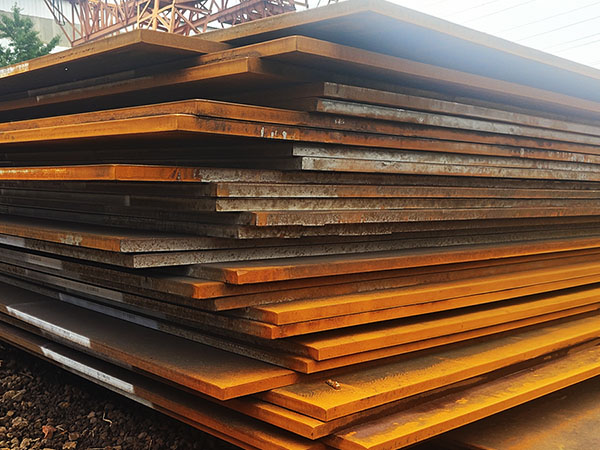
Yuxin Steel provides high-quality steel products to customers in more than 20 countries worldwide.
Contact Info
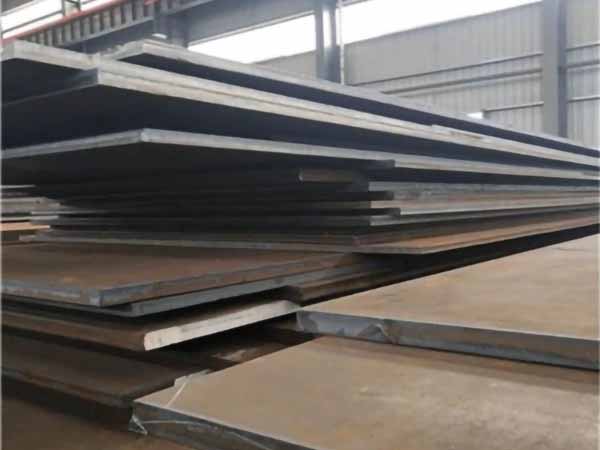
Would you like to know more about our offers? Please feel free to contact us.