Welding Process for CCS Grade EH36 Shipbuilding Steel Plates
- Jun 01, 2026

Knowledge
As a standard-strength shipbuilding steel plate, ABS Grade A is widely used in the structural fabrication of various small and medium-sized vessels, including coastal vessels, inland waterway vessels and barges, owing to its excellent weldability, high cost-effectiveness and good adaptability. It is primarily employed in non-critical structural components, providing stable and reliable structural support for vessels. This article will provide a detailed overview of the specific application scenarios of ABS Grade A shipbuilding steel plates in coastal vessels, analysing their performance through practical case studies to offer scientific guidance for material selection by shipbuilding enterprises.
The application of ABS Grade A shipbuilding steel plates in coastal vessels is primarily concentrated in non-critical structural areas. Taking into account the structural characteristics and operational conditions of coastal vessels, the specific application scenarios mainly include the following aspects:
These encompass key non-load-bearing structures such as cargo hold bulkheads, engine room bulkheads and accommodation bulkheads. They primarily withstand the pressure of the cargo within the holds and structural loads during navigation, without being subjected to excessive stress. The strength and toughness of ABS Grade A steel plates fully meet the service requirements for these components, whilst their cost-effectiveness helps to significantly reduce the overall shipbuilding costs.
This includes the wheelhouse, crew quarters, funnels and similar areas. These structures primarily serve protective, accommodation and equipment installation functions, and are subject to relatively low stresses. ABS Grade A steel plates possess excellent weldability, facilitating the fabrication of complex structural shapes, and are well-suited to the manufacturing requirements of the superstructure.
such as auxiliary support structures at the bow and stern, and secondary deck support areas. These sections are subjected to relatively moderate stresses; the selection of ABS Grade A steel plates allows for effective control of material costs whilst ensuring structural strength meets standards, thereby achieving a balance between strength and economy.
These include auxiliary components such as ship’s railings, ladders and work platforms. Whilst these fittings do not require high structural strength, they demand a high degree of processing flexibility. ABS Grade A steel plates offer excellent workability, allowing for flexible cutting, bending and stamping operations, and can precisely meet the manufacturing requirements of various ship’s fittings.
A coastal dry cargo vessel, 80 metres in length, 12 metres in beam and with a deadweight of 5,000 tonnes, is primarily used for the transport of bulk cargo between coastal ports. The vessel’s bulkheads, superstructure and secondary hull sections were all constructed using ABS Grade A shipbuilding steel plates. The plates were selected with thicknesses ranging from 8 to 20 mm, widths from 1,500 to 2,000 mm, and lengths from 6,000 to 12,000 mm. The welding process employed a combination of submerged arc welding and manual arc welding, strictly adhering to ABS ship welding codes and relevant industry standards throughout. During the vessel’s three years of service, regular inspections have confirmed that the steel plate surfaces show no significant corrosion or deformation, and the welds are free from quality defects such as cracks, porosity or slag inclusions. The hull structure exhibits good stability and fully meets the operational requirements for coastal navigation. Compared to the use of ABS Grade B steel plates, the manufacturing cost of this vessel has been reduced by 8%–12%, effectively achieving a dual improvement in both economy and practicality.
A certain inland dry cargo barge, primarily used for freight transport on inland waterways, features a relatively simple hull structure and experiences relatively moderate stress. The bulkheads and secondary deck supports of this barge are all constructed using ABS Grade A shipbuilding steel plates, with plate thicknesses ranging from 6 to 12 mm. The plates were produced using controlled rolling and controlled cooling processes, and following welding, they underwent a simple coating treatment to protect against the inland waterway environment. Having been in service for two years, the barge has adapted well to the mild navigational environment and water quality conditions of inland waterways. The steel plate surfaces show no significant corrosion or damage, the structural strength of the hull has consistently met standards, and routine maintenance costs remain low. This fully demonstrates the suitability and economic advantages of ABS Grade A steel plates for small and medium-sized vessels.
When using ABS Grade A shipbuilding steel plates in coastal vessels, particular attention must be paid to the following points to ensure effective performance and structural safety:
In coastal environments, seawater and the humid atmosphere exert a corrosive effect on steel plates, particularly on those exposed to the external environment. Coating protection processes compliant with marine industry standards must be adopted, and regular maintenance carried out to extend the service life of the steel plates.
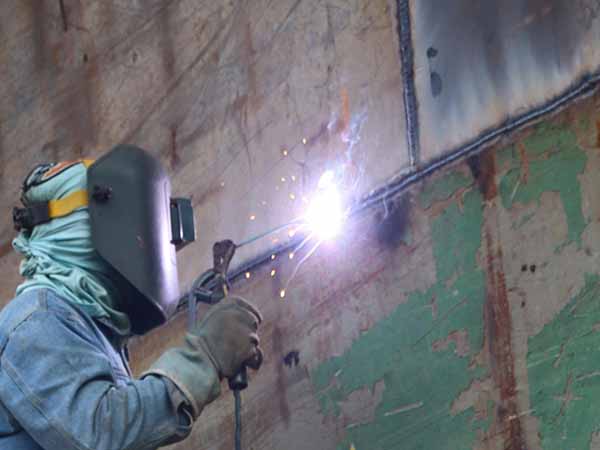
During the welding process, process parameters such as welding current, voltage and welding speed must be strictly controlled. ABS welding specifications must be strictly adhered to, and non-destructive testing of welds must be carried out to eliminate weld defects and ensure welding quality.
ABS Grade A shipbuilding steel plates that have been certified by ABS must be selected. Suppliers must provide complete product inspection certificates, material certificates and other relevant documentation to ensure that the quality of the steel plates meets the compliance requirements for shipbuilding.
Customers choose to engage in long-term cooperation with Yuxin Steel not only because of our high-quality products and services, as well as our strong reputation in the international market, but also due to our experienced one-stop raw material supply and further steel processing capabilities!