Knowledge
Welding Process for CCS Grade EH36 Shipbuilding Steel Plates
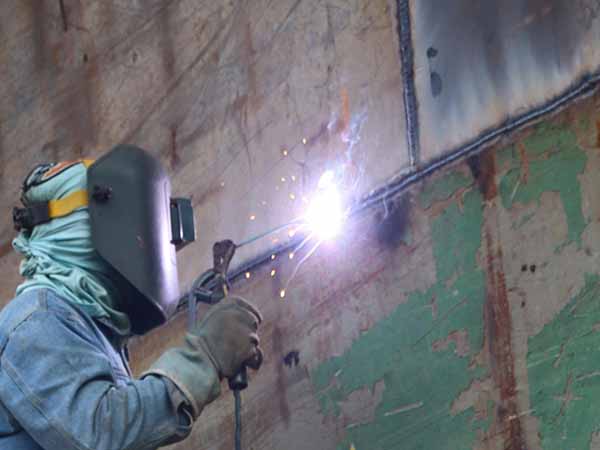
CCS Grade EH36 is a high-strength structural steel plate for marine applications, offering excellent impact toughness at -40°C and good weldability. It is widely used in shipbuilding and offshore engineering structures in extremely cold environments. When performing welding operations, attention must be paid to: hydrogen control, preheating, low heat input, and strict control of interpass temperatures to avoid cold cracks and embrittlement of the heat-affected zone.
Main Application Areas of CCS EH36 Grade Shipbuilding Steel Plates in Offshore Engineering
Thanks to its excellent low-temperature toughness at -40°C, high tensile strength and good resistance to seawater corrosion, CCS Grade EH36 shipbuilding steel plate has been widely adopted across multiple sub-sectors of marine engineering. Capable of withstanding extreme marine environments, CCS EH36 steel plate plays a crucial role in polar shipping, deep-sea resource development and new energy marine engineering.

Common Delivery Conditions for CCS EH36 Shipbuilding Steel Plates
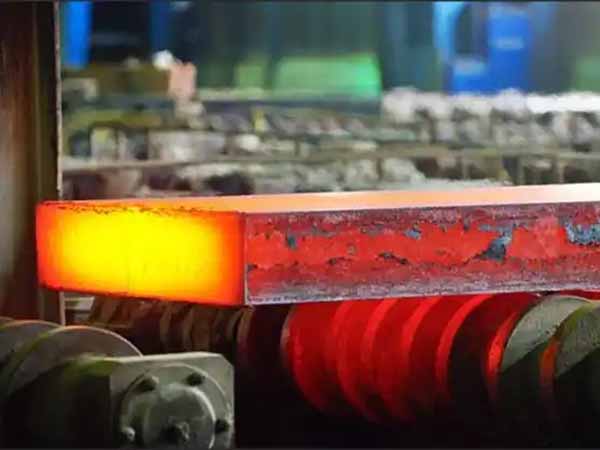
CCS EH36 shipbuilding steel plates have extremely high requirements for low-temperature toughness; therefore, delivery in the hot-rolled condition is generally not permitted. Depending on CCS specifications and the thickness of the steel plate, the common delivery conditions for CCS EH36 high-strength shipbuilding steel plates are TMCP, normalised and quenched and tempered. Additional conditions such as Z-direction property testing, non-destructive testing and surface treatment may also be selected.
Heat Treatment Techniques for CCS EH32 Shipbuilding Steel Plates
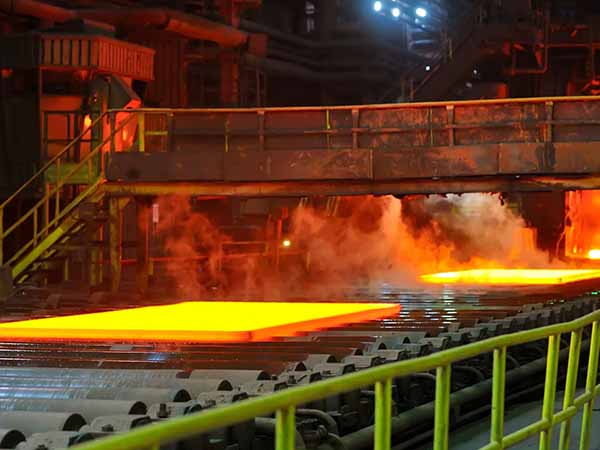
Heat treatment is a key process that determines the mechanical properties, flatness and service life of CCS EH32 shipbuilding steel plates. Improper processing can lead to insufficient low-temperature toughness, uneven hardness and reduced weldability, thereby failing to pass the certification inspection by the China Classification Society (CCS). Currently, two main heat treatment processes are used for CCS EH32 shipbuilding steel plates: normalising and TMCP (Thermomechanical Control Processing).
Equivalent Materials for CCS DH36 Steel
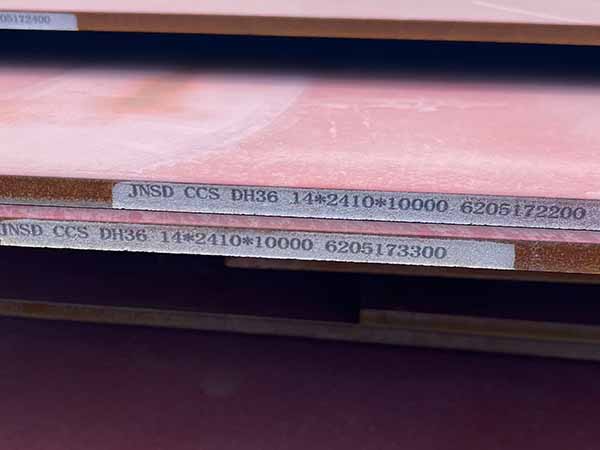
CCS DH36 is a high-strength hull structural steel certified by the China Classification Society (CCS), with core properties including: yield strength ≥355 MPa, tensile strength 490–630 MPa, and impact energy ≥34 J (longitudinal) at –20 °C. It has direct equivalents in the standards of major classification societies worldwide; these grades have essentially identical chemical compositions and mechanical properties and can be used interchangeably, provided that certification from the relevant classification society is provided.