Welding Procedure Specification for ABS Grade AH32 Shipbuild...
- Apr 28, 2026

Knowledge
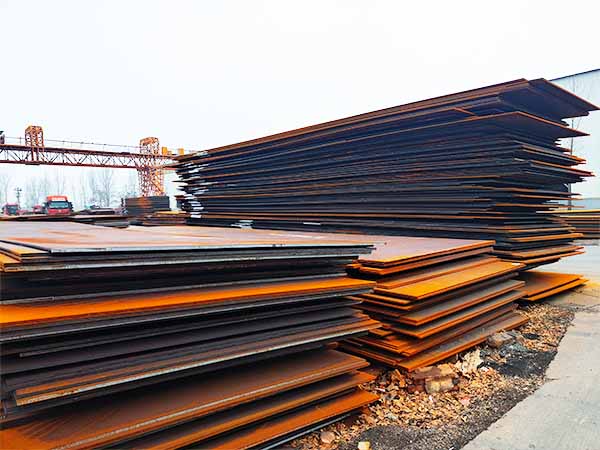
ABS Grade AH32 is a high-strength hull structural steel conforming to the ASTM A131 standard. ABS Grade AH32 steel is designed as a low-carbon, micro-alloyed steel and meets the certification requirements of international classification societies such as ABS, CCS and DNV.
The chemical composition of AH32 is strictly controlled to balance strength, toughness and weldability:
| Element | C | Si | Mn | P | S | Cu | Cr | Ni | Nb | V | Ti | Mo | Als |
|---|---|---|---|---|---|---|---|---|---|---|---|---|---|
| Content | ≤ 0.18 | ≤ 0.50 | 0.90 - 1.60 | ≤ 0.030 | ≤ 0.030 | ≤ 0.35 | ≤ 0.20 | ≤ 0.40 | 0.02 - 0.05 | 0.05 - 0.10 | ≤ 0.02 | ≤ 0.08 | ≥ 0.015 |
Low carbon (C ≤ 0.18%): Reduces carbon equivalent, improves weldability and reduces susceptibility to cold cracking.
High manganese (Mn 0.90–1.60%): Solution strengthening, enhancing strength and low-temperature toughness.
Microalloying (Nb, V): Refines grain size and provides precipitation hardening, significantly improving low-temperature impact toughness and strength.
Low impurities (P, S ≤ 0.030%): Reduces cold and heat brittleness, improving crack resistance.
Carbon equivalent (CEV) ≤ 0.38%: Ensures excellent weldability and prevents cold cracking during welding.
AH32 offers high strength, high toughness and good ductility, meeting the requirements of dynamic loads and low-temperature environments in marine applications:
| Performance Indicator | Standard Requirement | Typical Value | Remarks |
|---|---|---|---|
| Yield Strength (ReH), MPa | ≥ 315 | 320 – 350 | High strength base. |
| Tensile Strength (Rm), MPa | 450 – 570 | 450 – 550 | Balance of strength and toughness. |
| Elongation after Fracture A (%) | ≥ 22 | 22 – 25 | Good plasticity, strong deformation resistance. |
| Impact Toughness (0°C, KV2 / J) | ≥ 31 | 40 – 60 | Excellent low-temperature toughness, suitable for ice zones and cold seas. |
| Cold Bending Performance (180°) | No cracks | Pass | Good cold workability, easy to form. |
Low-temperature toughness: AH32 has an impact energy of ≥34 J at **0°C, with certain grades meeting the low-temperature impact requirements at -20°C**, making it suitable for polar vessels and reinforced structures in ice-prone areas.
High strength-to-weight ratio: High strength allows for thinner plate thickness, reducing the ship’s deadweight and improving cargo capacity and fuel economy.
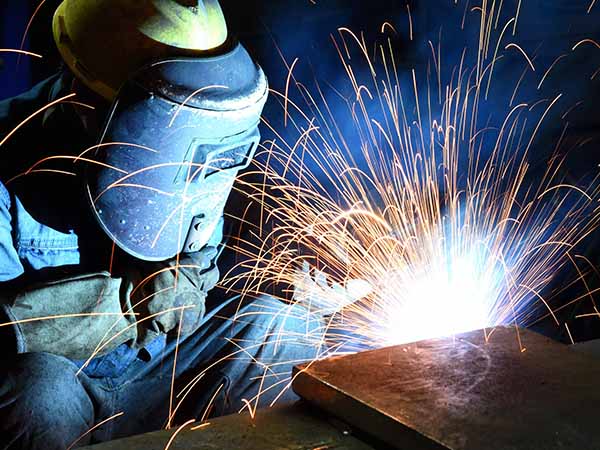
AH32 exhibits excellent weldability. Its low-carbon, low-impurity design combined with microalloying results in a carbon equivalent of ≤0.40%. The use of low-hydrogen welding consumables and appropriate preheating (80–120°C) effectively prevents cold cracks. It is suitable for various welding methods, including manual arc welding, submerged arc welding and CO₂ gas shielded welding.
It can be cold-bent 180° without cracking and is suitable for cold working processes such as shearing, stamping and bending. It exhibits good formability and is suitable for the manufacture of complex ship hull structures.
Heating temperature: 1100–1250°C; final rolling temperature: 800–900°C. Controlled rolling and cooling processes refine the grain structure, enhancing strength and toughness, and ensuring stable properties after hot working.
AH32 is a low-carbon, low-alloy structural steel with moderate corrosion resistance in atmospheric and seawater environments, outperforming ordinary carbon steels (such as A36 and Q235):
Atmospheric corrosion: A dense oxide film forms on the surface, with a corrosion rate of approximately 0.1–0.2 mm/year.
Seawater corrosion: Requires an anti-corrosion coating system (e.g. zinc-rich epoxy primer + topcoat), which can effectively extend service life on offshore platforms and in the waterline zone of ship hulls.
Weather resistance: The addition of small amounts of Cu, Cr and Ni enhances resistance to atmospheric corrosion, making it suitable for open-air decks and superstructures.
High strength: Yield strength ≥315 MPa, approximately 40% higher than standard ship plates (Grade A/B), allowing for reduced plate thickness, lighter hull weight, and improved load-carrying capacity and energy efficiency.
High toughness: Impact energy at 0°C ≥34 J; excellent low-temperature toughness, suitable for vessels operating in ice-covered waters, cold seas and polar regions.
Excellent weldability: Low-carbon, low-impurity + micro-alloyed, with a carbon equivalent ≤0.40%, ensuring good weldability and consistent weld quality.
International certification and mutual recognition: Certified by major classification societies including ABS, CCS, DNV, LR and BV, globally accepted, allowing for flexible procurement and replacement.
Excellent cost-effectiveness: High strength enables thinner plates, reducing material and welding costs; long service life reduces maintenance costs, resulting in low life-cycle costs.
Ship Structure: Hull plating, decks, bulkheads, side structures, and bottom longitudinal and transverse frames.
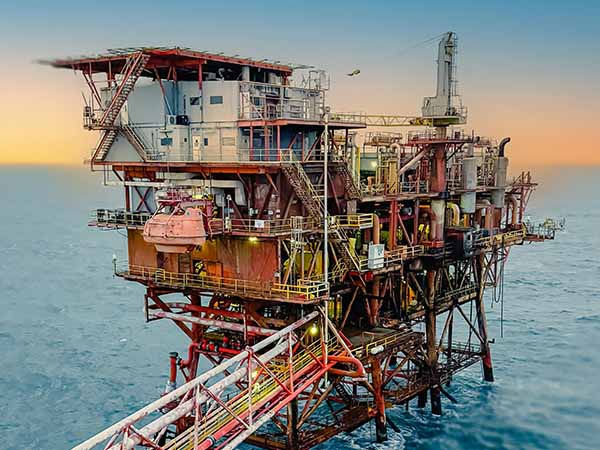
Offshore Engineering: Jack-up platform legs, jackets, platform decks, and module structures.
Specialised Vessels: Bulk carriers, oil tankers, container ships, LNG carriers, polar research vessels, and icebreakers.
Others: Ship repair and construction, port machinery, marine steel structural components, bridge structures (marine environment).
ABS Grade AH32 shipbuilding steel plate achieves an excellent balance of strength, toughness and weldability through low-carbon micro-alloying design and controlled rolling and cooling processes, making it a core material for modern shipbuilding and offshore engineering. Its high strength, toughness at both high and low temperatures, excellent weldability and internationally recognised certification make it widely used in the global shipbuilding and offshore engineering sectors, providing critical support for structural safety, improved energy efficiency and cost control.
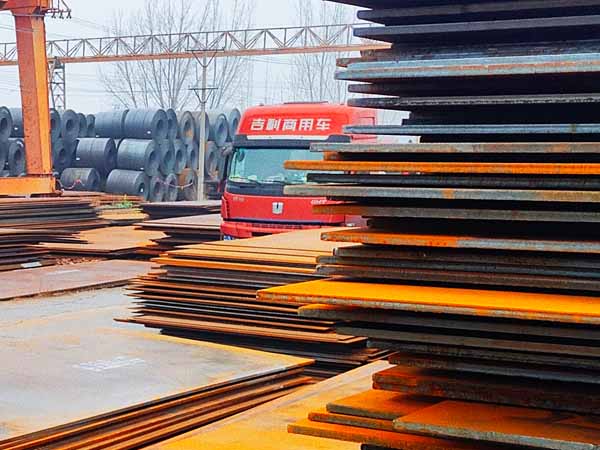
Customers choose to engage in long-term cooperation with Yuxin Steel not only because of our high-quality products and services, as well as our strong reputation in the international market, but also due to our experienced one-stop raw material supply and further steel processing capabilities!