Equivalent material to ABS Grade AH32
- Apr 28, 2026

Knowledge
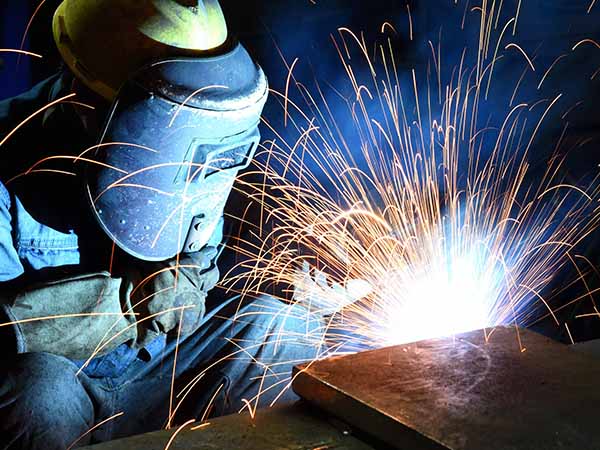
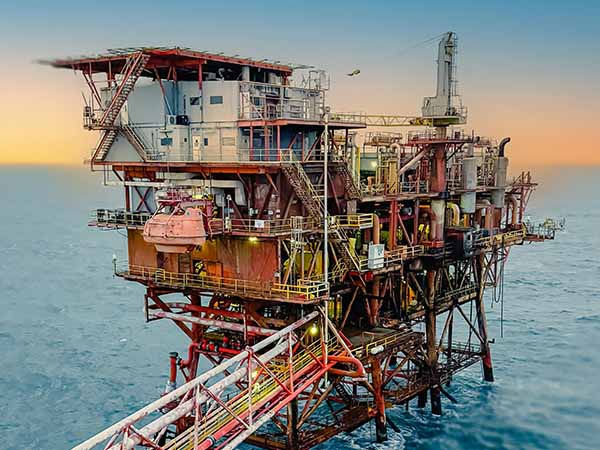
These specifications apply to manual metal arc welding (SMAW), submerged arc welding (SAW) and CO₂ gas shielded arc welding (GMAW) of ABS Grade AH32 (ASTM A131) shipbuilding steel plates, covering butt and fillet welds in hull structures, decks, bulkheads, offshore platforms and other locations.
AH32 has a yield strength of ≥315 MPa; welding consumables must be of equivalent or slightly higher strength and must be accompanied by certificates of approval from classification societies:
| Welding Process | Welding Consumable | Specification | Remarks |
|---|---|---|---|
| SMAW (Shielded Metal Arc Welding) | E7015 | Φ3.2/4.0/5.0 mm | Low-hydrogen type, prevents cold cracking |
| SAW (Submerged Arc Welding) | Wire H10Mn2 + Flux SJ101 | Φ4.0 mm | Class society approved 2Y/3Y |
| GMAW (Gas Metal Arc Welding) | ER50-6 | Φ1.2/1.6 mm | Shielding gas: 80% Ar + 20% CO₂ |
Welding consumable curing requirements: low-hydrogen electrodes 350°C × 1 - 2 h, followed by holding at 100 - 150°C; flux SJ101 250°C × 1 h, to be taken as required.
Plate thickness ≤ 6 mm: I-type groove, butt joint gap 0 - 2 mm.
Plate thickness 6 - 12 mm: V-groove, single-sided 30° - 45°, gap 2 - 3 mm, fillet 1 - 2 mm.
Plate thickness ≥12 mm: Double V-groove (X-groove), single-sided 30°, gap 2 - 4 mm, fillet 2 - 3 mm.
Groove requirements: Smooth, free from burrs, cracks and scale; misalignment ≤ 1/10 of plate thickness and ≤ 3 mm.
Rust, oil, paint and scale must be removed to a metallic finish within a 20 mm radius on either side of the groove to prevent porosity and slag inclusion.
Ambient temperature < 5°C: Preheat the entire plate to ≥80°C.
Plate thickness ≥12 mm: Preheat to 80 - 120°C.
Plate thickness ≥40 mm: Preheat to 100 - 150°C.
Interpass temperature: 80 - 150°C; exceeding 150°C is strictly prohibited (to prevent grain coarsening).
Temperature measurement method: Surface thermocouple or temperature pen, measured 50 mm from the groove edge.
Use E7015 (Φ3.2 mm), weld length 30 - 50 mm, spacing 200 - 300 mm, tack welds ≤ 2/3 of the design value, free from defects such as porosity and cracks.
| Electrode Diameter (mm) | Welding Current (A) | Arc Voltage (V) | Welding Speed (cm/min) |
|---|---|---|---|
| 3.2 | 90 - 130 | 22 - 26 | 8 - 12 |
| 4.0 | 140 - 190 | 24 - 28 | 10 - 15 |
| 5.0 | 200 - 250 | 26 - 30 | 12 - 18 |
Welding positions: Flat (F), Vertical (V), Horizontal (H), Overhead (O); reduce current by 10 - 15% for vertical and overhead positions.
| Welding Wire Diameter (mm) | Welding Current (A) | Welding Voltage (V) | Welding Speed (cm/min) | Wire Extension (mm) |
|---|---|---|---|---|
| 4.0 | 500 - 650 | 28 - 34 | 40 - 60 | 25 - 35 |
| Welding Wire Diameter (mm) | Welding Current (A) | Welding Voltage (V) | Welding Speed (cm/min) | Gas Flow Rate (L/min) |
|---|---|---|---|---|
| 1.2 | 180 - 240 | 24 - 28 | 15 - 25 | 15 - 25 |
Arc striking and extinguishing: Use arc striking and extinguishing plates, dimensions ≥100×100 mm; remove and grind flat after welding.
Welding motion: Flat position - straight or slight oscillation; vertical position - upward motion, controlling the size of the molten pool; horizontal position - short arc with slight oscillation to prevent undercut.
Multi-pass welding: Each weld pass shall be ≤4 mm thick; slag shall be thoroughly removed between passes to prevent slag inclusion; interpass temperature shall be strictly controlled at 80 - 150°C.
Welding sequence: Weld short seams first, then long seams; weld vertical seams first, then horizontal seams; perform symmetrical welding to minimise welding distortion and residual stress.
The weld bead shall be uniform in shape, free from defects such as porosity, cracks, undercut, lack of fusion and slag inclusions; the fillet dimensions shall comply with design requirements, with a fillet height of 0 - 3 mm and a width variation of ≤2 mm.
Butt welds: 100% UT (ultrasonic testing) + 20% RT (radiographic testing).
Fillet welds: 100% MT (magnetic particle testing) or PT (penetrant testing).
Defect removal: Carbon arc gouging or grinding with a grinding wheel; the removal area shall extend until the defect is completely eliminated and a metallic sheen is exposed.
Repair welding: To be carried out in accordance with the original WPS, with the preheating temperature increased by 20 - 30°C; the repaired area shall undergo NDT testing again.
7.3 Welding slag and waste electrodes must be sorted and recycled to prevent environmental pollution.
The welding process for ABS Grade AH32 shipbuilding steel plates must strictly adhere to four core principles: the use of low-hydrogen welding consumables, appropriate preheating, control of interpass temperatures, and multi-pass welding. Based on classification society regulations and practical experience, these procedures may be directly applied to the preparation of shipyard WPSs and on-site construction, thereby effectively ensuring weld quality and structural safety.
Customers choose to engage in long-term cooperation with Yuxin Steel not only because of our high-quality products and services, as well as our strong reputation in the international market, but also due to our experienced one-stop raw material supply and further steel processing capabilities!