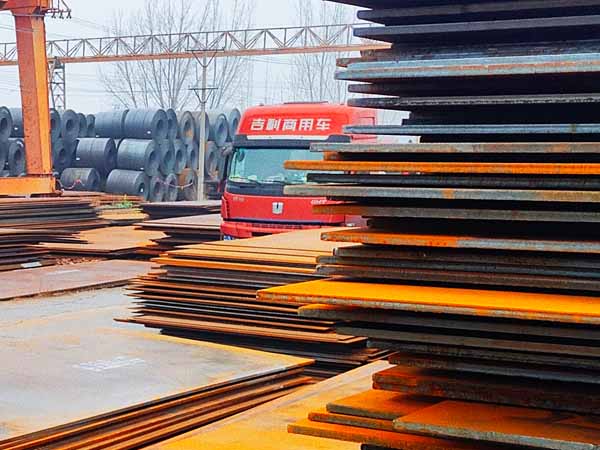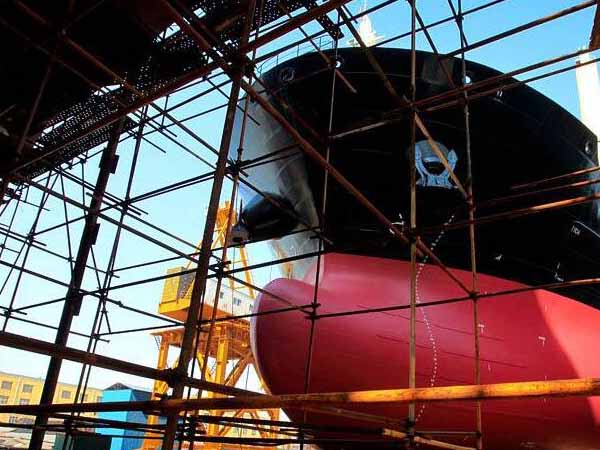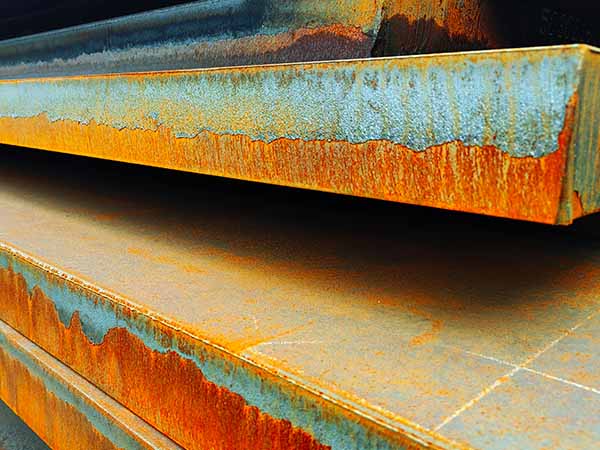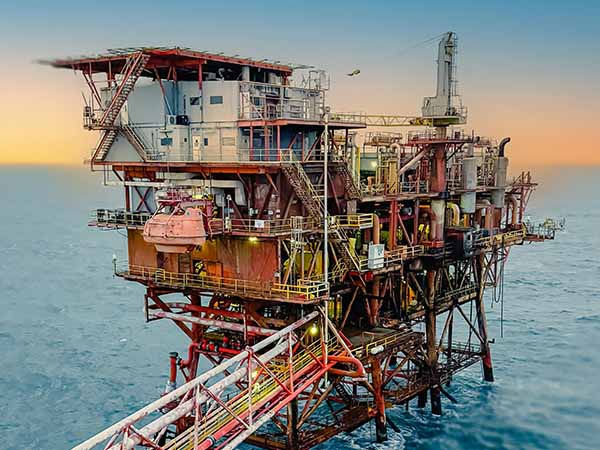
Applications of ABS Grade E marine steel plates: hulls, deck...
- Apr 27, 2026

Knowledge
| Parameter | ABS Grade A | ABS Grade E |
|---|---|---|
| Impact Test Temperature | 20°C (room temperature) | -40°C (cold climate) |
| Impact Energy Requirement | Not required | ≥ 27J |
| Yield Strength | ≥ 235 MPa | ≥ 235 MPa |
| Tensile Strength | 400 - 520 MPa | 400 - 520 MPa |
Judging by the mechanical properties tables, the values for Grade A and Grade E are essentially identical. However, the low-temperature impact requirement at –40°C places Grade E in a completely different technical category.
To achieve the required toughness at –40°C, Grade E requires much stricter control over its chemical composition:
| Grade | C | Si | Mn | P | S | Cu | Cr | Ni | Als |
|---|---|---|---|---|---|---|---|---|---|
| ABS Grade A | ≤ 0.21 | ≤ 0.50 | ≥ 0.50 | ≤ 0.035 | ≤ 0.035 | ≤ 0.35 | ≤ 0.30 | ≤ 0.30 | - |
| ABS Grade E | ≤ 0.18 | ≤ 0.35 | ≥ 0.70 | ≤ 0.025 | ≤ 0.025 | ≤ 0.35 | ≤ 0.30 | ≤ 0.30 | ≥ 0.015 |
Grade A does not have strict requirements regarding grain refinement and may be produced using the boiling steel process.
Grade E must utilise fully killed steel and control grain size through aluminium treatment, thereby achieving fine ferritic grains in the hot-rolled or TMCP (Thermomechanical Control of Processing and Cooling) condition.
Grade A: Typically supplied in the hot-rolled condition, requiring no special heat treatment.
Grade E: Typically requires delivery in a normalised or TMCP condition to ensure uniformity of core properties.
Selecting Grade E entails a certain sacrifice in cost-effectiveness (costs are 15%–25% higher) in exchange for the following critical assurances:
Safety of the vessel when operating on polar routes or in the North Atlantic during winter
Resistance to brittle fracture in outer plating and side structures
Compliance with classification society requirements for special inspections of critical structural components
Grade A must not be used as a substitute for Grade E in side plating intended for low-temperature environments.
Although short-term mechanical performance tests may indicate compliance, the risk of brittle fracture will increase significantly under the low-temperature impact conditions corresponding to the design service conditions.
Customers choose to engage in long-term cooperation with Yuxin Steel not only because of our high-quality products and services, as well as our strong reputation in the international market, but also due to our experienced one-stop raw material supply and further steel processing capabilities!