Key Differences Between ABS Grade E and A/B/D Shipbuilding P...
- Apr 25, 2026

Knowledge
| Grade | Temperature, ℃ | Impact Energy, KV2 / J | Typical Application | |
|---|---|---|---|---|
| Longitudinal | Transverse | |||
| ABS A | 20 | - | - | Indoor structures, warm seas |
| ABS B | 0 | 27 | 20 | General hulls, moderate climates |
| ABS D | -20 | 27 | 20 | Ocean-going hulls, cold but non-polar seas |
| ABS E | -40 | 27 | 20 | LNG carriers, polar vessels, cold offshore platforms |
Although the yield strength of all four grades (A, B, D and E) is 235 MPa and the tensile strength ranges from 400 to 520 MPa, only Grade E meets the impact toughness requirements at -40°C, making it indispensable for low-temperature and polar marine engineering applications. Furthermore, ABS Grade E imposes stricter limits on phosphorus (P) and sulphur (S) content to reduce the risk of brittle fracture in cold environments.
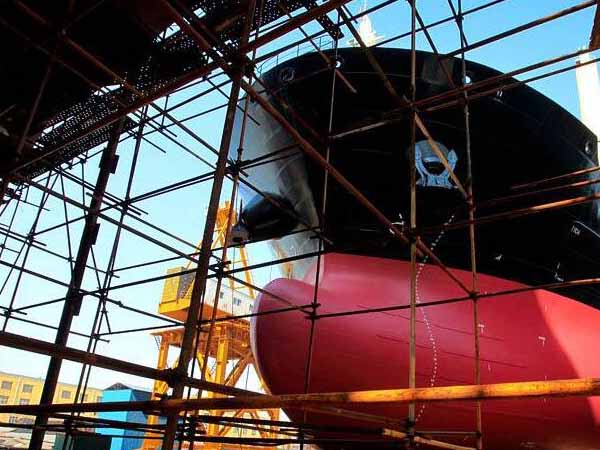
For shipyards and marine engineers, selecting ABS Grade E ensures the safe operation of structures under extreme low-temperature conditions and effectively prevents brittle fracture incidents. Materials of this grade are widely used in critical hull structural components, liquefied natural gas (LNG) tank support structures and polar offshore equipment, where low-temperature performance is a core, non-negotiable parameter in engineering design.
Customers choose to engage in long-term cooperation with Yuxin Steel not only because of our high-quality products and services, as well as our strong reputation in the international market, but also due to our experienced one-stop raw material supply and further steel processing capabilities!