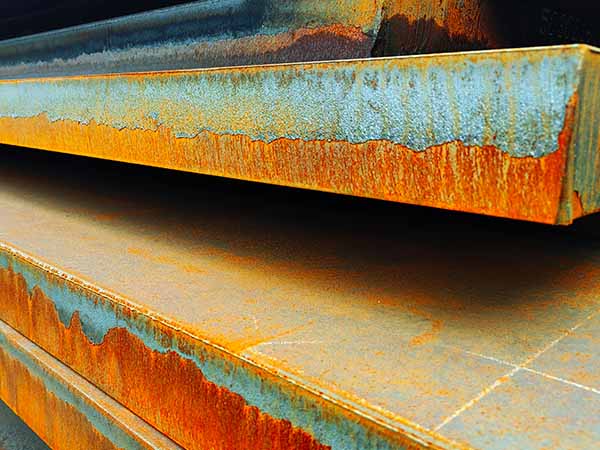
Dimensional tolerances for ABS Grade D shipbuilding plates
- Apr 24, 2026

Knowledge
ABS Grade D marine steel plates are low-carbon steels with good weldability, and a variety of welding methods can be employed to suit different scenarios in shipbuilding. Common methods include:
This method offers operational flexibility and is suitable for field welding, local repairs and welding of complex joints. Matching low-carbon steel electrodes, such as E4316 or E7016 (compliant with AWS E6016/E7016), should be selected to ensure that the strength and toughness of the joint match those of the base material.
This method offers high welding efficiency and consistent weld quality, making it suitable for long, straight welds (such as the joining of hull decks and bulkheads). Recommended welding wires: H08A, H08MnA; recommended flux: HJ431.
Offering high welding speed and good bead formation, this method is suitable for welding medium and thin plates (e.g., superstructure). CO₂ or mixed gas is used as the shielding gas, and ER50-6 (corresponding to AWS ER70S-6) welding wire should be selected to ensure the ductility and toughness of the joint.
Offering high precision and excellent quality, this method is suitable for welding dissimilar steels (e.g. stainless steel and ABS Grade D) or high-precision areas. Pure argon gas is used for shielding, paired with low-carbon steel filler wire to prevent oxidation and slag inclusion.
| Steel Plate Thickness (mm) | Electrode Diameter (mm) | Welding Current (A) | Welding Voltage (V) | Welding Speed (mm/s) |
|---|---|---|---|---|
| 3 - 6 | φ3.2 | 80 - 120 | 22 - 28 | 3 - 5 |
| 6 - 12 | φ4.0 | 120 - 180 | 22 - 28 | 3 - 5 |
| ≥12 | φ5.0 | 180 - 240 | 22 - 28 | 3 - 5 |
Excessive current may lead to burn-through or undercut; insufficient current may result in lack of penetration or slag inclusion.
Excessive welding speed may cause lack of penetration, whilst too slow a speed may result in an excessively wide weld bead and coarse grain structure.
Multi-pass welding: Used when plate thickness exceeds 8 mm; the thickness of a single weld pass should not exceed 1.5 times the diameter of the electrode, and the interpass temperature should be controlled between 150–200 °C to prevent coarse grain structure or cracking.
| Welding Wire Diameter(mm) | Welding Current (A) | Welding Voltage (V) | Welding Speed (mm/s) | Flux Layer Thickness |
|---|---|---|---|---|
| φ3.2 - φ6.0 | 500 - 800 | 28 - 36 | 3 - 6 | 15 - 25 |
Clean the surface of the weld joint and the area 20–30 mm on either side of it to remove oil, rust, scale, moisture, etc. Grinding or sandblasting may be used to ensure the surface is dry and clean, thereby preventing porosity and slag inclusion.
Prepare the groove according to plate thickness: commonly V-type or X-type, with a groove angle of 60°–70°, a root face of 2–3 mm, and a gap of 2–4 mm. An X-type groove is recommended for thick plates, as it reduces the number of weld passes, lowers stress and prevents cracking.
Preheating is generally not required. However, when the plate thickness exceeds 20 mm, the ambient temperature is below 0 °C, or the joint is highly constrained, preheating to 80–150 °C is necessary. The preheating zone should extend 100 mm around the joint to ensure uniform temperature and prevent cold cracks.
Promptly remove slag and spatter from the weld surface using grinding or air chipping to ensure the weld is smooth and free from defects such as slag inclusions, porosity and undercut.
For thick plates or critical joints (such as panel welds and major hull joints), post-weld heat treatment is recommended. Heat to 550–600 °C, with the holding time calculated based on plate thickness (1 hour per 10 mm), followed by slow cooling to room temperature to relieve welding stresses and prevent cracking.
Welds shall undergo visual inspection, ultrasonic testing (UT) and radiographic testing (RT). Visual inspection confirms proper formation; UT/RT testing detects internal defects (lack of fusion, cracks, inclusions, etc.), with acceptance criteria in accordance with the ABS Code of Materials and Welding.
| Defect Type | Main Causes | Solutions |
|---|---|---|
| Incomplete Penetration | Current too low, travel speed too high, root gap too small, insufficient preheating | Increase current, reduce travel speed, adjust root gap, preheat; repair weld if necessary |
| Cracks (Hot/Cold) | Hot cracks: excessive current, high sulfur content; Cold cracks: insufficient preheating, excessive stress, poor cleaning | Control current, limit sulfur content, enhance preheating, stress relief treatment, thoroughly clean joints |
| Porosity | Moisture/oil on joint, inadequate gas shielding, damp flux | Thoroughly clean, check gas lines, dry flux |
| Slag Inclusion | Current too low, travel speed too high, incomplete interpass slag removal | Increase current, reduce travel speed, remove interpass slag promptly |
Customers choose to engage in long-term cooperation with Yuxin Steel not only because of our high-quality products and services, as well as our strong reputation in the international market, but also due to our experienced one-stop raw material supply and further steel processing capabilities!