What Makes CCS Grade E shipbuilding Steel Plates the Ideal Choice for Low-Temperature Marine Environments?
- May 21, 2026

Knowledge
Depending on thickness, CCS Grade E shipbuilding steel plates may be supplied in the following conditions:
| Thickness | Typical Delivery Condition |
|---|---|
| ≤40 mm | Thermo-Mechanical Controlled Processed (TMCP) |
| >40 mm | Normalized (N) |
Thinner plates are typically supplied in a controlled-rolled condition, where the austenite grain size is refined by precisely controlling the final rolling temperature. This process enhances the strength and toughness of the steel plate without the need for additional heat treatment.
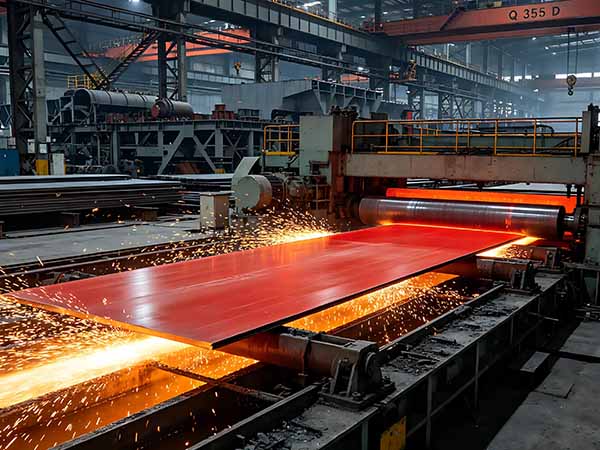
Thermomechanically Controlled Processing (TMCP) has significantly advanced the manufacturing standards of CCS Grade E shipbuilding steel plates. The typical process flow includes:
Reheating: Heating the slab to approximately 1150–1200°C.
Controlled rolling: High-reduction rolling is performed in the austenitic non-recrystallisation zone.
Accelerated cooling: Rapid cooling via a water-cooling system to lock in the fine-grained microstructure.
CCS Grade E shipbuilding steel plates produced using the TMCP process offer higher strength and lower alloy content, thereby improving weldability and reducing production costs.
When the thickness of CCS Grade E shipbuilding steel plates exceeds 40 mm, normalising is required. The specific process involves reheating the steel plate to approximately 900°C (above the upper critical temperature), holding at this temperature for an appropriate duration, and then allowing it to cool in air. This process serves the following purposes:
Homogenisation of the microstructure
Elimination of internal stresses generated during rolling
Grain refinement and improvement of low-temperature toughness
For critical structures subjected to stress in the full thickness direction, CCS Grade E shipbuilding steel plates may be specified as Z15, Z25 or Z35 grades, corresponding respectively to the minimum requirements for cross-sectional reduction in full-thickness tensile tests. This helps to prevent laminar tearing during the welding process.
Understanding the manufacturing process of CCS Grade E shipbuilding steel plates assists engineers in selecting the appropriate delivery condition for specific applications. For thinner gauges, the TMCP process offers an excellent balance of strength and toughness; whereas for thick plates, normalising ensures stable and reliable in-service performance.
Customers choose to engage in long-term cooperation with Yuxin Steel not only because of our high-quality products and services, as well as our strong reputation in the international market, but also due to our experienced one-stop raw material supply and further steel processing capabilities!