
Knowledge
Characteristics and Advantages of S235J2W Weathering Steel Plates
S235J2W is a weather-resistant structural steel plate manufactured in accordance with the EN 10025-5 standard, with the steel grade designation 1.8961. In this designation, “S235” represents the base yield strength class, “J2” indicates compliance with the impact toughness requirement at -20°C, and “W” indicates improved resistance to atmospheric corrosion.
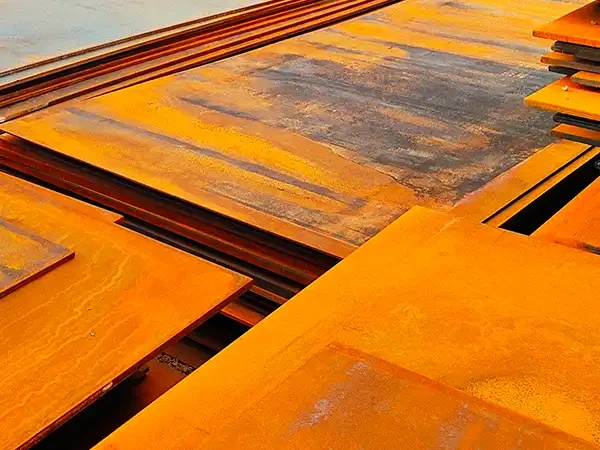
S235J2W Weathering Steel Plate Technical Specifications
S235J2W is a structural steel resistant to atmospheric corrosion as defined in the European standard EN 10025-5, with the material designation 1.8961. It is characterized by the addition of alloying elements such as Cu, Cr, and Ni to the standard structural steel S235J2. After prolonged exposure to the atmosphere, a dense, stable patina forms on its surface, effectively isolating the steel from air and moisture erosion to enhance its corrosion resistance in atmospheric environments. It is widely used in outdoor steel structures, construction projects, bridge construction, municipal facilities, and railway engineering.
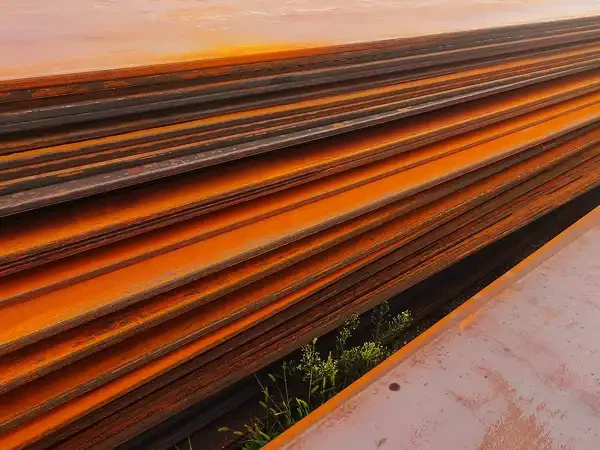
Applications of S235J0W Weathering Steel Plates
S235J0W weathering steel plate is a structural steel designed to resist atmospheric corrosion in accordance with the EN 10025-5 standard; it belongs to the category of low-alloy weathering steels. Through the addition of alloying elements such as Cu, Cr, and Ni, it forms a dense and stable protective oxide layer in natural environments, thereby enhancing its resistance to atmospheric corrosion. It is primarily used in steel structure projects that are exposed to the outdoors for extended periods, require low maintenance, or serve decorative purposes.

Chemical Composition of S235J0W Weathering Steel Plate
S235J0W is a low-alloy weathering structural steel defined in the European standard EN 10025-5. It primarily relies on the synergistic effect of alloying elements such as Cu, Cr, and Ni to form a dense, stable protective rust layer on the steel surface, thereby reducing the rate of atmospheric corrosion. With a yield strength grade of 235 MPa, it is suitable for bridges, buildings, railways, and outdoor steel structures. The following are the main chemical compositions of S235J0W weathering steel and their primary functions.
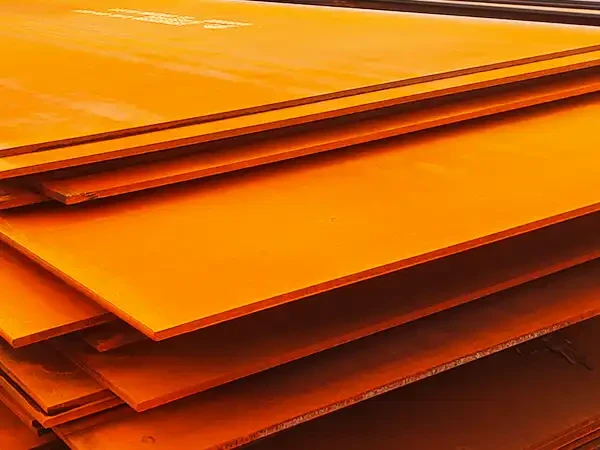
Characteristics and Advantages of S235J0W Weathering Steel Plates
S235J0W weathering steel plate is a low-alloy weathering structural steel that complies with the EN 10025-5 standard. Through the addition of corrosion-resistant alloying elements such as Cu (copper), Cr (chromium), and Ni (nickel), the steel forms a dense and stable protective rust layer in natural environments, thereby significantly improving its resistance to atmospheric corrosion. The following outlines its main material characteristics and application advantages.