Welding Process for CCS Grade EH36 Shipbuilding Steel Plates
- Jun 01, 2026

Knowledge
Ships operate year-round in various maritime environments, where low temperatures are the norm; in some areas, temperatures may even drop to near 0°C or below. In such low-temperature environments, the toughness of standard A36 steel decreases sharply, exhibiting glass-like brittle characteristics, and its impact resistance is significantly reduced.
In contrast, ABS Grade A steel, having undergone specialised micro-alloying or targeted heat treatment, effectively optimises its crystal structure. This ensures that it retains good toughness and impact resistance at 0°C or lower temperatures, enabling it to effectively withstand external impacts in cold conditions.
If A36 steel were used in shipbuilding, any external forces such as wave impact or vessel collisions would cause brittle fracture cracks to propagate rapidly and penetrate the entire hull, ultimately leading to serious safety incidents. This bears similarities to the causes of tragedies such as the sinking of the Titanic and the mass fractures of Liberty ships during the Second World War.
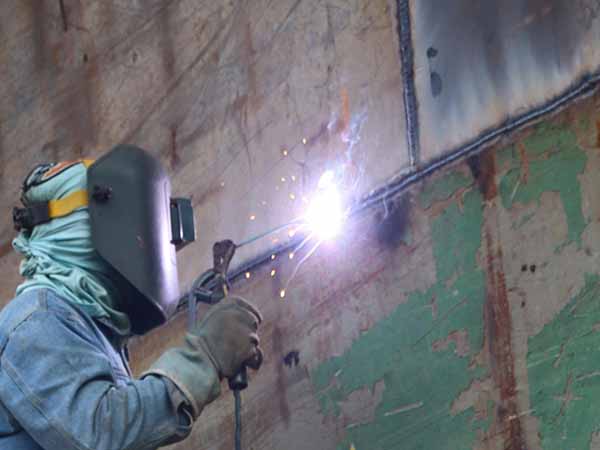
Welding is the primary method of joining ship structures, and the quality of the welds directly determines the integrity and safety of the hull structure; therefore, the weldability of the steel and the stability of the heat-affected zone are of paramount importance.
ABS-certified steel is subject to strict limits on carbon equivalent (CEV). Through precise control of chemical composition, it ensures that no hardened structures form in the heat-affected zone during welding, whilst effectively preventing cold cracks, thereby guaranteeing that the mechanical properties of the welded joint match those of the base material.
Conventional A36 steel exhibits significant fluctuations in chemical composition, with insufficient precision in controlling carbon content and impurity elements. During the welding of thick plates, micro-cracks invisible to the naked eye are highly likely to form at the weld edges. Under the alternating surge stresses encountered during long-term maritime operations, these micro-cracks will continuously propagate and extend, ultimately leading to fatigue failure of the welded joint and posing a threat to hull safety.
Critical joints in ship structures (such as the intersections of bulkheads and longitudinal frames, and the connections between the hull deck and the ship’s sides) are subjected to complex, multi-directional stresses over long periods, placing extremely high demands on the internal quality of the steel and its resistance to laminar tearing.
Marine-grade steel (such as ABS Grade A) must meet extremely high standards of internal purity, with strict control over the content of harmful impurities such as sulphur and phosphorus—sulphur readily forms low-melting-point sulphide inclusions, whilst phosphorus exacerbates the brittleness of the steel; both significantly reduce the steel’s resistance to laminar tearing.
The ABS certification process includes rigorous ultrasonic testing, which comprehensively identifies internal defects such as laminations, porosity and inclusions. This ensures uniform internal quality and eliminates potential hazards, thereby effectively preventing laminar tearing caused by internal defects when the steel is subjected to stress in the thickness direction, and safeguarding the structural stability of critical ship components.
Customers choose to engage in long-term cooperation with Yuxin Steel not only because of our high-quality products and services, as well as our strong reputation in the international market, but also due to our experienced one-stop raw material supply and further steel processing capabilities!