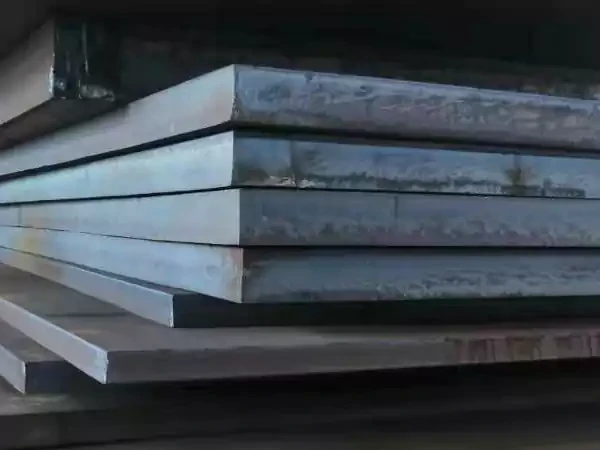
S690QL Material Properties
- Oct 15, 2026

Knowledge
| Grade | C | Si | Mn | P | S | Als |
|---|---|---|---|---|---|---|
| CCS AH32 | ≤ 0.18 | ≤ 0.50 | 0.90 - 1.60 | ≤ 0.030 | ≤ 0.030 | ≥ 0.015 |
| CCS DH32 | ≤ 0.18 | ≤ 0.50 | 0.90 - 1.60 | ≤ 0.025 | ≤ 0.025 | ≥ 0.015 |
| CCS EH32 | ≤ 0.18 | ≤ 0.50 | 0.90 - 1.60 | ≤ 0.025 | ≤ 0.025 | ≥ 0.015 |
Difference: CCS Grade DH32 and CCS Grade EH32 have stricter controls on P and S content in order to improve low-temperature toughness and resistance to brittle fracture.
| Grade | Yield Strength (ReH), MPa | Tensile Strength (Rm), MPa | Elongation (A), % | Impact Temperature | Impact Energy, KV2 / J |
|---|---|---|---|---|---|
| CCS AH32 | ≥ 315 | 450 - 570 | ≥ 22 | 0 ℃ | ≥ 31 |
| CCS DH32 | ≥ 315 | 450 - 570 | ≥ 22 | -20 ℃ | ≥ 31 |
| CCS EH32 | ≥ 315 | 450 - 570 | ≥ 22 | -40 ℃ | ≥ 31 |
Key difference: The low-temperature toughness of AH32, DH32 and EH32 increases progressively.
Differences:
AH32: Hot-rolled or TMCP; low cost and easy to machine.
DH32: Primarily control-rolled; thick plates (>20 mm) require normalising.
EH32: Thick plates must be normalised to ensure impact strength at −40 °C; this has the most stringent manufacturing process and the highest cost.
| Grade | Applications |
|---|---|
| AH32 | Deck, inner bottom plates and other normal-temperature structures of ships operating in temperate sea areas (bulk carriers, container ships). |
| DH32 | Low-temperature sea areas / high-stress zones (ship bottom, side shells, frames); offers stronger resistance to brittle fracture. |
| EH32 | Key joints in extremely low-temperature environments such as polar ships, offshore platforms, and LNG carriers. |
Customers choose to engage in long-term cooperation with Yuxin Steel not only because of our high-quality products and services, as well as our strong reputation in the international market, but also due to our experienced one-stop raw material supply and further steel processing capabilities!