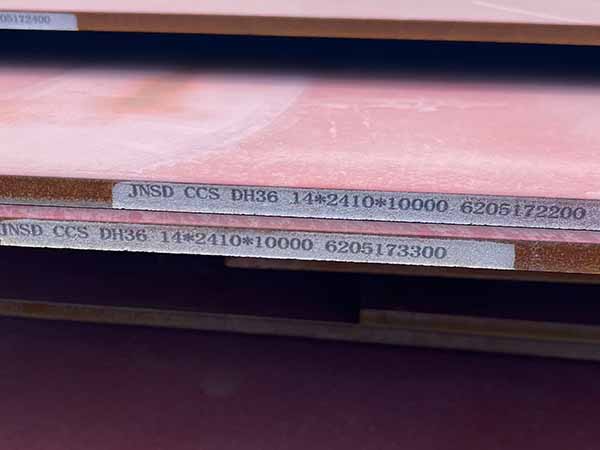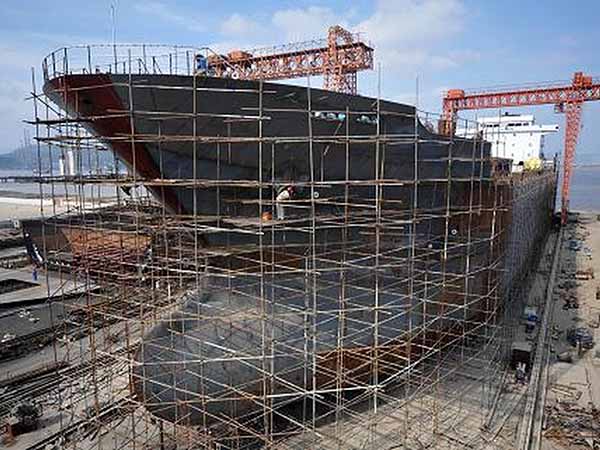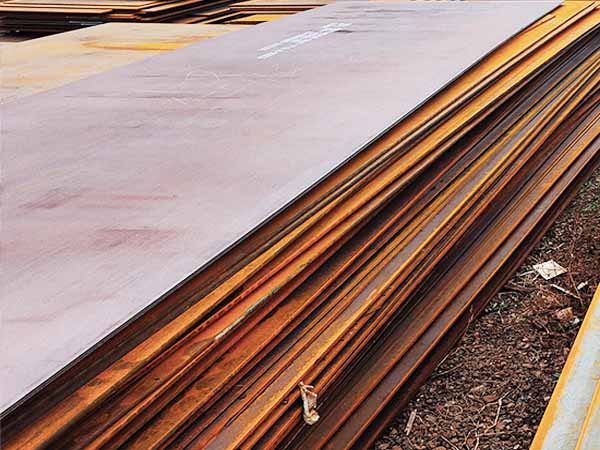
Corrosion Protection Technology for CCS AH36 Shipbuilding Steel Plates in Marine Environments
- May 25, 2026

Knowledge
| Element | Mass fraction (%) | Effect on corrosion resistance |
|---|---|---|
| C | ≤0.18 | Low-carbon design ensures weldability and reduces carbide precipitation. |
| Si | 0.10 - 0.50 | Solid solution strengthening, enhancing strength and corrosion resistance. |
| Mn | 0.90 - 1.60 | Improves hardenability and refines grain size. |
| P | ≤0.030 | Strictly limited to prevent cold brittleness and intergranular corrosion. |
| S | ≤0.030 | Strictly limited to reduce susceptibility to hot cracking and sulphide inclusions. |
| Nb/V/Ti | ≤0.12 (total) | Microalloying, refines grain size, improves microstructural uniformity. |
| Cu | ≤0.35 | Forms a dense rust layer, reducing the annual corrosion rate to 0.08 mm/a. |
| Ni | ≤0.40 | Improves low-temperature toughness and resistance to seawater corrosion. |
In seawater, mainly non-uniform general corrosion occurs, with the corrosion rate initially increasing and then decreasing.
Corrosion products consist primarily of Fe oxides and hydroxides, which have a certain inhibitory effect on medium- to long-term corrosion.
The corrosion rate of domestically produced AH36 in conventional marine atmospheres and seawater splash zones is approximately 0.12–0.18 mm/year, representing a gap of 0.02–0.04 mm/year compared to similar products from Japan and South Korea.
Microbial corrosion (MIC) is prone to occur in environments containing sulphate-reducing bacteria (SRB), accelerating the localised corrosion process.
The marine environment can be divided vertically into five typical corrosion zones, with significant differences in corrosion rates and dominant factors between each zone:
| Corrosion Zone | Location Range | Main Corrosion Factors | Typical Corrosion Rate |
|---|---|---|---|
| Marine Atmosphere Zone | 10 - 20 metres above sea level | Salt spray, UV radiation, alternating wet and dry cycles | 0.05 - 0.15 mm/year |
| Splash Zone | Within ±1 metre of the tidal level | Frequent wet-dry cycles, high oxygen content, mechanical scouring | 0.3 - 0.8 mm/year |
| Tidal Zone | Area alternately submerged by rising and falling tides | Large variations in oxygen concentration, prone to the formation of concentration cells | 0.15 - 0.3 mm/year |
| Fully submerged seawater zone | Continuously submerged in seawater | Dissolved oxygen, seawater flow velocity, marine organisms | 0.1 - 0.2 mm/year |
| Seabed sediment zone | Within seabed sediments | Anaerobic conditions, sulphate-reducing bacteria, low electrical resistivity | 0.03 mm/year |
Comprehensive electrochemical corrosion, relatively easy to predict and control.
Localised corrosion caused by chloride ions damaging the passivation film; prone to causing perforation failure.
Concealed corrosion occurring in crevices such as welds and bolted joints.
Occurs when in contact with dissimilar metals such as copper alloys and stainless steel.
Occurs under the combined action of tensile stress and chloride ions in seawater.
A synergistic effect of cyclic stress and corrosion, commonly found in propeller shafts, decks and similar locations.
Corrosion is accelerated by the metabolic products of marine microorganisms, such as sulphate-reducing bacteria.
The corrosion protection for CCS AH36 marine structures should employ a ‘triple protection system’: substrate protection + coating protection + cathodic protection. Through the synergistic action of these three elements, a design life of 15–20 years can be achieved.
Corrosion-resistant AH36 steel plates containing 0.02–0.05% copper should be selected, as these form a dense, stable rust layer on the surface.
For polar vessels, a modified AH36 grade with a nickel content of 0.30–0.50% may be selected to enhance both low-temperature toughness and corrosion resistance.
Strictly control the content of harmful impurities such as P and S in the steel plates to reduce pitting corrosion caused by intergranular corrosion and sulphide inclusions.
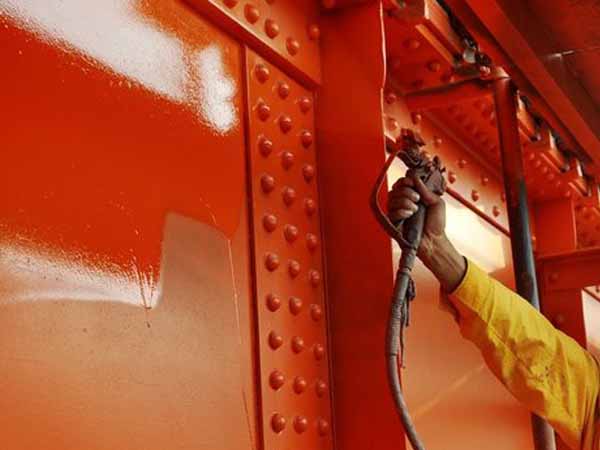
Coatings are the primary means of corrosion protection; appropriate systems must be selected according to different corrosion zones:
All surfaces to be painted must achieve Sa2.5 grade (ISO 8501-1), with a surface roughness of Rz 40–75 μm.
For critical areas such as below the waterline and ballast water tanks, Sa3 grade is recommended.
Primer application must take place within 4 hours of surface preparation to prevent secondary rusting.
a) Marine Atmosphere Zone (Superstructure, Decks)
System: Epoxy zinc-rich primer (80 μm, dry film zinc content ≥85%) + Epoxy micaceous iron oxide intermediate coat (120 μm) + Polysiloxane topcoat (40 μm)
Total dry film thickness: ≥240 μm
Design life: 15 years
b) Spray and waterline zones
System: Inorganic zinc silicate primer (80 μm) + glass flake epoxy intermediate coat (2 × 150 μm) + polyurethane topcoat (50 μm)
Total dry film thickness: ≥430 μm
Characteristics: Glass flakes provide excellent barrier protection against cyclic wetting and drying and mechanical abrasion.
c) Full seawater immersion zone (hull bottom)
System: Epoxy zinc-rich primer (80 μm) + Epoxy bitumen intermediate coat (2 × 120 μm) + Antifouling paint (2 × 60 μm)
Total dry film thickness: ≥440μm
Anti-fouling paint requirements: The use of organotin compounds is prohibited; copper-based or bio-based anti-fouling agents must be used.
d) Dedicated seawater ballast tanks
System: Pure epoxy primer (2×160μm)
Total dry film thickness: ≥320μm (CCS mandatory requirement)
Special requirements: Non-soap-forming paint, compatible with sacrificial anodes, resistant to wet-dry cycling, light colour for ease of inspection.
Design life: 15 years
Cathodic protection is used in conjunction with coatings to protect steel plates where the coating is damaged. It is divided into two methods: the sacrificial anode method and the impressed current method:
Anode material: Al-Zn-In-Cd alloy (preferred for seawater environments), current efficiency ≥85%.
Protection current density: 110–150 mA/m²
Protection potential: –850 mV to –1100 mV (relative to a copper/copper sulphate reference electrode).
Design life: 5–15 years, aligned with the ship’s dry-docking cycle.
Installation principles: Even distribution, avoidance of shielding effects, and good insulation between the anodes and the hull.
Suitable for large vessels and offshore platforms, with a design life of over 20 years.
System components: Potentiostat, auxiliary anodes, reference electrode, cables
Advantages: Adjustable output current, wide protection range, low maintenance costs
Precautions: Over-protection devices must be installed to prevent hydrogen embrittlement
Avoid sharp angles and dead corners; use rounded transitions to reduce stress concentration and liquid accumulation.
Ensure unobstructed drainage to prevent seawater stagnation and the formation of localised corrosion environments.
Insulating washers should be installed where dissimilar metals come into contact to prevent galvanic corrosion.
Sufficient space should be provided for inspection and maintenance to facilitate future testing and repairs.
Add corrosion inhibitors in enclosed spaces such as ballast water tanks to suppress microbial corrosion.
Perform post-weld stress relief on welded joints to prevent stress corrosion cracking.
Employ surface strengthening techniques such as shot peening and roller burnishing to introduce residual compressive stress into the surface.
Ballast water tanks are among the areas of a ship most prone to corrosion. Due to frequent alternation between wet and dry conditions and the prevalence of an oxygen-deficient environment, they are susceptible to microbiological corrosion.
Strictly comply with the IMO’s ‘Performance Standards for Protective Coatings in Ballast Tanks’ (PSPC).
A full recoating must be carried out when the coating damage rate exceeds 20%.
Sacrificial anode protection must be provided, with anodes positioned to cover all corners.
Regular internal inspections and thickness measurements must be conducted to identify potential corrosion hazards in a timely manner.
The splash zone is the area subject to the most severe corrosion, where traditional coatings struggle to provide long-term effective protection.
Use a thick-film glass flake epoxy coating with a total thickness of ≥500 μm.
A composite protection system comprising thermal spray aluminium-zinc alloy plus sealing treatment may be employed.
For critical structures such as offshore platform legs, the use of fibreglass wrapping or corrosion-resistant alloys may be considered.
Containing microcapsules or nanocontainers, these coatings automatically release corrosion inhibitors when damaged, thereby repairing microcracks.
The addition of nanomaterials such as graphene and titanium dioxide significantly enhances the coating’s barrier properties and mechanical strength.
Metal-organic framework materials serve as carriers for corrosion inhibitors, enabling controlled release and improving corrosion inhibition efficiency.
Real-time monitoring of protection potential and current, with automatic adjustment of output to optimise protection effectiveness.
Regular external hull inspections shall be carried out, with a comprehensive dry-dock overhaul every 5 years
Internal inspections of ballast water tanks shall be carried out every 2.5 years, with comprehensive thickness measurements conducted every 5 years
Damaged areas of the coating shall be repaired promptly; surface preparation and coating thickness in the repaired areas shall not be less than the original design requirements
Sacrificial anodes shall be replaced promptly when consumption exceeds 80%
A comprehensive anti-corrosion record shall be established, documenting coating application, cathodic protection system operation and corrosion inspection data
Corrosion protection for CCS AH36 shipbuilding steel plates in marine environments is a systematic engineering process requiring comprehensive control from material selection and structural design through to construction quality and subsequent maintenance. The adoption of a triple protection system comprising ‘substrate protection + coating protection + cathodic protection’, combined with zone-specific design and regular maintenance, can effectively extend the service life of CCS AH36 structures and ensure the safe operation of ships and offshore engineering equipment.
Customers choose to engage in long-term cooperation with Yuxin Steel not only because of our high-quality products and services, as well as our strong reputation in the international market, but also due to our experienced one-stop raw material supply and further steel processing capabilities!