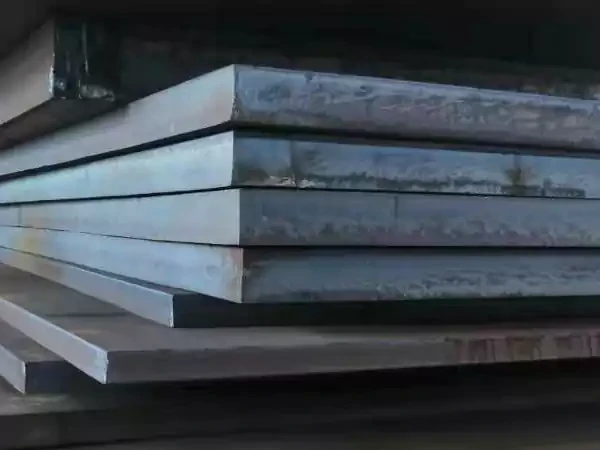
S690QL Material Properties
- Oct 15, 2026

Knowledge
| Item | Technical Specifications |
|---|---|
| Grade | S355J2WP |
| Standard | EN 10025-5 |
| Steel Number | 1.8946 |
| Classification | Weathering Structural Steel / Atmospheric Corrosion-Resistant Steel |
| Thickness | 6.0 - 200.0 mm |
| Width | 1,500.0 - 4,050.0 mm |
| Length | 3,000.0 – 15,000.0 mm |
| Yield Strength | ≥ 355 MPa (thickness ≤ 16 mm) |
| Impact Test Temperature | -20°C |
| Impact Energy | ≥ 27 J |
| Elongation | ≥ 22 % |
| Delivery Condition | Hot-rolled (+AR), normalized (+N), thermomechanically rolled (+M), etc. |
| Forms of Delivery | Plates, steel strips, structural sections, etc. |
| Design Features | High strength and resistance to atmospheric corrosion |
| Typical Applications | Bridges, building structures, outdoor steel structures, railway and transportation facilities, landscape structures, etc. |
* EN 10025-5 specifically defines the technical delivery conditions for hot-rolled steel with improved atmospheric corrosion resistance; S355J2WP weathering steel plates belong to the WP series within this standard.
| Character | Meaning | Description |
|---|---|---|
| S | Structural steel | Steel for structural applications |
| 355 | Minimum yield strength | Yield strength (ReH) ≥ 355 MPa (thickness ≤ 16 mm); the yield value for thick plates decreases with plate thickness |
| J2 | Impact toughness grade | Impact Energy: ≥27 J at -20 °C (Charpy V-notch impact test) |
| W | Weathering steel | Steel resistant to atmospheric corrosion |
| P | High phosphorus content | High-phosphorus weathering steel, accelerates rust layer formation. |
| Element | Content |
|---|---|
| C | ≤ 0.12 % |
| Si | ≤ 0.75 % |
| Mn | ≤ 1.0 % |
| P | 0.06–0.15 % |
| S | ≤ 0.030 % |
| Cr | 0.30–1.25 % |
| Cu | 0.25–0.55 % |
| Thickness (t) | Yield Strength (ReH) | Tensile Strength (Rm) | Elongation (A) |
|---|---|---|---|
| t ≤ 16 mm | ≥ 355 MPa | 470 - 630 MPa | ≥ 20 % |
| 16 mm < t ≤ 40 mm | ≥ 345 MPa | 470 - 630 MPa | ≥ 20 % |
| 40 mm < t ≤ 63 mm | ≥ 335 MPa | 470 - 630 MPa | ≥ 20 % |
| 63 mm < t ≤ 80 mm | ≥ 325 MPa | 470 - 630 MPa | ≥ 20 % |
| 80 mm < t ≤ 100 mm | ≥ 315 MPa | 470 - 630 MPa | ≥ 20 % |
| 100 mm < t ≤ 150 mm | ≥ 295 MPa | 450 - 600 MPa | ≥ 20 % |
| Item | Requirements |
|---|---|
| Impact Test | Charpy V-notch |
| Impact Temperature | - 20 °C |
| Impact Energy | ≥ 27 J |
| Specimen Orientation | Longitudinal |
Common delivery conditions for S355J2WP:
| Condition | Description |
|---|---|
| +AR | Hot-rolled |
| +N | Normalized or normalized-rolled |
| TMCP | Thermomechanically Controlled Rolling |
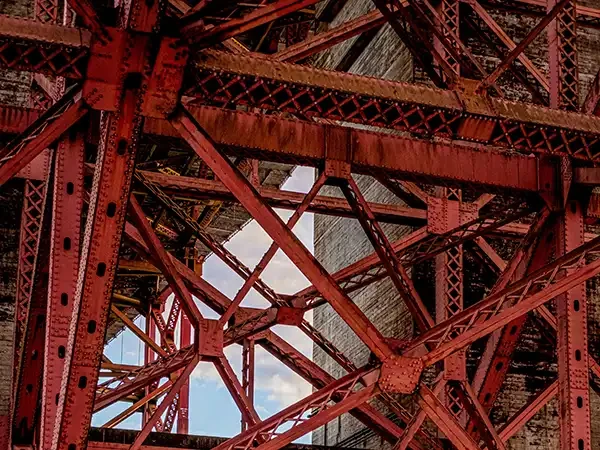
In a suitable outdoor atmospheric environment, the steel plate surface undergoes the following evolution: initial rusting → development of an oxide layer → formation of a dense, stable rust layer.
This stable rust layer effectively slows down subsequent corrosion processes; therefore, under appropriate usage conditions, traditional coating maintenance can be reduced or eliminated.
However, it should be noted that weathering steel is not “completely rust-free.” If exposed for extended periods to persistent moisture, standing water, high salt fog, or high chloride ion environments, its weathering performance may significantly deteriorate; S355J2WP steel should not be treated as stainless steel.
The EN 10025-5 standard contains specific provisions regarding the operating environment, manufacturing processes, and welding requirements for weathering steel.
S355J2WP weathering steel plates can be welded using conventional welding methods; however, because they contain weathering alloying elements such as Cu, Cr, and P, welding parameters (including plate thickness, carbon equivalent, preheating temperature, heat input, selection of welding consumables, and interpass temperature) must be determined comprehensively based on specific conditions.
It is important to note that the weathering performance of the weld and the heat-affected zone is not automatically equivalent to that of the base metal. In weathering steel projects, welding materials and processes that match the weathering grade of the base material should be selected.
Furthermore, EN 10025-5 imposes restrictions on the subsequent heat treatment of S355J2WP weathering steel plates. The standard stipulates that, except for specified stress-relief treatments, heat treatment should generally not be performed after delivery; improper high-temperature or prolonged stress relief may result in a decline in mechanical properties.
S355J2WP weathering steel plates are primarily suitable for applications requiring structural strength and resistance to atmospheric corrosion, such as:
1) Bridge and railway bridge structures
2) Outdoor steel structures
3) Architectural steel structures
4) Railway rolling stock and vehicle structures
5) Containers and transportation equipment
7) Power transmission towers
8) External structures of industrial equipment
9) Landscape architecture and architectural decorative structures
Customers choose to engage in long-term cooperation with Yuxin Steel not only because of our high-quality products and services, as well as our strong reputation in the international market, but also due to our experienced one-stop raw material supply and further steel processing capabilities!