Corrosion Resistance of CCS Grade A Shipbuilding Steel Plates in Marine Environments and Coating Solutions
- May 14, 2026

Knowledge
In bridge construction, material selection directly determines the structure's safety, durability, and life-cycle cost. As modern bridge design moves towards lightweight, long-life, and low-maintenance designs, S355J0W, a fine-grained weathering steel, is gradually becoming a core structural material for cross-sea bridges, urban viaducts, and mountain steel bridges.
Yuxin Steel will delve into the core material advantages of S355J0W weathering steel, explore its specific application advantages in bridge construction, and summarize the precautions and key processes for using S355J0W weathering steel in bridge construction.
S355J0W is a low-alloy high-strength weathering steel (also known as atmospheric corrosion resistant steel or Corten steel) conforming to EN 10025-5 standards. With its high strength, excellent weather resistance, good low-temperature toughness, and weldability, it has become a core material for modern bridge engineering, especially suitable for bridge designs requiring no painting, long life, and low maintenance.
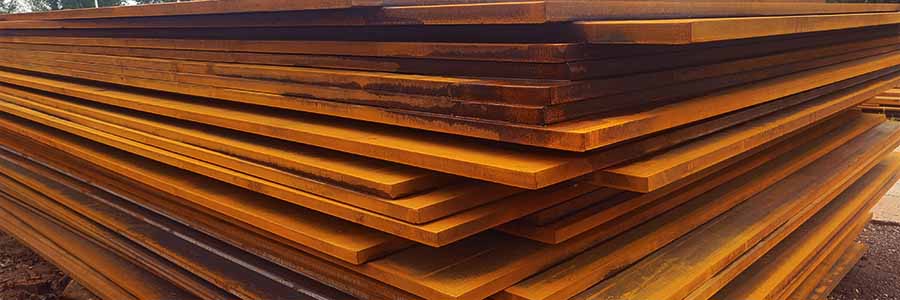
Standard: EN 10025-5:2019 "Hot rolled products of structural steels - Part 5: Technical delivery conditions for structural steels with improved atmospheric corrosion resistance"
Grade Meaning:
S: Structural Steel
355: Minimum yield strength 355MPa for thickness ≤16mm
J0: Impact energy ≥27J at 0℃, ensuring resistance to brittle fracture at low temperatures
W: Weathering, resistant to atmospheric corrosion, possessing weathering properties
Unlike ordinary carbon steel (such as S355J0), S355J0W weathering steel is produced by adding small amounts of alloying elements such as chromium (Cr), nickel (Ni), and copper (Cu), enabling it to form a dense and stable protective rust layer on the substrate surface when exposed to the atmosphere. This rust layer effectively prevents further penetration of corrosive media, thus achieving atmospheric corrosion resistance without the need for painting.
| Element | C | Si | Mn | P | S | N | Cr | Cu |
|---|---|---|---|---|---|---|---|---|
| Content (max, %) | 0.16 | 0.50 | 0.50 - 1.50 | 0.035 | 0.035 | 0.012 | 0.40 - 0.80 | 0.25 - 0.55 |
| Thickness (t) [mm] | Yield Strength (ReH) [min, MPa] | Tensile Strength (Rm) [MPa] | Elongation (A) [min, %] | Impact Energy (KV) [min] |
|---|---|---|---|---|
| t ≤ 16 | 355 | 470 - 630 | 22 | 27J (at 0°C, Longitudinal) |
| 16 < t ≤ 40 | 345 | 470 - 630 | 22 | 27J (at 0°C, Longitudinal) |
| 40 < t ≤ 63 | 335 | 470 - 630 | 21 | 27J (at 0°C, Longitudinal) |
| 63 < t ≤ 80 | 325 | 470 - 630 | 20 | 27J (at 0°C, Longitudinal) |
| 80 < t ≤ 100 | 315 | 470 - 630 | 20 | 27J (at 0°C, Longitudinal) |
| 100 < t ≤ 150 | 295 | 450 - 600 | 18 | 27J (at 0°C, Longitudinal) |
a) Traditional bridges require regular rust removal and painting maintenance, which is costly. For bridge construction, the atmospheric corrosion resistance of S355J0W weathering steel is 2–8 times that of ordinary carbon steel, perfectly solving these drawbacks.
b) It resists corrosion from harsh environments such as industrial exhaust gases, salt spray, rain, snow, and ultraviolet radiation, significantly extending the life of bridges.
c) It allows for paint-free or reduced painting frequency; under suitable conditions, it can be used directly in the bare environment, saving painting costs.
d) Reduced Maintenance Frequency: Especially in the difficult-to-maintain substructure of bridges or viaduct piers, S355J0W weathering steel can significantly reduce later operation and maintenance costs.
Bridge structural components often involve complex welding processes. S355J0W weathering steel has a low carbon equivalent (CE), which ensures high strength while maintaining good weldability and reducing the likelihood of cold cracking. Furthermore, the J0 grade ensures excellent toughness even at temperatures below 0°C, making it particularly suitable for bridge construction projects in northern regions and high-altitude mountainous areas.
S355J0W weathering steel is delivered hot-rolled or normalized, allowing for cutting, bending, punching, and other processing to meet the needs of bridge component manufacturing.
Because S355J0W weathering steel develops a natural hue from rust red to dark brown over time, this unique industrial aesthetic makes it widely used in pedestrian bridges and landscape bridges. This avoids the problems of subsequent paint fading and peeling, achieving harmony between the structure and the environment, becoming a unique scenic feature.
S355J0W weathering steel is mainly used in the following key areas of bridge construction:
a) Steel plate beams, steel box girders, steel truss beams, orthotropic bridge decks: Utilizing high strength and weather resistance, it enables large-span, lightweight designs, reducing foundation loads.
b) Bridge piers, towers, cap beams, bearing pads: Utilizing a protective layer to resist erosion from rainwater and humid air, as well as impacts from vehicles and ships, ensuring the safety and durability of the substructure.
a) Crash guardrails, pedestrian railings: Paint-free, reducing later maintenance costs and enhancing the aesthetic appeal.
b) Inspection access roads, expansion joint covers, drainage channels, and other components: Maintaining structural integrity and functionality under long-term exposure conditions, reducing maintenance burden.
a) Coastal and near-shore bridges: Resistant to salt spray corrosion, replacing traditional heavy-duty anti-corrosion coating solutions.
b) Cold-region bridges: Achieve 0℃ impact toughness standards, prevent low-temperature brittle fracture, and improve the safety of winter construction and operation.
c) Heavy-loaded and high-traffic bridges: High strength to resist fatigue loads, extending service life.
Although S355J0W weathering steel has significant advantages, the following points must be noted during bridge construction to ensure its weathering performance is fully utilized:
Not all environments are suitable for bare application of S355J0W weathering steel. In long-term high-salt spray environments (such as coastal splash zones) or high-concentration industrial pollution environments (such as long-term acid rain), a dense rust layer may not form stably. When using S355J0W in these areas, a coating system or special sealing treatment is usually still required.
Matching weathering steel welding materials must be used to ensure the corrosion resistance and mechanical properties of the welded area. If ordinary welding wire is used, the corrosion resistance of the weld will be much lower than that of the base material, leading to anodic corrosion and preferential rusting and perforation of the weld. Welding materials conforming to EN standards or equivalent weathering resistance are recommended.
Weathering steel relies on alternating wet and dry environments to form a stable rust layer. During the bridge construction design phase, dead zones for dust and water accumulation must be avoided. Areas that are chronically damp or have accumulated dust cannot form a protective layer and will instead weaken the cross-section due to continuous corrosion. The design should ensure unobstructed drainage and avoid water-filled depressions.
Avoid direct contact with metals with significant potential differences (ordinary carbon steel, stainless steel, copper). If contact is unavoidable, proper insulation and isolation must be ensured.
After bridge construction and installation, the S355J0W surface will undergo an unstable rusting period of approximately 2-3 years. During this period, surface rust may flow, contaminating the underlying concrete or pavement. Construction units should consider reserving reasonable diversion measures during the design phase, or use specific surface stabilizing agents in the initial stage to prevent early rust contamination.
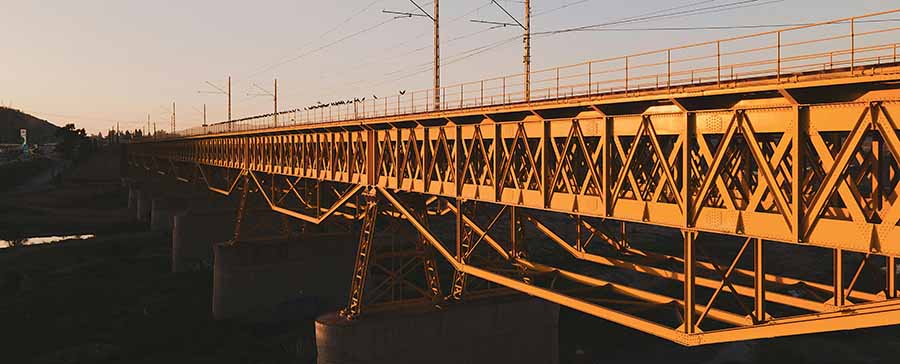
S355J0W weathering steel, with its high strength, excellent low-temperature toughness, and unique paint-free, low-maintenance weathering resistance, provides a cost-effective and environmentally friendly solution for modern bridge construction. It can not only effectively shorten the bridge construction cycle but also significantly reduce maintenance costs over the bridge's 100-year service life.
With the increasing demand for modern steel structure bridges in infrastructure construction and the desire for economical life-cycle costs, the application prospects of S355J0W weathering steel in cross-sea bridges, urban elevated roads, and pedestrian landscape bridges will become even broader.
Customers choose to engage in long-term cooperation with Yuxin Steel not only because of our high-quality products and services, as well as our strong reputation in the international market, but also due to our experienced one-stop raw material supply and further steel processing capabilities!