S690QL Material Properties
- Oct 15, 2026

Knowledge
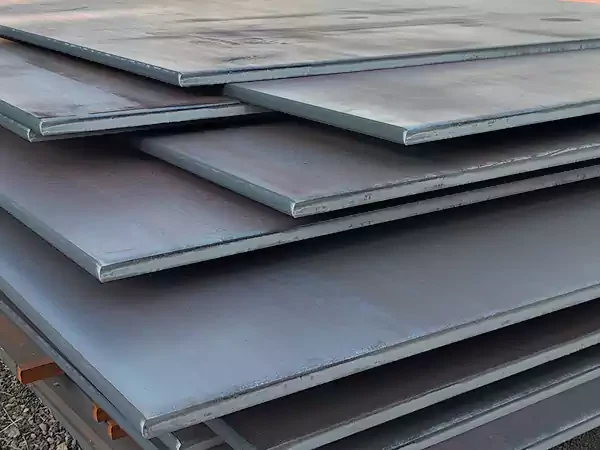
LR DH36 shipbuilding steel plate is a high-strength structural steel for ships and offshore engineering certified by Lloyd’s Register (LR) of the United Kingdom, and belongs to the high-strength hull structural steel series. Its minimum yield strength typically reaches 355 MPa, and it combines good weldability, low-temperature impact toughness, and fatigue resistance, making it a critical material in the manufacture of modern large vessels, offshore platforms, and offshore engineering equipment.
Offshore platforms, offshore wind turbine foundations, engineering vessels, and other equipment are subjected to complex loads over extended periods, including:
1) Periodic impacts caused by waves;
2) Severe vibrations under storm conditions;
3) Dynamic loads generated by equipment operation;
4) Seawater pressure and the structure’s own weight.
LR DH36 shipbuilding steel plates have a high yield strength (≥355 MPa). Compared to ordinary marine structural steel, they allow for reduced steel plate thickness while still meeting strength requirements, thereby reducing structural weight and improving the equipment’s load-bearing capacity.
For example, using LR DH36 steel plates in offshore platform trusses, deck structures, and the main load-bearing areas of the hull can enhance overall structural strength and reduce the risk of fatigue cracking.
Modern offshore engineering equipment is continuously becoming larger:
1) Deepwater drilling platforms;
2) FPSOs (Floating Production, Storage, and Offloading vessels);
3) Large engineering vessels;
4) Offshore wind turbine installation vessels.
These facilities require large quantities of high-strength steel plates for:
1) Hull plating;
2) Main decks;
3) bulkhead structures;
4) support frames;
5) platform module bases.
LR DH36 shipbuilding steel plates offer an optimal balance of strength and toughness, meeting the manufacturing requirements for large-scale welded structures while helping to reduce structural weight and increase payload capacity.
The manufacture of offshore equipment typically involves the assembly and welding of large steel plates; therefore, the steel’s welding performance is critical.
LR DH36 marine steel plates are typically designed as low-carbon, micro-alloyed steels and produced using processes such as controlled rolling and controlled cooling (TMCP), giving them:
1) a low carbon equivalent;
2) good weldability;
3) Minimal welding distortion;
4) Low risk of cold cracking.
This means that during shipyard and offshore engineering manufacturing processes, complex pre-welding treatments can be reduced, production efficiency can be improved, and manufacturing costs can be lowered.
Offshore engineering equipment may operate in:
1) Arctic shipping routes;
2) The North Atlantic region;
3) Cold-water oil and gas development areas.
Compared to ordinary high-strength steel, Grade DH36 has stricter requirements for low-temperature impact performance. Impact toughness testing is typically required at lower temperatures to ensure resistance to brittle fracture in cold environments.
Therefore, LR DH36 shipbuilding steel plates are particularly suitable for:
1) Polar transport vessels;
2) Offshore oil and gas platforms;
3) Deep-sea engineering vessels;
4) Offshore equipment in cold regions.
The primary application areas for LR DH36 steel plates include:
| Equipment | Main Application Areas |
|---|---|
| Offshore drilling platforms | Main platform structure, support beams, decks |
| FPSOs (Floating Production, Storage, and Offloading vessels) | Hull structure, deck modules |
| Offshore support vessels | Hull, reinforced structures |
| Offshore wind turbine installation vessels | Hull and large load-bearing structures |
| Large bulk carriers and oil tankers | Hull, bulkheads, deck |
Industry data indicates that Grade DH36 high-strength ship plates are widely used in critical areas such as hull construction, offshore drilling platforms, and platform connection structures.
Investments in offshore engineering equipment are substantial, typically requiring a service life of 20 to 30 years or more. LR DH36 shipbuilding steel plates enhance life-cycle value through the following performance advantages:
High strength allows for optimized plate thickness, enabling lightweight design.
Good toughness and fatigue performance help resist long-term cyclic loads.
Stable material properties reduce the need for crack repairs and structural replacements.
Reduced equipment deadweight increases transport capacity and energy efficiency.
With the global energy structure adjustment and the development of the marine economy, demand for LR DH36 shipbuilding steel plates will continue to grow in the following areas:
1) Deep-sea oil and gas development equipment;
2) Large offshore wind power installation platforms;
3) Offshore engineering service vessels;
4) LNG carriers and large merchant ships;
5) Next-generation smart ships.
Future marine equipment will place greater emphasis on high strength, lightweight design, low-temperature resistance, and long service life. With its mature classification society certification system and comprehensive performance advantages, LR DH36 shipbuilding steel plate will remain a key choice for marine engineering structural materials.
The core value of LR DH36 shipbuilding steel plate in marine engineering equipment is reflected in:
1) High load-bearing capacity, enhancing structural safety;
2) Good weldability, reducing manufacturing complexity;
3) Excellent low-temperature toughness, enabling adaptation to complex marine environments;
4) Lightweight design, improving equipment cost-effectiveness;
5) Reliable classification society certification, meeting international engineering standards.
Therefore, LR DH36 shipbuilding steel plates are not only an important material for traditional shipbuilding but also a key foundational material for the future development of deep-sea exploration, marine energy equipment, and large-scale offshore structures.
Customers choose to engage in long-term cooperation with Yuxin Steel not only because of our high-quality products and services, as well as our strong reputation in the international market, but also due to our experienced one-stop raw material supply and further steel processing capabilities!