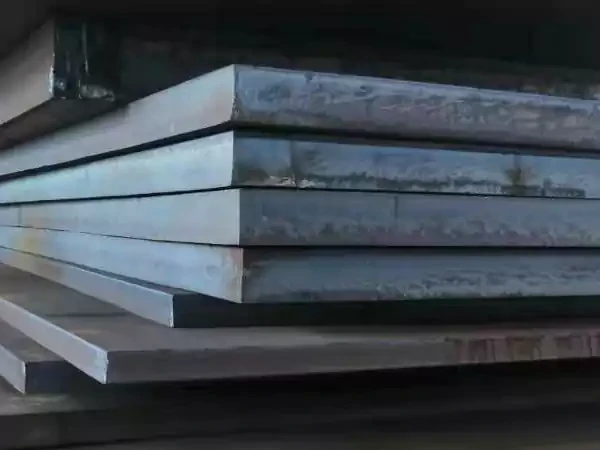
S690QL Material Properties
- Oct 15, 2026

Knowledge
ABS Grade AH36 marine steel plates are designed as low-carbon, micro-alloyed steels. Through careful control of their chemical composition, they possess a certain degree of inherent corrosion resistance. Their microstructure consists primarily of ferrite and pearlite, with fine grains and a uniform structure, enabling them to effectively resist electrochemical corrosion in marine environments. Compared to ordinary carbon steel, their resistance to marine corrosion is improved by more than 30%. However, given the characteristics of the marine environment—including high salinity, high humidity and strong oxidising properties—relying solely on the material’s inherent corrosion resistance is insufficient to meet long-term service requirements; targeted protective measures must be implemented.
As an electrolyte solution, seawater causes micro-cells to form on the surface of the steel plate. Iron dissolution occurs in the anodic zone, whilst oxygen reduction occurs in the cathodic zone. Over time, this leads to rusting and pitting on the steel plate surface; in severe cases, it progresses to perforation, resulting in a reduction in structural strength.
Salt spray particles in the marine atmosphere adhere to the steel plate surface, absorbing moisture from the air to form a saline film, thereby accelerating electrochemical corrosion. Salt spray corrosion primarily affects exposed areas such as superstructures and decks; prolonged exposure causes uniform rusting, compromising both appearance and structural integrity.
Marine organisms such as shellfish and algae attach to the steel plate surface; acidic substances in their metabolic by-products can damage protective coatings. Simultaneously, they cause localised oxygen supply irregularities on the surface, forming localised corrosion cells that accelerate the corrosion process and compromise structural stability.
Under the influence of welding stresses and hull loads, combined with corrosive media such as Cl⁻ in the marine environment, stress corrosion cracking may occur in steel plates. This poses a serious threat to ship safety and primarily occurs at welded joints and stress concentration zones.
Adopting a comprehensive protection strategy of ‘surface protection + structural optimisation + operation and maintenance management’ can effectively enhance the corrosion resistance of ABS Grade AH36 marine steel plates and extend their service life.
This is the most common and effective protective measure, employing a three-layer system comprising primer, intermediate coat and topcoat:
a) Primer: Select an epoxy zinc-rich primer (zinc content ≥ 80%) to provide sacrificial anode protection;
b) Intermediate coat: Select an epoxy micaceous iron oxide paint to increase coating thickness and adhesion;
c) Topcoat: Fluorocarbon or polyurethane paint is selected for its excellent weather resistance and salt spray resistance.
Prior to application, scale, rust and oil contamination must be thoroughly removed from the steel plate surface to ensure it is clean and dry; during application, coating thickness and uniformity must be controlled to avoid defects such as missed areas and pinholes; post-application inspection must be carried out to verify the effectiveness of the protection.
Suitable for secondary ship structures and connecting components. This forms a uniform zinc layer ≥ 80 μm thick on the steel plate surface, providing both sacrificial anode protection and physical barrier effects, effectively resisting electrochemical and salt spray corrosion. Acid washing and passivation must be carried out prior to galvanising to ensure the zinc layer adheres firmly and does not peel off.
For underwater sections of ships (such as the hull bottom and propellers), the combined use of cathodic protection and coatings is recommended:
a) Sacrificial anode method: Zinc or aluminium alloy anodes are selected to corrode preferentially, thereby protecting the steel plates;
b) Impressed current method: An external power source is used to make the steel plate the cathode, thereby inhibiting corrosion.
Cathodic protection should be used in conjunction with coatings to reduce anode consumption and extend the service life of the protection.
During the design phase, the structure should be optimised to avoid stress concentrations and reduce the risk of stress corrosion cracking. For areas subject to severe corrosion, such as the tidal zone and the hull bottom, ABS Grade AH36 Z-directional steel or modified steel plates with additional corrosion-resistant alloying elements may be selected.
During service, the surface protective coating should be inspected regularly, and damaged coatings repaired promptly; underwater sections and the cathodic protection system should be inspected, and worn sacrificial anodes replaced; non-destructive testing should be carried out on welded joints and stress concentration zones to detect and address corrosion defects in a timely manner.
Surface passivation treatment or the addition of corrosion inhibitors may also be employed to further enhance the corrosion resistance of the steel plates. Passivation treatment forms a dense oxide film on the surface of the steel plates, acting as a barrier against corrosive media; corrosion inhibitors may be applied to areas in contact with seawater to suppress electrochemical corrosion.
The corrosion resistance of ABS Grade AH36 marine steel plates in marine environments is a key requirement for long-term safe service. Multiple corrosion factors can significantly affect its performance and service life. The adoption of a comprehensive protection system centred on ‘surface coating + hot-dip galvanising + cathodic protection’, combined with structural optimisation and regular maintenance, can effectively resist marine corrosion, maintain the stability of the steel plate’s mechanical properties, extend the service life of the vessel, and ensure navigational safety.
Customers choose to engage in long-term cooperation with Yuxin Steel not only because of our high-quality products and services, as well as our strong reputation in the international market, but also due to our experienced one-stop raw material supply and further steel processing capabilities!