
Knowledge
Applications of S355J0W Weathering Steel Plates
Thanks to its stable resistance to atmospheric corrosion, high load-bearing capacity, and low-maintenance characteristics, S355J0W weathering steel has become a widely used structural material in outdoor projects across the world’s temperate regions. Its applications span architectural cladding, bridge construction, energy facilities, landscape engineering, and municipal infrastructure, offering both structural and aesthetic value in various settings. This article reviews the industrial applications of S355J0W weathering steel and its unique advantages across various engineering fields.

Characteristics and Advantages of S355J0W Weathering Steel Plates
The key characteristics and advantages of S355J0W weathering steel plate stem from its unique self-protective weathering mechanism, high load-bearing strength, low maintenance costs, and excellent adaptability to construction. Compared to ordinary carbon steel, which requires frequent anti-corrosion maintenance, and high-end weathering steel with significant performance redundancy, S355J0W strikes an effective balance between extending the service life of outdoor steel structures and controlling overall costs, and has therefore gained widespread recognition in the global outdoor infrastructure sector.

Technical Specifications for S355J0W Weathering Steel Plate
S355J0W is a weather-resistant structural steel specified in the European standard EN 10025-5, with the material number 1.8959. Its resistance to atmospheric corrosion is enhanced through the addition of alloying elements such as Cu and Cr. S355J0W weather-resistant steel plates are suitable for structural components—such as bridges, buildings, vehicles, steel structures, and outdoor equipment—that are subject to long-term exposure to the atmosphere.
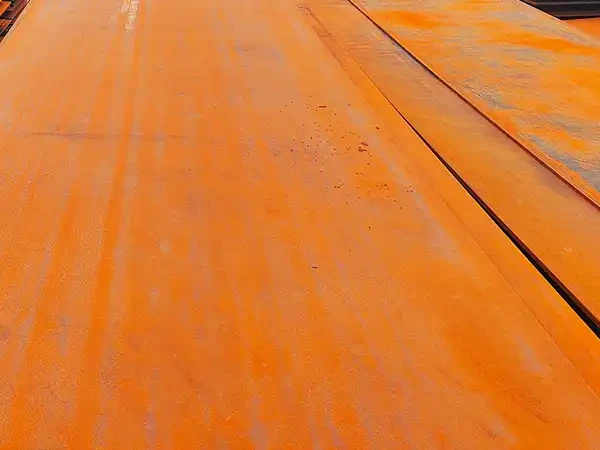
An In-Depth Analysis of the Atmospheric Corrosion Resistance of S355J0W
S355J0W is a low-alloy, high-strength, weather-resistant structural steel in accordance with the EN 10025-5 standard. Its core weather resistance stems from the synergistic action of alloying elements such as Cu, Cr, Ni and other alloying elements, which work synergistically to form a dense, stable protective passivation layer (patina) on the surface in atmospheric environments. This effectively prevents further corrosion penetration, with atmospheric corrosion resistance 2–8 times that of ordinary carbon steel, allowing for long-term use in exposed conditions. The following provides an in-depth analysis covering several aspects, including chemical composition, mechanism of weather resistance, quantification of weather resistance, weathering performance in different environments, advantages of weathering resistance and limitations of use and application scenarios.
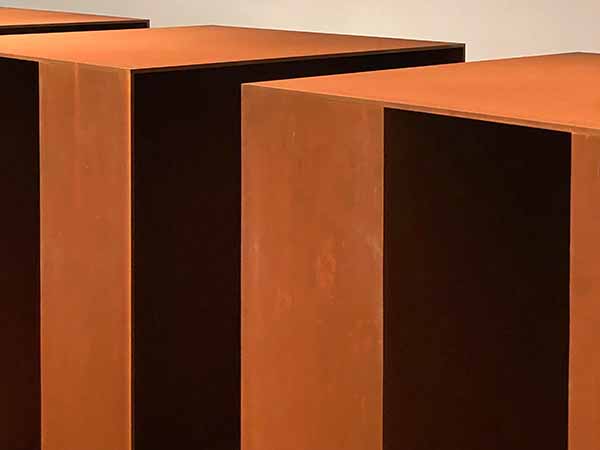
Welding Procedure Specification for S355J0W Weathering Steel
The welding procedure specification for S355J0W weathering steel includes the following: base metal properties, weldability analysis, pre-welding preparation, welding materials, welding parameters, key welding operations, post-welding treatment, welding quality inspection, and referenced standards.