
Blog
Corrosion Protection Technologies and Applications for ABS Grade B Marine Steel Plates
ABS Grade B marine steel plates, when in long-term service in a marine environment, face multiple risks including seawater corrosion, marine atmospheric corrosion and bio-corrosion. Corrosion can lead to a decline in the performance of the steel plates and structural damage, seriously affecting the service life and safety of the vessel. Therefore, the effective implementation of corrosion protection is a critical aspect of shipbuilding and maintenance. This article systematically introduces the principles, application methods and precautions of corrosion protection technology for ABS Grade B marine steel plates, providing comprehensive protection solutions for the shipping industry.
- Tags:
- ABS Grade B

ABS Grade B Marine Structural Steel Welding Process Guide
ABS Grade B is a standard-strength marine structural steel certified by the American Bureau of Shipping (ABS), primarily used for non-high-strength load-bearing structures such as hulls, decks and ship’s sides. With regard to the welding of ABS Grade B marine structural steel, Yuxin has compiled the following ABS Grade B Marine Structural Steel Welding Procedure Guide, covering the basic properties of the material, recommended welding methods and consumables, pre-welding preparation, welding process parameters, key welding operation points, post-welding treatment and inspection, common defects and their prevention, as well as the scope of application and regulatory basis.
- Tags:
- ABS Grade B
- ABS B

Are ABS Grade B steel and ASTM A131 Grade B steel equivalent?
Having analysed the chemical composition, mechanical properties, certification and testing requirements of ABS Grade B steel and ASTM A131 Grade B steel, we have concluded that their technical specifications are equivalent, although the certification systems and testing methods differ. Whether they are interchangeable depends on whether your project requires classification certification from ABS.
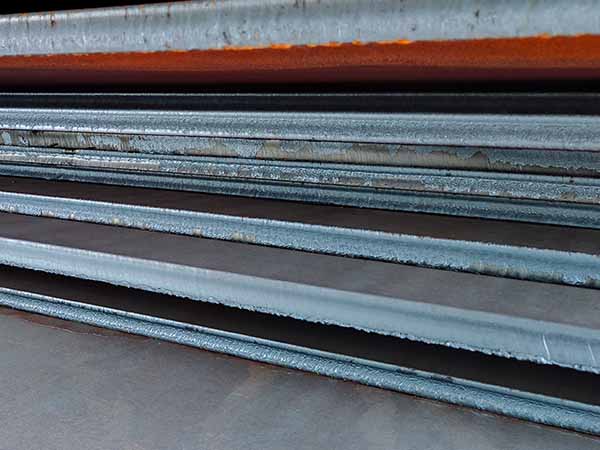
The Application and Case Studies of Grade A ABS Shipbuilding Steel Plates in Coastal Vessels
This article provides a detailed overview of the specific applications of ABS Grade A shipbuilding steel plates in coastal vessels. Drawing on practical case studies, it analyses their performance in these applications, thereby offering guidance to shipbuilders on product selection.
- Tags:
- ABS Grade A
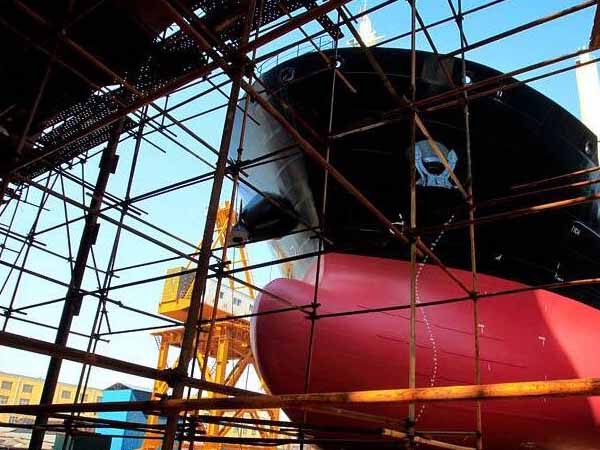
Carbon Equivalent of ABS Grade A Shipbuilding Steel Plates
The carbon equivalent (CEV) of ABS Grade A standard-strength shipbuilding steel plates is not typically a mandatory requirement in ABS classification society regulations. However, taking into account industry practice, welding processability requirements, and actual test data from steel mills’ certificates of quality, the typical control range for its carbon equivalent (calculated using the formula recommended by the International Institute of Welding, IIW) is 0.30% to 0.38%.
- Tags:
- ABS Grade A